IN Brief:
- Yokogawa will offer BuyCo's container transportation management system primarily to materials-sector manufacturers.
- The platform centralises container planning, booking, tracking, carrier selection, route decisions, and stakeholder information.
- Yokogawa intends to connect logistics management with demand forecasting, inventory optimisation, and wider end-to-end supply chain systems.
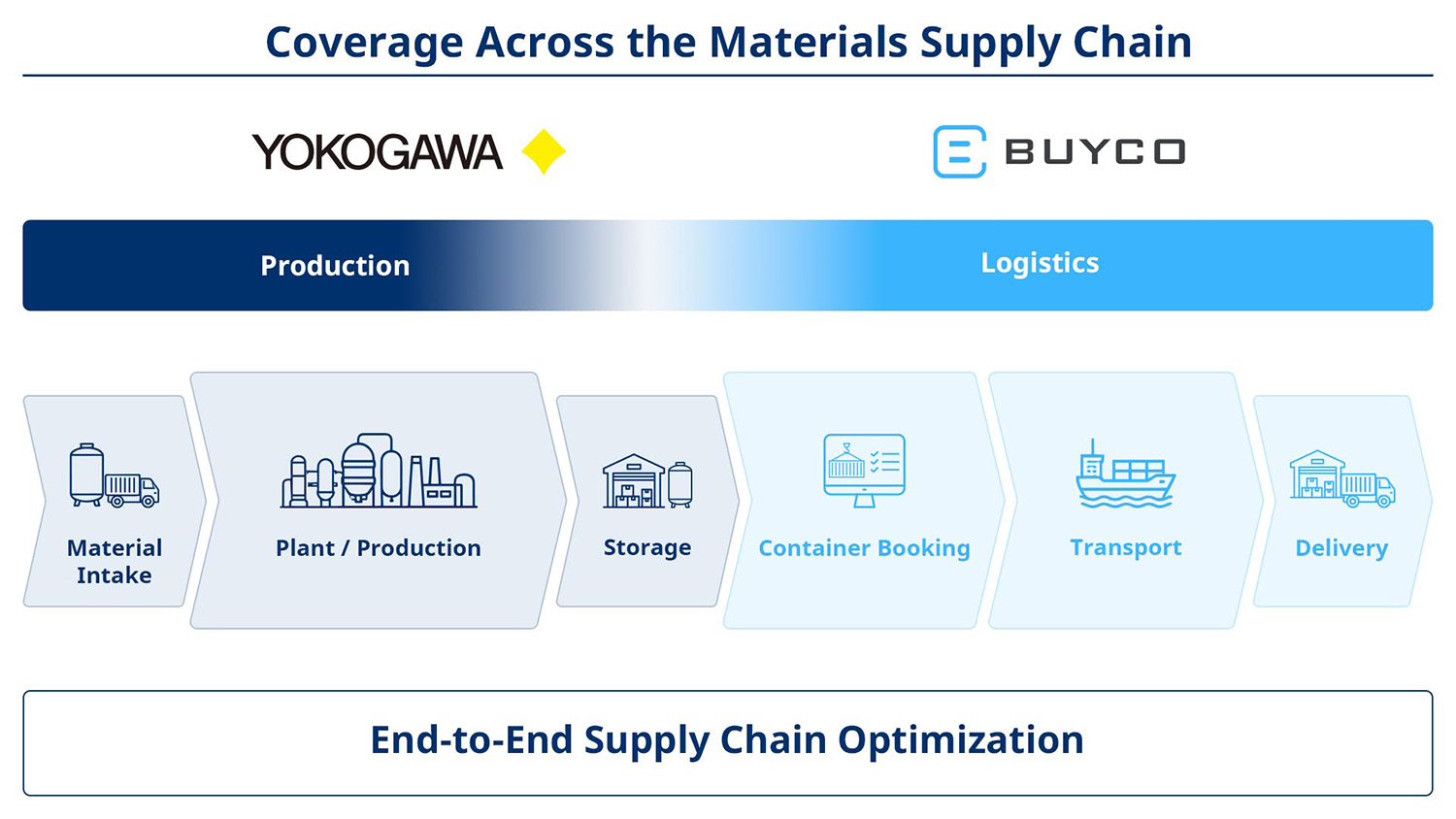
Yokogawa Electric Corporation has signed a distribution agreement with French software company BuyCo that extends the Japanese automation group’s digital offering into international container logistics. Yokogawa will offer BuyCo’s transportation management system primarily to materials companies, adding shipment planning, booking, tracking, and transport visibility to a portfolio historically centred on measurement, control, and optimisation inside industrial plants.
The agreement addresses a persistent operating divide in chemicals and other materials businesses: production planning and logistics are often managed through separate systems even though one immediately constrains the other. Manufacturers may optimise plant utilisation, inventories, and batch schedules only to encounter vessel availability, port delays, hazardous-material restrictions, container shortages, or a demand change that alters what should be produced and where it should be shipped.
BuyCo’s software is designed to centralise container transport information and support planning and booking, real-time visualisation of shipping activity, and information exchange between companies involved in a movement. It can also assist users with carrier and route selection, provide door-to-door tracking, and bring transport data into one environment instead of leaving teams to reconcile carrier portals, spreadsheets, emails, and forwarder updates. Yokogawa says more than 12,000 users worldwide already use the platform.
Naohisa Endo, executive officer and head of Yokogawa’s Materials Business Headquarters, said: “By leveraging BuyCo’s container transport management platform, we will strengthen initiatives to optimize supply chains for the materials industry.” The agreement gives Yokogawa a direct logistics layer to sit alongside the production and process information it already handles for industrial customers.
Materials producers can handle bulk and packaged products, hazardous cargoes, temperature-sensitive goods, and shipments subject to chemical regulation while simultaneously managing volatile transport costs and pressure to measure greenhouse-gas emissions. A transport system operating in isolation can improve execution, but its value increases if the data can feed purchasing, production scheduling, inventory allocation, customer service, and emissions decisions across the wider operation.
Yokogawa has spent much of its history working on that production side of the equation, supplying measurement and control technologies across energy, chemicals, materials, pharmaceuticals, food, and other process industries. It is now extending the boundary of optimisation beyond individual plants and towards the supply chains connecting multiple facilities. Container transport is an obvious junction because delays or unreliable arrival estimates can either starve a production site of inputs or leave finished products occupying inventory and storage capacity for longer than planned.
Integration will determine how far that ambition travels beyond visibility. Container platforms usually depend on feeds from carriers, forwarders, terminals, and customer systems, while industrial planning platforms depend on production orders, bills of materials, inventories, and demand signals. Connecting those datasets can allow a delayed sailing to influence replenishment or production planning, but only if shipment identifiers and master data are consistent across systems that may have been implemented years apart.
The BuyCo platform also creates a route for comparing transport choices against more than freight price. Shipment data can support selection of shipping lines and routes, while door-to-door visibility makes it easier to identify where lead-time variability is accumulating. Yokogawa says the system can support lower logistics costs and inventory, improve on-time delivery, reduce the risk of cargo deterioration, and provide information for measuring and reducing transport-related carbon emissions. Those outcomes will still depend on the quality of carrier data and how extensively customers integrate the system into operational processes.
The agreement also gives Yokogawa access to a transport-management capability without having to build carrier connectivity from scratch. BuyCo already operates within container shipping workflows, where booking formats, schedules, milestones, and exception messages vary between carriers and regions. Yokogawa can concentrate on how that information is used inside industrial decision-making while BuyCo maintains the specialised logistics layer needed to collect and normalise it.
Yokogawa intends to combine container management with additional supply chain functions, including demand forecasting and inventory optimisation. Linking those functions would allow a change in transport status to influence inventory and production decisions rather than remaining an alert confined to the logistics department, although that requires consistent master data and connections between enterprise, plant, and transport systems.
For materials manufacturers, the commercial test will be what happens after a delay is detected. A late container can change raw-material availability, production sequencing, customer delivery commitments, working-capital requirements, and storage demand within hours. Yokogawa’s expansion into transport management is an attempt to connect those consequences to the production systems it already serves, with BuyCo supplying the container data layer on which that broader integration can be built.