IN Brief:
- Global trade continues through disruption, but climate, transport, and cost pressures are narrowing operational buffers.
- Supplier data, verification, material specification, and reusable assets are moving resilience into day-to-day operating decisions.
- Warehouse automation is extending into variable, physically difficult work, increasing the importance of integration and control software.
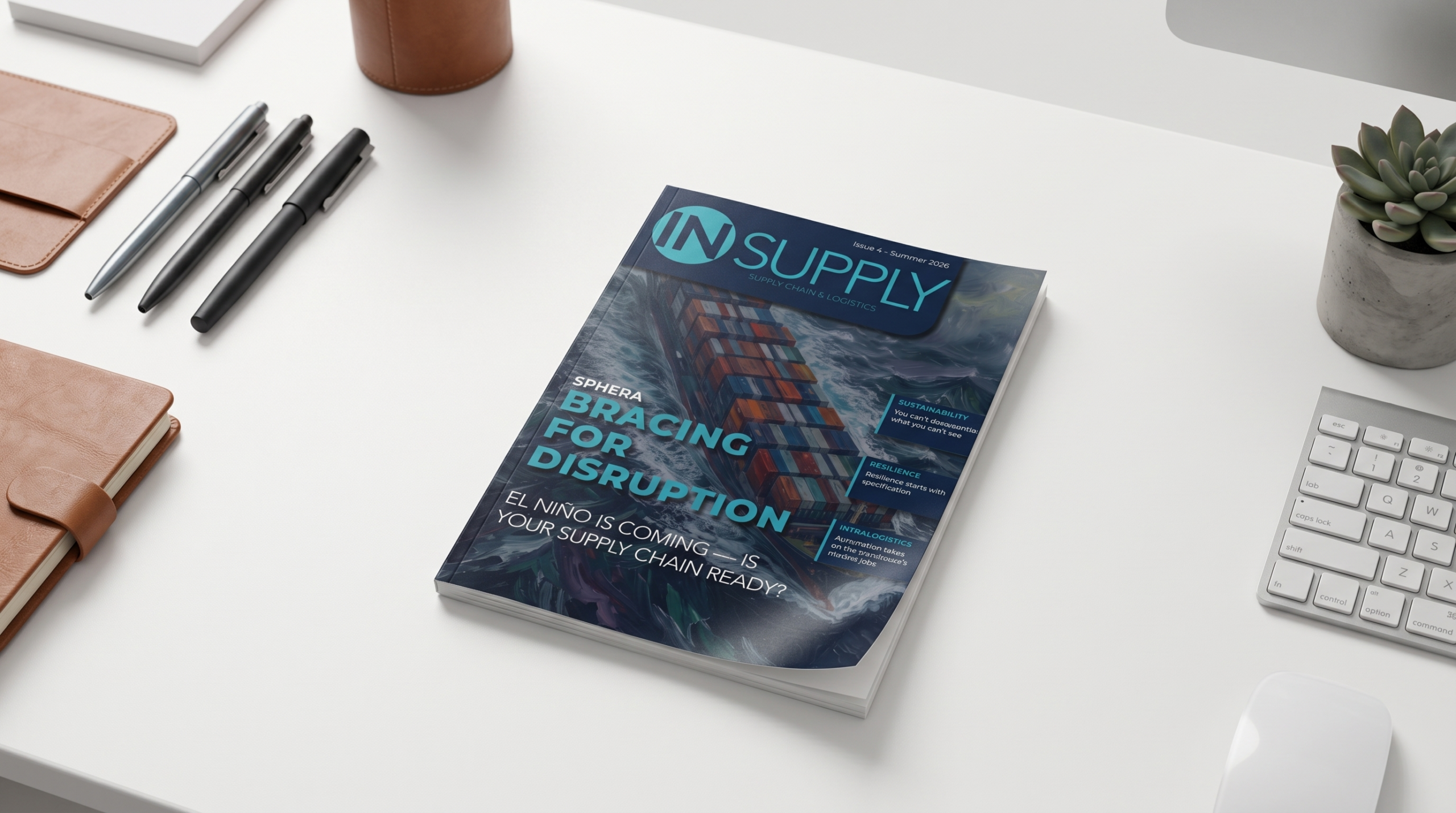
Issue 4 of IN Supply arrives at a slightly awkward moment for global trade. Goods are still moving, but headline growth is being flattered by higher prices, while disruption through key shipping routes and a strengthening El Niño are adding fresh pressure to transport, energy, agriculture, and manufacturing.
The issue follows that pressure upstream. Resilience is increasingly being designed into the operation itself — through better supplier data, stronger product verification, more consistent material specification, reusable logistics assets, and control systems able to coordinate increasingly automated warehouses.
That shift runs through the edition. Sphera examines the exposure created by El Niño when familiar buffers are already under strain, while 51toCarbonZero looks at the gap between measuring Scope 3 emissions and using supplier-specific data to change procurement decisions. Elsewhere, circular pharma logistics, distributed-ledger verification, and materials specification all point towards the same practical challenge: reducing variability before it becomes disruption.
Warehouse automation brings the argument onto the floor. Robots are moving into trailer loading, container unloading, freezer handling, and other tasks that have resisted mechanisation, making integration, software ownership, and recovery from failure part of the return-on-investment calculation.
Issue 4 of IN Supply is available now.