IN Brief:
- Winton Industries' 82m³ Uacns silo wagon has obtained TSI approval in aluminium and carbon-steel configurations.
- Certification confirms compliance with applicable European interoperability requirements for freight rolling stock.
- The approval gives Winton a route from established tanker and pressure-vessel manufacturing into the European rail freight equipment market.
Winton Industries has obtained Technical Specifications for Interoperability certification for aluminium and carbon-steel versions of its 82m³ Uacns silo wagon, giving the Turkish manufacturer a compliant freight platform for the European railway environment. The approval marks a concrete commercial step for a business extending established road-tanker and pressure-vessel manufacturing capabilities into rail rolling stock.
TSI compliance provides a common technical framework for vehicles operating across European railway systems and is a fundamental requirement for freight equipment intended to move between national networks. Certification does not determine where each wagon will operate or guarantee customer orders, but it removes a significant regulatory barrier by confirming that the type has been assessed against the applicable interoperability requirements.
For a new rolling-stock supplier, that distinction separates a marketable wagon from a catalogue design or prototype that still requires regulatory work before fleet deployment. Freight wagons are long-life industrial assets expected to pass between infrastructure managers, terminals, maintenance providers, leasing companies, and operators, making compliance documentation part of the product rather than a final administrative step after manufacture.
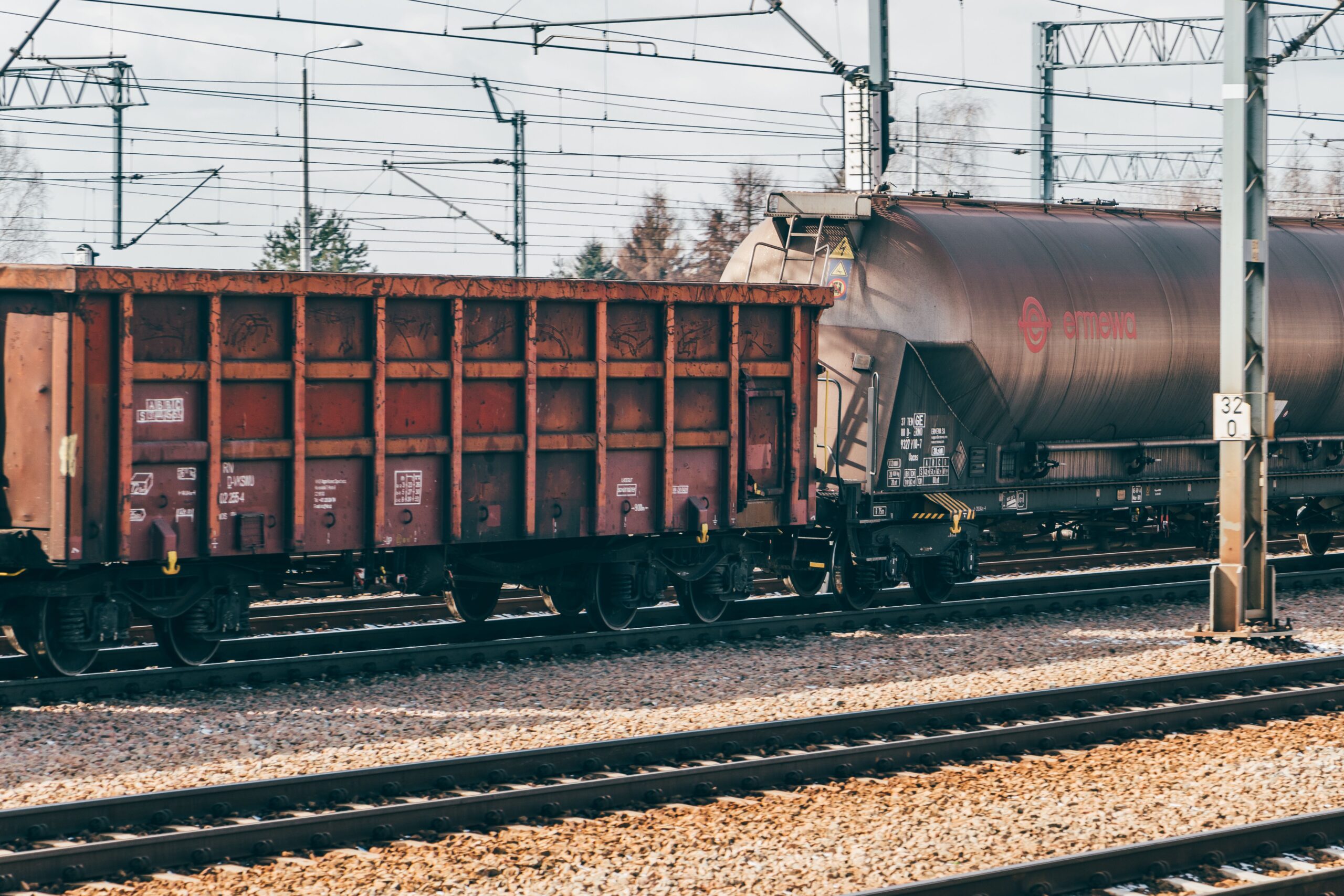
Winton offers the 82m³ Uacns design in aluminium and carbon-steel configurations, allowing customers to choose material according to payload, commodity, corrosion behaviour, repair practice, acquisition cost, and lifecycle requirements. Silo wagons are used for dry bulk products that need protected transport and controlled discharge, making tare weight, usable volume, axle load, hopper arrangement, and compatibility with unloading infrastructure central to operating economics.
The published carbon-steel configuration uses a single 82m³ chamber arranged across four hoppers. Winton lists an approximate tare weight of 21 tonnes and gross weight of 90 tonnes, with the wagon configured for standard 1,435mm gauge and operation at up to 100km/h at the stated loaded condition. Pneumatic distribution and discharge connections are provided on both sides, giving terminals more flexibility over unloading arrangements.
Those specifications relate to the carbon-steel version and should not be assumed to apply identically to the aluminium variant. The material choice affects tare weight and structural design, potentially allowing an aluminium wagon to carry more product within the same gross train limits, while carbon steel can offer a different balance of initial cost, maintenance familiarity, strength, and material compatibility.
Winton also lists the carbon-steel model as prepared for digital automatic coupling, with optional telematics, anti-climbing equipment, and derailment detection. Such features are becoming more relevant as European freight operators seek better asset visibility and more automated train formation, although digital coupling remains a network-level programme whose benefits depend on infrastructure, locomotives, other wagons, and operating procedures being developed in parallel.
The company enters rail with a manufacturing base in Ankara and experience producing LPG and LNG road tankers, storage vessels, and related pressure equipment. It says it has delivered more than 4,650 transport and storage tanks to customers in more than 50 countries. Welding, materials handling, pressure-vessel fabrication, inspection, and certification provide useful industrial foundations, but rail introduces additional engineering requirements around bogies, brakes, running dynamics, couplers, gauging, and long-term vehicle configuration.
That last point is commercially important because wagon buyers purchase support as well as steel and aluminium. Fleets can remain in service for decades, during which operators need drawings, maintenance instructions, spare parts, approved repairs, component substitutions, and configuration records. A manufacturer entering the market therefore has to demonstrate that it can support equipment well after the first production batch has left the factory.
Bulk logistics customers will ultimately assess the wagon through payload and utilisation. A lighter vehicle can increase the amount of saleable product carried per train, but only if loading terminals, discharge facilities, train paths, locomotive capability, and customer schedules allow the additional capacity to be used. A high-capacity wagon waiting for a terminal slot contributes little to supply chain efficiency regardless of its certification.
TSI approval gives Winton the regulatory basis to compete for European freight work in both material configurations. The next evidence will come from customer orders, fleet deployment, maintenance performance, and daily utilisation. Certification opens the European market; commercial credibility will depend on how often the wagons are actually moving cargo once they enter it.