IN Brief:
- OMEGA 1 Singapore represents a S$260 million investment in integrated logistics infrastructure at 19 Gul Lane.
- The five-storey development will include more than 65,000 automated pallet positions across ambient and air conditioned operations.
- Completion is targeted for the second half of 2028, with shared automation intended to reduce the upfront burden on occupiers.
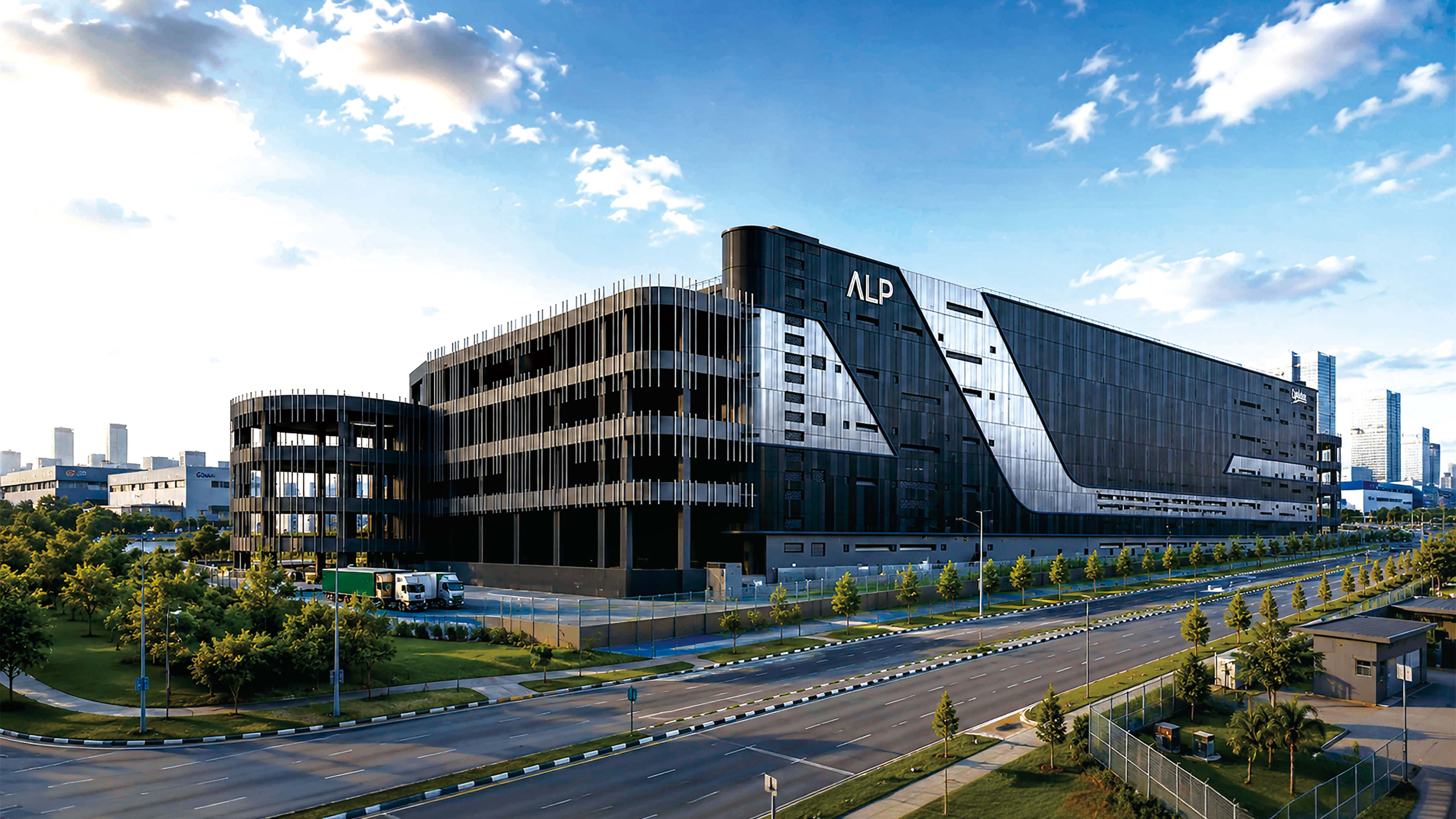
Ally Logistic Property (ALP) and CapitaLand Investment have broken ground on OMEGA 1 Singapore, a S$260 million development combining logistics property, shared warehouse automation, digital systems, and operational support within one infrastructure platform.
The five-storey project at 19 Gul Lane will provide approximately 71,000 sq m of gross floor area, including more than 51,000 sq m dedicated to logistics operations. An automated storage and retrieval system will provide more than 65,000 pallet positions across ambient and air conditioned storage.
ALP’s proprietary ALPOS platform will connect individual tenants’ warehouse management systems with the site’s automation equipment. On-site maintenance will also form part of the model, reducing the need for every occupier to procure and integrate an entirely separate automation stack after moving into the building.
Completion is targeted for the second half of 2028. The western Singapore location is close to Tuas Port, Tuas Checkpoint, and Jurong Port, placing the facility within an established logistics and industrial cluster serving domestic distribution, regional fulfilment, and cross-border flows.
Charlie Chang, Chief Executive Officer and Co-Founder of ALP, said: “Logistics infrastructure can no longer be defined by space alone.” OMEGA is built around that premise, with the warehouse itself providing a larger share of the automation, software, and technical support normally installed separately by an occupier.
The financial distinction is significant for businesses considering automation. High-density storage systems, conveyors, control software, and warehouse management integration require substantial capital before a new facility processes its first commercial order. Shared infrastructure spreads more of that investment across the property platform and can give tenants access to automated capacity without building a dedicated system from scratch.
Standardisation can also shorten implementation, although occupiers still need their own inventory rules, order logic, data interfaces, and operating procedures. ALPOS is intended to provide the common connection between tenant warehouse management systems and OMEGA equipment, allowing several businesses to use shared automation while retaining their own inventory and fulfilment processes.
The model addresses two persistent constraints in Singapore logistics: industrial land and labour. Higher storage density makes greater use of the available building volume, while automated handling reduces the amount of repetitive manual movement needed to increase throughput. Neither removes the need for people, but both allow more volume to pass through a fixed site without simply adding floor area or headcount.
Automation is already moving into established Singapore logistics operations. CEVA Logistics recently deployed autonomous electric vehicles across its Blue Hub, moving pallets, totes, and other inventory between floors using the building’s existing ramp. OMEGA approaches the same operating pressure at property level by designing automation and software into the facility from the outset.
The Singapore project is part of a wider OMEGA network rather than a standalone prototype. ALP developed the platform in Taiwan and has facilities operating or under development elsewhere in Southeast Asia. OMEGA 1 Bang Na in the Greater Bangkok Metropolitan Area is due to complete its first phase by the end of September 2026.
Replicating a standard platform across several countries offers potential procurement, engineering, and maintenance benefits, but local conditions still shape each installation. Building regulations, land constraints, labour economics, electricity supply, customer sectors, and transport networks differ considerably across Asian logistics markets, so a repeatable building design still has to accommodate different operating requirements.
OMEGA 1 Singapore is also targeting Green Mark GoldPLUS certification and will include a solar-ready roof, facade greening, and landscaping. Electricity demand will be an increasingly important part of the operating model because automated storage, conveyors, charging equipment, cooling, and digital systems concentrate more electrically driven activity inside the warehouse.
That changes the specification expected of modern logistics property. An occupier may remain in a building for years while automation requirements, power demand, and order profiles change substantially. Assets designed only around floor area, clear height, and loading docks can become operationally restrictive even when the underlying structure remains serviceable.
OMEGA 1 will not begin proving its commercial performance until completion in 2028. Its 65,000-plus pallet positions, shared automation, software integration, and maintenance model nevertheless make the development more than a conventional speculative warehouse. ALP and CapitaLand are effectively testing whether automation can become part of logistics property infrastructure rather than an expensive layer rebuilt by every new occupier.