IN Brief:
- Agility Robotics and FORT Robotics have signed an MOU covering Digit 5 safety infrastructure spanning the robot, operator controls, and external facility systems.
- A jointly developed Offboard Safety Bridge is intended to connect Digit 5 with safety equipment and signals elsewhere in industrial facilities.
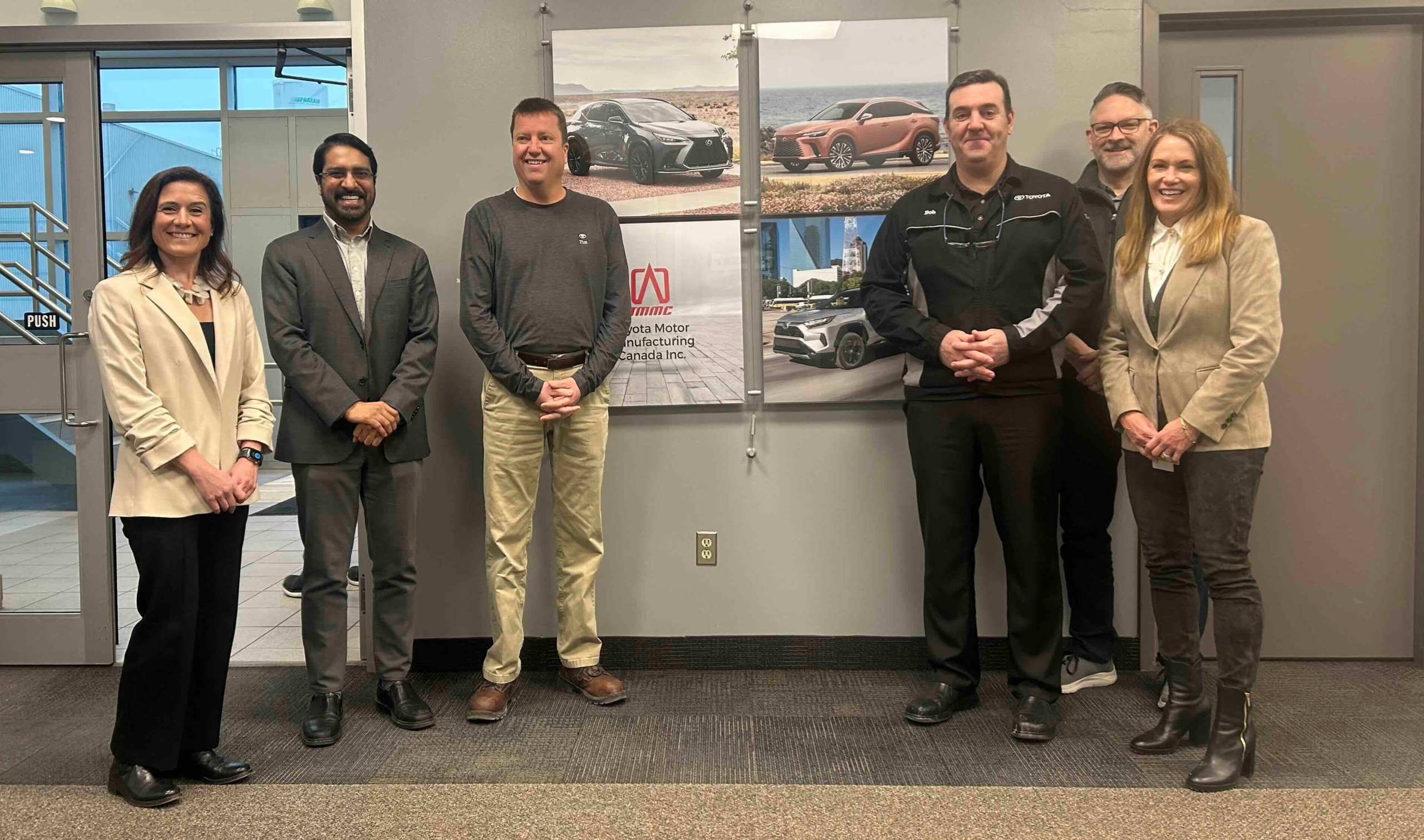
- Earlier Digit generations have accumulated more than 65,000 operating hours at customer sites including GXO, Schaeffler, and Toyota Motor Manufacturing Canada.
Agility Robotics has expanded its work with FORT Robotics around the safety architecture for Digit 5, developing interfaces that connect the humanoid robot with operator controls and safety systems elsewhere in warehouses, manufacturing plants, and logistics facilities.
The companies signed a memorandum of understanding on 1 October covering a three-part architecture made up of a safety pendant, communications on the robot, and external interfaces. A jointly developed Offboard Safety Bridge is intended to allow safety information generated outside Digit to form part of the machine’s operating response.
The agreement represents a broader relationship than the component supply arrangements used on earlier generations of Digit. FORT has already provided technology for previous machines and developed a pendant sled that combines Digit’s tablet with emergency stop and enabling device functions.
Digit 5 is being developed for autonomous work in areas where people may be present rather than inside a permanently segregated automation cell. That changes the safety engineering problem substantially. Traditional industrial robots can often be separated from employees using fences, guarded doors, scanners, or defined working zones, allowing the machine to operate at speed while access to its movement envelope is tightly controlled.
A mobile humanoid has a different operating pattern. It may move between storage areas, workstations, conveyors, and production equipment using the same floors and access routes as workers. Safety therefore has to account for changing positions, people entering and leaving the working area, and signals generated by the wider facility rather than relying solely on a fixed perimeter.
Agility says Digit 5’s planned onboard architecture includes human detection, safety cues, and safe motion control. The external interface is intended to complement those functions by giving the robot access to safety information originating elsewhere in the building.
That could allow a warehouse or factory to link the humanoid with equipment such as external emergency stop circuits, controlled areas, or other safety infrastructure. The companies have not published a complete list of supported interfaces or a final certified configuration, so individual deployment arrangements will depend on the customer site.
The operator pendant adds another independent intervention point. During setup, maintenance, or an abnormal situation, personnel can monitor the robot and use manual safety controls rather than relying entirely on autonomous software to determine when movement should stop.
Redundancy becomes more significant as fleet size increases. Supporting one humanoid during an early deployment allows engineers to remain close to the equipment and intervene manually when unusual conditions arise. An industrial operation using several robots across multiple tasks needs repeatable controls capable of placing individual machines into a safe state without disrupting the entire facility.
The Offboard Safety Bridge is intended to help create that wider operating architecture. Instead of treating each humanoid as an isolated machine carrying every required safety function onboard, the approach allows the facility and robot to exchange information that can influence operation.
That relationship will have practical consequences for warehouse integration. Mobile robots may share space with conveyors, forklifts, autonomous mobile robots, lifting equipment, doors, and pedestrian routes, each of which can have its own control and safety requirements. Coordinating those systems becomes more complicated as autonomous equipment moves beyond clearly defined lanes.
Agility enters the Digit 5 programme with operating experience from previous machine generations. The company says earlier Digit robots have accumulated more than 65,000 operating hours and have been deployed at customer locations including GXO, Schaeffler, and Toyota Motor Manufacturing Canada. Those figures are company reported, but they provide a larger operating base than a short laboratory demonstration.
Digit 5 itself remains a developing platform. Agility unveiled the new generation in September and describes it as its first humanoid engineered for cooperatively safe work at scale. The company also notes that some product capabilities and safety features remain under development, making the current FORT agreement part of the engineering programme rather than evidence that every element is already deployed or certified.
That distinction is particularly important around humanoid robotics, where demonstrations can move considerably faster than industrial qualification. Logistics operators have to assess machinery against predictable availability, maintenance, safe recovery from faults, integration with existing systems, and the ability to repeat the same task over long production periods.
Safety infrastructure is part of that operating cost. Pendants, communications hardware, external interfaces, sensors, and software all have to be maintained and tested after installation. A system that performs correctly at commissioning still needs procedures for software changes, component replacement, fault investigation, and validation when a facility layout or production process changes.
The partnership also includes planned work around solutions engineering, regulatory compliance, hardware development, and deployment support. Those activities are less visible than robot movement, but they determine whether a machine can move from a tightly supervised introduction into ordinary industrial operations.
For warehouse operators, the attraction of humanoid equipment is partly its potential to work around infrastructure originally designed for people rather than requiring a dedicated automation system for each task. The same flexibility increases the number of operating conditions the machine may encounter and therefore broadens the safety case that has to be managed.
Agility and FORT are addressing that problem by extending the architecture beyond the robot itself. The next meaningful evidence will come as Digit 5 enters customer deployments and the combined onboard, operator, and facility interfaces have to function together over sustained industrial operating hours.