IN Brief:
- PanStar Acro returned to Busan on 11 October after a 50-day Northern Sea Route trial.
- The 2,758-TEU vessel carried real commercial cargo through Arctic waters to European ports.
- South Korean officials have discussed regular Arctic services towards 2030, subject to operating and commercial assessment.
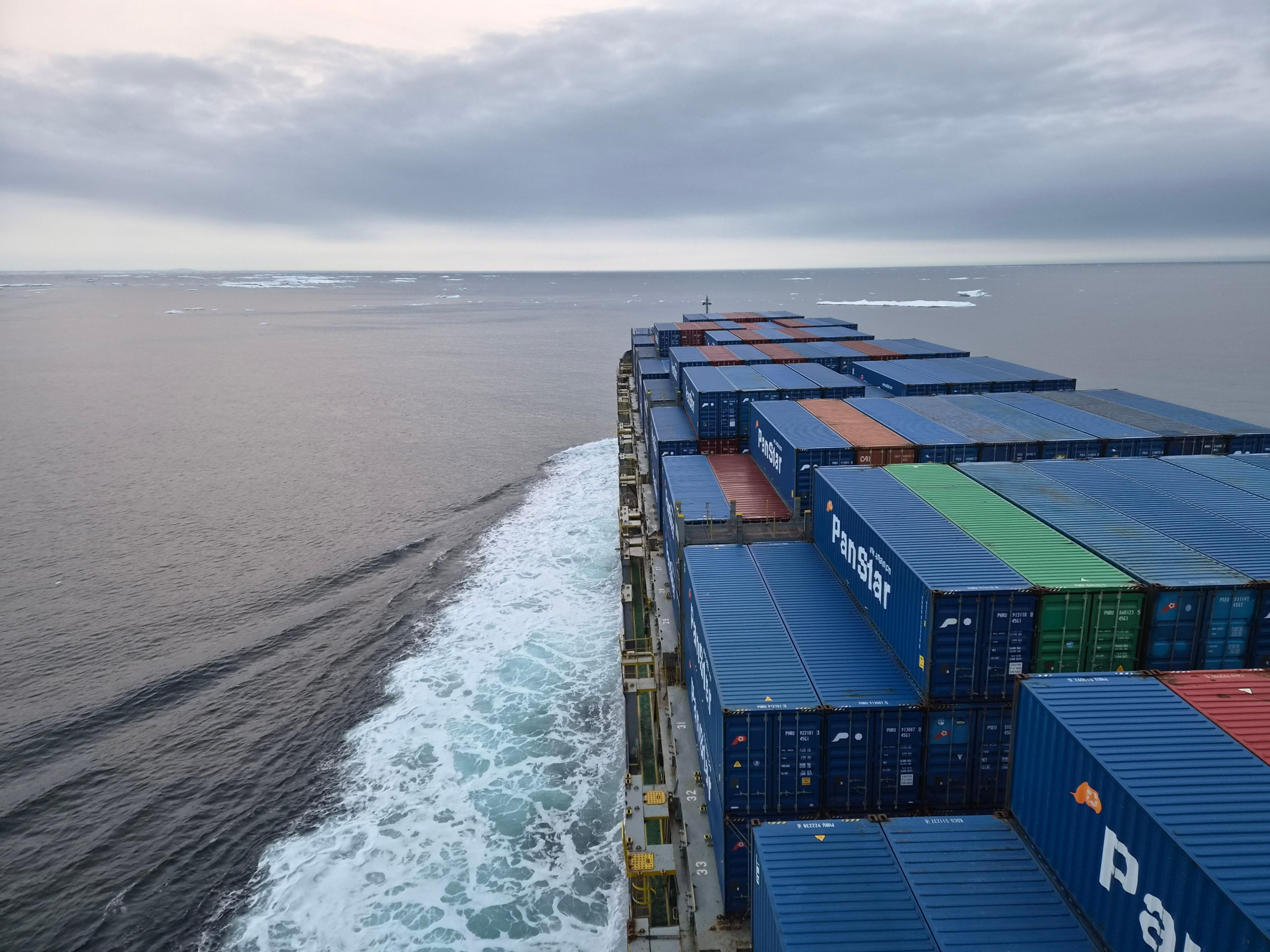
South Korea has completed a 50-day container shipping trial through the Arctic, bringing the PanStar Acro back to Busan after a round trip linking the country’s principal container port with northern Europe. The vessel returned on 11 October, having departed on 22 August, giving the government and participating shipping businesses a completed operational exercise on which to assess the Northern Sea Route. The voyage carried commercial cargo rather than operating solely as a navigation demonstration, although the evidence gathered is not yet sufficient to establish a viable scheduled service.
The 2,758-TEU PanStar Acro sailed towards the Arctic via the waters north of Russia before reaching European ports, including Felixstowe, Rotterdam and Gdańsk. Its return completes South Korea’s first container ship round trip on this route, an undertaking that depends on a significantly different operating environment from the established Asia–Europe services using the Suez Canal or routes around southern Africa. A shorter passage through Arctic waters offers potential distance and journey time advantages, but only under the appropriate navigational and commercial conditions.
South Korea’s Ministry of Oceans and Fisheries had originally planned a voyage of approximately 45 days. The completed journey took 50 days, illustrating the importance of measuring actual schedules rather than relying on an idealised route comparison. The government’s pre-departure programme covered crew training, vessel and cargo preparation, insurance arrangements and emergency response. It also involved coordination with relevant authorities to address permissions and international requirements for a voyage through sensitive Arctic waters.
Before departure, the ministry identified approximately 737 TEU of loaded commercial freight and 100 empty containers, including shipments involving chemical products, used vehicles and automotive components. The ship’s nominal capacity was substantially greater than that initial cargo volume. On a route with incomplete vessel utilisation, a shorter navigable distance may not deliver the lowest transport cost, particularly if paying cargo is limited in either direction.
A regular container liner must offer shippers a dependable schedule, adequate port coverage and an acceptable balance between freight rates and delivery time. The trial confirms that a container vessel can complete the itinerary with commercial goods aboard. It does not establish the frequency with which ice, weather or regulatory constraints would permit the same journey, or the level of demand that might support several vessels serving the route on a fixed timetable.
The ministry designed the exercise to collect evidence on navigational distance, voyage duration, fuel consumption and operating expense. Those measurements are essential for any meaningful cost comparison with established services. Additional requirements can arise from specialist navigation skills, ice-related risks, insurance cover and contingency arrangements in waters where diversion options are limited. A saving in steaming distance may therefore be partially offset by costs that are less prominent on conventional trade lanes.
Much of the Northern Sea Route follows Russia’s Arctic coastline, making permissions and applicable international requirements practical considerations for any repeat voyage. Commercial carriers assessing a new service would need to consider legal exposure, insurance availability and the reliability of supporting infrastructure alongside ordinary vessel operating costs. The successful return of one ship does not resolve those considerations for an entire liner network.
A dependable northern connection with Europe could eventually offer Busan another shipping option for high-value or time-sensitive cargo and strengthen the port’s position within regional shipping networks. Yet such benefits depend on practical integration with existing container terminals, inland transport links and European port calls. The trial’s inclusion of three European destinations provides experience of that operating chain, but does not demonstrate that the same commercial rotation would remain optimal for a scheduled service.
A shorter passage can reduce fuel demand on a particular voyage, but the outcome depends on ship speed, operating conditions, ice management, vessel loading and any support services. Arctic shipping brings risks in ecologically sensitive waters, so a credible assessment needs to consider more than a single distance-based emissions estimate. No independently verified full-voyage cost or emissions comparison has been published with the return announcement.
South Korean officials have discussed developing regular Arctic services towards 2030. That remains an objective rather than a confirmed launch timetable. The trial provides actual transit times, cargo handling experience and navigational procedures to inform those plans. Repeat voyages would be needed to measure whether the route can offer a reliable timetable and enough loaded containers to support commercially sustainable services.