IN Brief:
- Airbus projects the dedicated freighter fleet growing from 2,360 aircraft in 2026 to 3,460 in 2045, a 46% increase.
- Its 2,670-aircraft requirement comprises 1,580 replacements and 1,090 growth aircraft, including 1,700 expected passenger conversions.
- North America and Asia-Pacific account for 925 and 850 projected freighter requirements, respectively; these are forecasts rather than orders.
Airbus expects the global fleet of dedicated freighter aircraft to expand by 46% between 2026 and 2045, while carriers acquire thousands of aircraft to replace ageing equipment and accommodate additional cargo traffic. Its 2026 Cargo Global Market Forecast places the operating fleet at 2,360 aircraft this year and projects 3,460 by 2045. The study, presented at the Cargo Facts Symposium on 21 October, forecasts a requirement for 2,670 freighters over the period, a separate delivery requirement that includes both replacement and fleet expansion.
Of that requirement, 1,580 aircraft are allocated to replacement and 1,090 to fleet growth. The figures separate replacement aircraft, which take the place of freighters being withdrawn, from net additional aircraft required to meet demand. It would be incorrect to describe all 2,670 as growth in the fleet. The published fleet endpoints imply a rise of around 1,100 aircraft, while Airbus categorises 1,090 of the requirements as growth aircraft. The published totals are rounded forecasts, not a reconciled register of individual airframes. Neither total constitutes firm airline orders, and neither establishes how many aircraft a single manufacturer will deliver.
Passenger aircraft conversions are expected to provide most of the required freighters. Airbus divides the forecast into 1,700 converted aircraft and 970 new-build freighters, representing approximately 64% and 36% of the total respectively. In size terms, it expects demand for 1,140 single-aisle aircraft, 860 medium widebodies and 670 large widebodies. The size categories sum to the same 2,670-aircraft requirement but address a different question from whether a particular aircraft begins life on a passenger production line or is subsequently converted.
Conversion programmes remove the passenger cabin configuration and adapt an existing airframe for cargo operations. Depending on the aircraft and certified conversion design, work can involve installing a main-deck cargo door, reinforcing structural areas, fitting freight handling equipment and addressing fire detection, suppression and other safety provisions. A conversion can keep a passenger airframe in productive service after its passenger economics deteriorate. The price and availability of suitable feedstock aircraft, structural condition and conversion capacity determine whether that is financially viable. A modelled requirement for converted aircraft does not guarantee sufficient conversion slots, materials or airframes will be available on schedule.
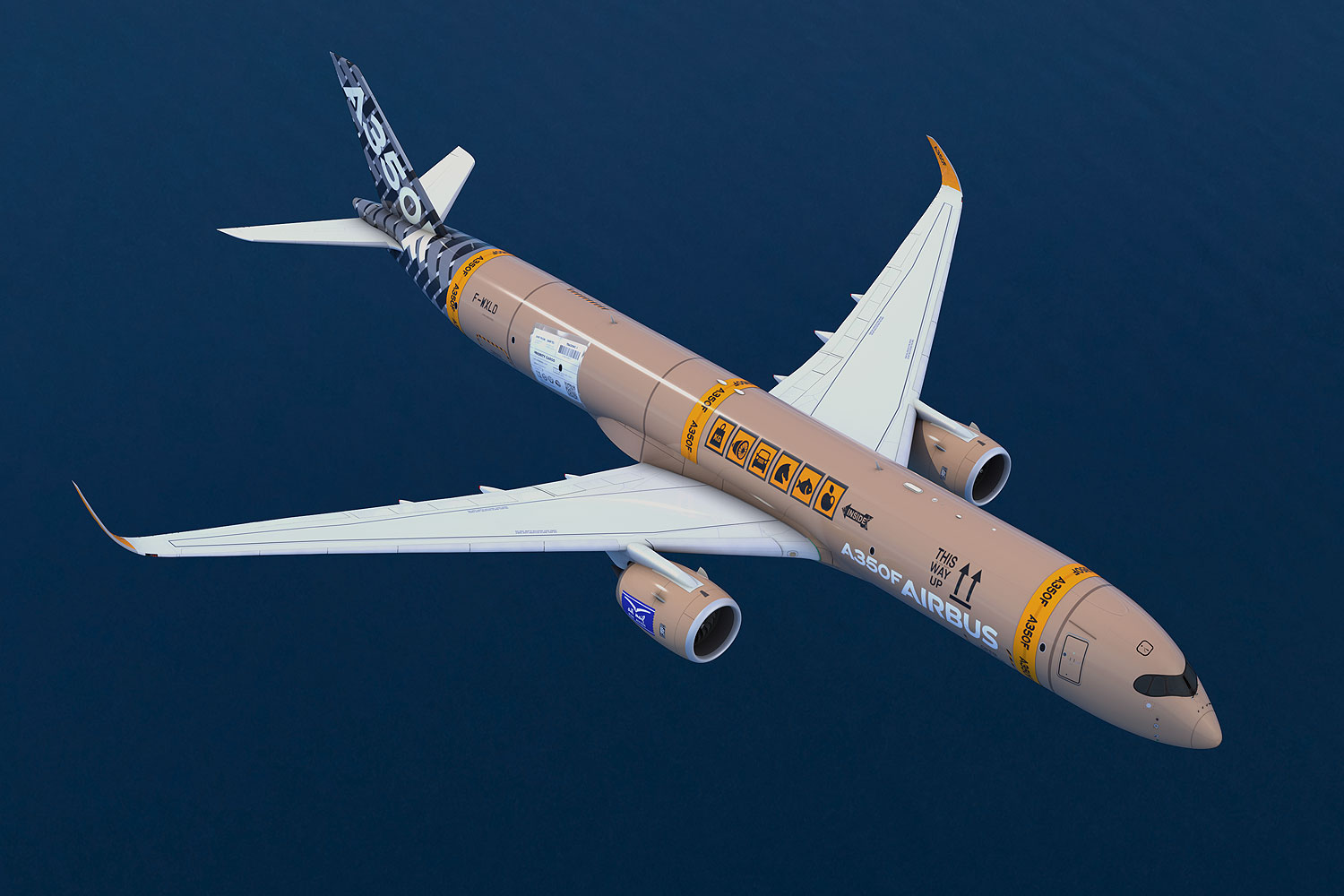
Airbus identifies the A320 and A321 families among aircraft suitable for the single-aisle conversion market, alongside A330 passenger-to-freighter conversions in the widebody segment. Its new-build A350F is positioned for larger and longer-distance freight operations. Aircraft selection still depends on payload, available volume, route length, airport limitations and the structure of the carrier’s network. A widebody can move larger consignments over long sectors, but a smaller converted aircraft may be better matched to regional routes where demand would not justify a larger aircraft on every departure.
Airbus projects global air cargo traffic growth averaging 3.2% a year over the coming two decades, against 2.9% annual growth in trade. Those are assumptions about long-term activity, not a promise of uninterrupted expansion in any individual year. Freight demand can fluctuate with consumer spending, industrial production, trade controls and temporary shifts away from sea transport. The forecast assumes that demand for quick movement of valuable or time-sensitive goods continues to underpin investment despite higher operating costs and geopolitical interruptions.
Air freight moves a small share of world trade by physical weight but a much larger share by value, according to Airbus’s figures: less than 1% of weight and more than 30% of value. High-value technology goods have become an increasingly important part of that activity. The manufacturer says the value of computers and other high-technology goods in air cargo has doubled over the past three years, reaching a reported 15% share in 2026. That is an Airbus forecast statement, not a separately verified breakdown of all traded goods. Manufacturers may choose air freight for components whose late arrival would halt production, but the service premium must still be weighed against transport cost, shipment density and available delivery windows.
Regional demand is concentrated in North America and Asia-Pacific, where Airbus forecasts requirements for 925 and 850 aircraft respectively. Together they represent roughly two-thirds of global demand. Europe and the Commonwealth of Independent States account for 515 aircraft, followed by Latin America at 165, the Middle East at 125 and Africa at 90. These are geographic allocations of forecast fleet requirements, not schedules for deliveries into individual countries. The manufacturer also expects Asia-Pacific to remain the leading region for international air cargo traffic, with links to North America projected to grow at around 3.8% annually.
Freighter capacity is only one part of the logistics network. Cargo also travels in the lower holds of passenger aircraft, an important source of competing capacity on scheduled routes. The practical availability of an all-cargo service depends on aircraft utilisation, airport handling, customs processing and suitable departure and arrival slots. Larger fleets will not remove ground bottlenecks where cargo terminals, road connections or specialist temperature-controlled handling space fail to keep pace. Likewise, a route forecast does not resolve the commercial balance between freighter services and the belly capacity offered by scheduled passenger networks.
Fleet replacement may reduce fuel consumed per tonne of cargo where newer aircraft are used efficiently, but the realised environmental outcome depends on utilisation, load factors, operating conditions and the aircraft replaced. The A350F made its first flight on 29 September 2026 and is in flight testing. Type certification, customer deliveries and production at scale remain separate milestones. Aircraft converters and freight operators must also align equipment investment with route demand and maintenance requirements. Airbus’s latest figures establish the scale of the prospective renewal market: a fleet growing by less than half, supplied through a much larger cycle of replacement and conversion over the period to 2045.