IN Brief:
- Transport Canada has committed up to C$254 million through the Trade Diversification Corridors Fund, not confirmed completed expenditure.
- The programme includes 103 km of rail upgrades, protection of the port's sole rail access and a customs container examination facility.
- Dredging is expected to increase deep-draught tidal windows by at least 30%, while 850,000–one million TEU is a future capacity target.
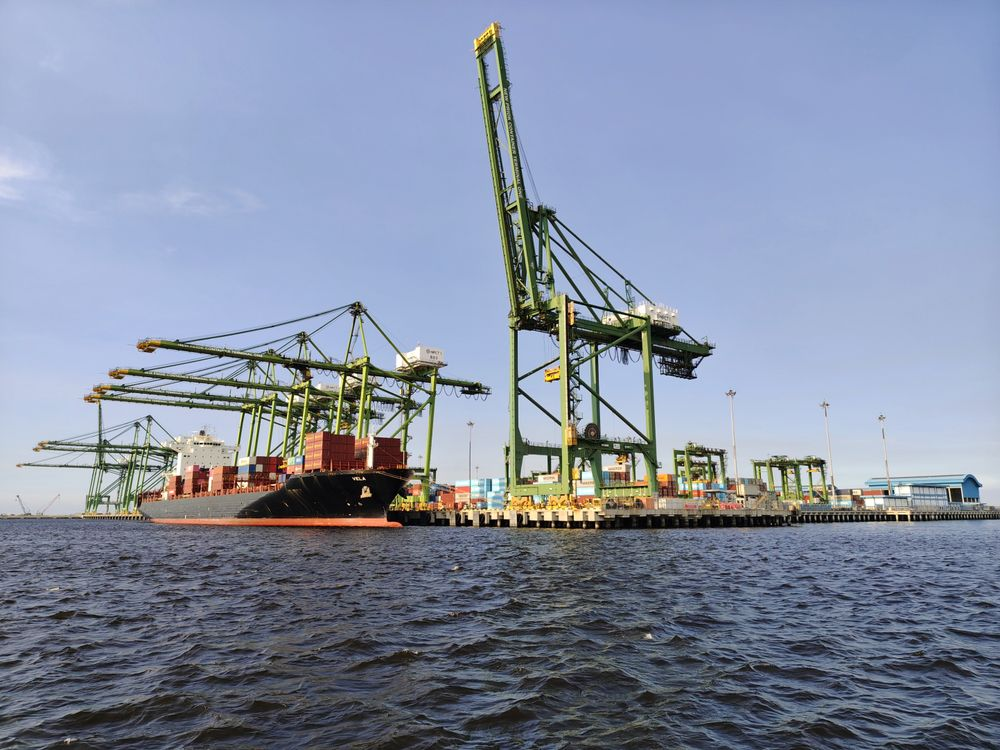
Transport Canada has committed up to C$254 million towards a package of railway, marine, customs and warehousing improvements around the Port of Saint John in New Brunswick. Announced on 21 October, the funding is intended to relieve constraints on cargo moving between the Atlantic gateway and inland North American markets. It is a contribution ceiling, not an audited expenditure figure or the total cost of all associated construction.
The Trade Diversification Corridors Fund contribution will support a partnership involving New Brunswick’s Regional Development Corporation, the Saint John Port Authority, New Brunswick Southern Railway and the provincial Department of Transportation and Infrastructure. Their respective works address different constraints along the route from quayside to inland rail and road networks. The federal contribution is a ceiling for the announced package, not confirmation that construction contracts have been completed or funding fully spent.
Transport Canada expects the combined improvements to support annual container handling capacity of 850,000 to one million twenty-foot equivalent units (TEU). That is a future capability target rather than present throughput or a forecast of actual annual shipments. Quay capacity alone will not deliver it: vessel arrival windows, terminal yards, customs release, truck movements and inland railway departures have to work together if added boxes are to move through the port without longer dwell times.
A 103 km stretch of New Brunswick Southern Railway is to be upgraded using continuously welded rail. The government says the work should raise the mainline operating speed to 64 km/h and improve the movement of containers between Saint John and the Class 1 railways that serve wider North American markets. Continuous welded rail reduces the number of mechanical joints compared with conventional jointed track, although actual train running times will still be influenced by junctions, loading windows, train length and network dispatching.
The port’s rail access also requires protection. Shoreline stabilisation at the Bayshore Rail Terminal is planned to safeguard what the federal announcement calls Saint John’s only rail connection. A failure or prolonged restriction at that point could interrupt inland movements even while ships and cranes were available. Protecting the existing line therefore underpins any later increase in handling capacity; additional containers cannot reliably leave the gateway by rail if the connection itself is vulnerable.
Marine works comprise dredging and rehabilitation of infrastructure that governs access for deeper-draught ships. Transport Canada expects the changes to increase the number of suitable high-water tidal windows by at least 30% for fully loaded vessels at deeper draughts. A tidal window is a period in which the available water depth permits a ship to pass safely; extending the number of such opportunities can reduce the need for a vessel to wait offshore for a later tide. The figure is a projected increase in windows, not a 30% guarantee of additional vessel calls.
The programme also includes expansion and upgrading of warehouse facilities. Warehousing can support consolidation, storage and handling of higher-value goods, while capacity close to the port reduces the number of occasions on which cargo must be moved to a distant site before it is ready for onward transport. The government has linked these works to recent cold chain investment, but has not supplied a new breakdown of warehouse floor area, operating costs or additional refrigerated capacity under this particular funding announcement.
The proposed Canada Border Services Agency container examination facility addresses a separate cause of cargo delay. Containers selected for inspection may require controlled unloading or movement away from the normal release sequence, extending their dwell time. A dedicated examination location should make the process easier to schedule, although inspection volumes, equipment availability and officer staffing will ultimately govern performance. Transport Canada says a portion of 1,000 newly recruited officers will staff the facility; the announcement does not allocate 1,000 officers to Saint John.
The reconstruction of Simms Corner is intended to separate road and railway movements. Physical conflict between trucks and trains can create interruptions at crossing points even when both networks have adequate line capacity elsewhere. Separating flows may make the connection more predictable for hauliers and railway operators, although the announcement does not provide a measured forecast of time saved at this particular junction.
Port Saint John has previously received more than C$76 million through the National Trade Corridors Fund. No unified construction schedule, final total project budget or target year for the 850,000–one million TEU capability was provided on 21 October. The commitment establishes the funding ceiling and the works proposed across several transport interfaces; measured reductions in port delays and increased cargo throughput remain outcomes to be assessed as individual facilities are commissioned.