IN Brief:
- Major road haulage blockades were removed by 23 October and freight distribution resumed.
- The government announced €105.2m in additional diesel tax credits plus temporary leasing payment relief.
- Fuel loading queues and reduced supermarket stocks remained after transport restrictions were lifted.
Road freight movements have resumed across southern Italy after hauliers removed major blockades that had interrupted food, fuel and industrial deliveries. The restrictions were largely cleared by 23 October following additional government support for transport operators, although distribution centres, filling stations and retailers still faced backlogs accumulated during the protests.
The action had affected motorway routes and access to freight facilities across several southern regions, with particularly serious disruption in Campania. Earlier restrictions on food and fuel deliveries had interrupted normal replenishment. Vehicles carrying essential goods were delayed, while shortages at supermarkets and filling stations developed as normal replenishment movements could not reach their destinations. The reopening of roads allowed those deliveries to restart before local inventory levels had fully recovered.
The Italian Ministry of Infrastructure and Transport announced further measures on 22 October, including diesel tax credits and temporary relief for eligible vehicle leasing payments. An additional €45.2 million was allocated to qualifying diesel expenditure between March and August 2026, supplementing €21.2 million already provided for the same period.
A further €60 million was allocated to fuel expenditure incurred from 1 September to 5 October, taking the two newly announced allocations to €105.2 million. These credits offset eligible transport costs for defined periods rather than altering the pump price of diesel or guaranteeing an identical payment to every haulier.
The leasing measure addresses a different financial pressure. Eligible businesses may suspend qualifying payments due between November 2026 and March 2027, with the specified relief extending to 31 March. Postponing those payments can ease cash requirements for businesses using leased vehicles while freight rates and fuel expenditure remain difficult to reconcile.
Both provisions reflect the economics of road transport, where diesel is a substantial variable cost and vehicle finance is often a recurring commitment. A sharp increase in fuel expenditure can reduce margins on journeys priced before the increase, especially for owner-drivers and smaller businesses with limited flexibility to adjust customer contracts quickly.
Following the government decision, protesters began removing motorway roadblocks during the night of 22–23 October. Restrictions near Caserta and Salerno were cleared, and access at the Bausan entrance to the Port of Naples was restored. Earlier descriptions of a continuing Naples blockade were overtaken by the subsequent prefecture statement confirming that the principal restrictions had ended.
Naples prefect Michele Di Bari said the most critical phase was over, while cautioning that operations would take time to return to normal. A small symbolic protest presence remained near the port, but it was not obstructing freight movement. This allowed port access and road distribution to resume without implying that every consequence of the interruption had disappeared.
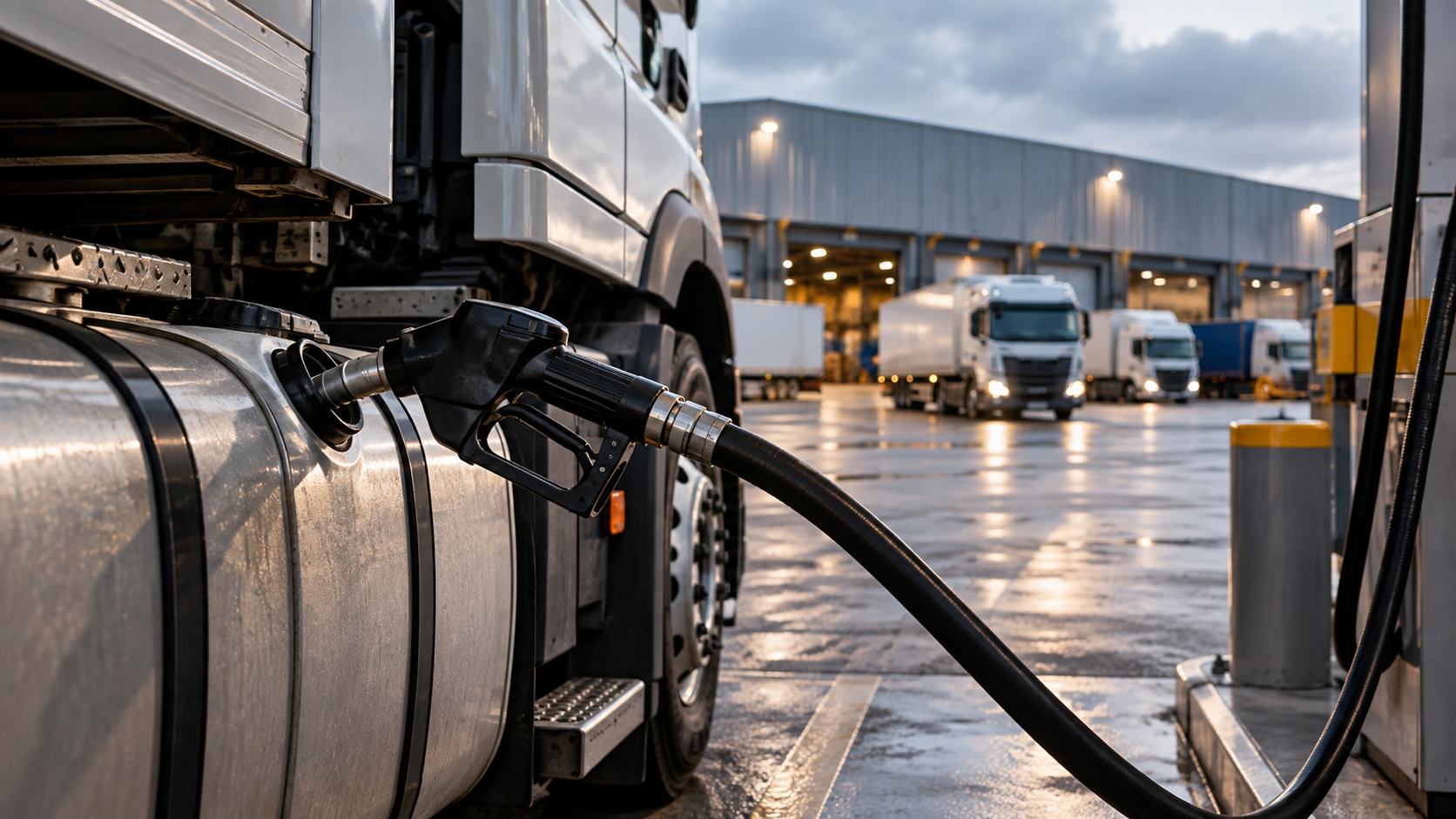
At the same time, approximately 150 trucks were reportedly waiting to load fuel for onward distribution to filling stations in the Naples area. The queue reflected accumulated transport demand after the restrictions, with available loading facilities and vehicle schedules needing to process delayed movements alongside ordinary requirements.
Supermarkets were experiencing similar pressures. Reopening delivery routes enabled carriers to restart consignments from warehouses, but shops with depleted stocks could not immediately restore availability. Distribution centres needed to allocate products and vehicles to delayed orders while receiving facilities adjusted appointments for the returning freight.
Fresh products can be particularly sensitive to such interruptions because remaining commercial life and storage conditions may affect whether a delayed consignment can still be accepted. The available reporting does not establish how much stock was spoiled or permanently lost, so the consequences should be described as disruption and replenishment pressure rather than assigned a speculative loss figure.
Manufacturers also encountered interrupted deliveries of ingredients, components and other materials. Restarting vehicle movements can restore supply, but a plant that has exhausted essential inputs may need to sequence production around the arrival of replacement consignments. No comprehensive timetable has been published for the resumption of every affected industrial operation.
Authorities had arranged escorted movements during the protests to maintain supplies of food, medicines and other essential goods. The Naples prefect reported that approximately 1,050 trucks had been escorted in the city and surrounding province, providing limited continuity even while normal traffic was restricted.
Those priority movements required coordination and did not replace unrestricted commercial distribution capacity. Once the roadblocks were lifted, carriers could resume ordinary routes, although vehicle availability, cargo handling and receiving schedules continued to influence how quickly accumulated work could be cleared.
The government measures eased the immediate confrontation, but transport businesses have continued raising concerns about longer-term operating costs. Further discussions with representatives were scheduled for 27 October. An announced meeting does not itself establish whether the parties will agree further relief or whether all protest organisers consider their concerns resolved.
Reporting through 24 October supports the removal of the principal blockades and the reopening of distribution routes, while leaving local recovery incomplete. Fuel stations, retailers and manufacturers will return to normal operation according to their inventory position and the capacity available to move delayed freight.