IN Brief:
- Port Logistics EBIT guidance is now €100m–€120m, down from €135m–€155m.
- HHLA expects a significant throughput decline while terminal automation commissioning and strike disruption continue.
- Group EBIT guidance falls to €115m–€135m; a separate approximately €12m non-cash impairment affects Logistics.
Hamburger Hafen und Logistik AG (HHLA) has reduced its 2026 earnings expectations after strike disruption and the continuing introduction of automated equipment affected throughput at its Hamburg container terminals. The company’s Port Logistics subgroup is now forecast to generate operating profit of €100 million to €120 million, below the previous €135 million to €155 million range.
Published on 22 October, the disclosure also lowers group earnings before interest and taxes to €115 million to €135 million from the earlier €150 million to €170 million guidance. Separately, HHLA has recognised a non-cash impairment of approximately €12 million in its Logistics segment following a review of investments in newer businesses.
The €35 million reduction at both ends of the group EBIT range reflects several contributing factors, but HHLA has not supplied a numerical allocation between industrial action, automation commissioning and the impairment. Treating the separate accounting charge as a direct cost of new terminal equipment would misrepresent the company’s disclosure.
Container throughput is now expected to decline significantly year on year, replacing the previous expectation of a slight fall. Revenue guidance remains unchanged, with a significant increase still anticipated, while container transport is expected to rise slightly. The different indicators reflect the operating activities measured: terminal throughput covers containers handled at port facilities, whereas transport includes movements through the group’s inland logistics network.
HHLA had already reduced its financial expectations in July, identifying difficult weather, rail infrastructure work and the effect of terminal modernisation on operating capacity. The October adjustment indicates that disruption and the stabilisation of new equipment continued to limit handling performance later in the year.
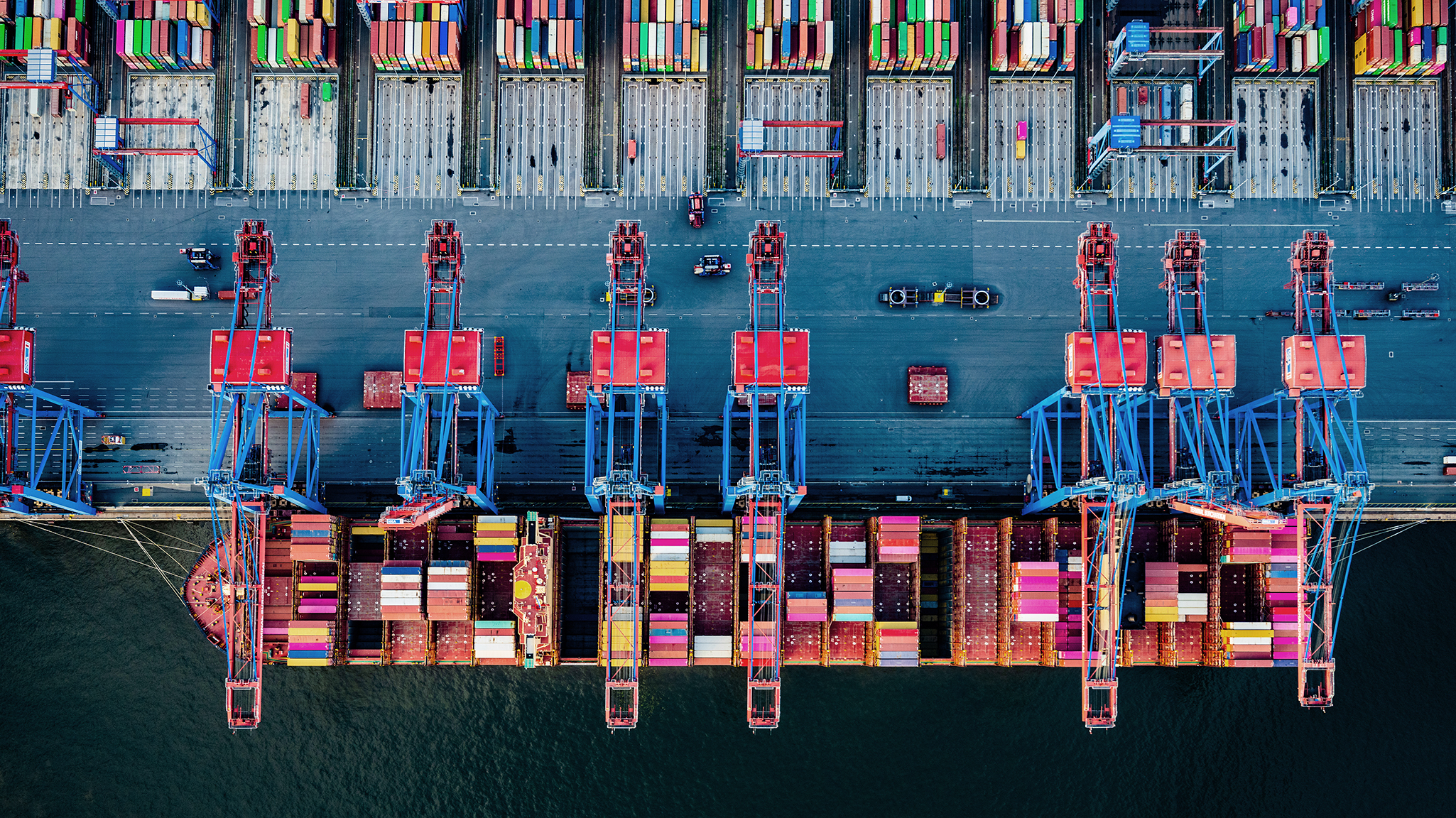
At Container Terminal Burchardkai, automated guided vehicles are being introduced to move containers between quay cranes and storage areas. The vehicles operate as part of a wider handling system, relying on terminal software to assign journeys and coordinate with other equipment. Introducing additional vehicles requires infrastructure and operating arrangements to function together while commercial shipping continues.
During the first half, HHLA reported that AGV operations had extended to berths three and four, while a workshop facility and preparations for additional automated storage crane blocks were progressing. These milestones show ongoing commissioning activity without establishing that every part of the modernised operation has achieved its intended operating capacity.
A container arriving at the quay must be transferred from the vessel, moved to an appropriate storage or dispatch position and made available for onward handling. If any stage is restricted during installation or testing, the effective throughput of the complete operation may fall despite sufficient equipment capacity elsewhere in the terminal.
Container Terminal Altenwerder is undergoing its own programme. Three new dual-trolley quay cranes entered operations in April, and the company reported a stabilisation phase during the first half. It has also introduced remote operation for rail gantry cranes and completed electrification of its hinterland tractor fleet with 20 battery-powered vehicles and supporting charging infrastructure.
At Altenwerder, the equipment changes concern several distinct handling processes, including vessel operations, transport within the site and transfers to rail. Each requires safe coordination with the other processes, and new automated or remotely operated equipment may need a period of testing under actual traffic conditions.
HHLA has not identified one particular machine or software fault responsible for the October guidance reduction. Its broader explanation refers to the continuing automation ramp-up and strike effects, while separate first-half results identify other influences on traffic and profitability, including lower volumes on some trade routes and higher operating expenses.
First-half results recorded container throughput of 2.959 million twenty-foot equivalent units, down 6.7% from the corresponding 2025 period. Container transport fell 1.2% to 985,000 TEU, while revenue rose 3.0% to €910.9 million and group EBIT reached €51.3 million. Those figures show the divergence between revenue and volume performance before the latest outlook change.
Changes in the volume and mix of containers handled can affect terminal earnings through labour, equipment use, storage and other operating requirements. Revenue can increase while profit falls where handling costs rise or the operation cannot achieve expected efficiencies. The published accounts do not provide a complete assignment of those effects to individual terminal programmes.
Separately, the approximately €12 million impairment concerns investments in new and spin-off activities within Logistics, where a review reduced the recognised value of those interests. It has no direct equivalence to a cash payment for new cranes, vehicles or terminal software, and must remain separate from the description of commissioning difficulties.
HHLA continues developing automated and electrically powered terminal operations while maintaining intermodal services linking ports and inland destinations. The near-term operational challenge is stabilising those handling systems sufficiently to serve the traffic arriving at Hamburg without the additional restrictions experienced during commissioning.
Its unchanged revenue and inland transport expectations sit alongside a weaker outlook for port throughput and profit. The remaining months of 2026 will determine whether operating conditions improve enough for HHLA to achieve the revised guidance range.