IN Brief:
- Albion Fine Foods uses Webfleet and Prolius across an operation comprising 45 HGVs and 90 vans.
- Live refrigerated-vehicle temperature records and remote tachograph downloads support delivery auditing and compliance checks.
- Albion reports claims cost per vehicle down 74% and claim numbers down one third in the six months to 31 March 2026.
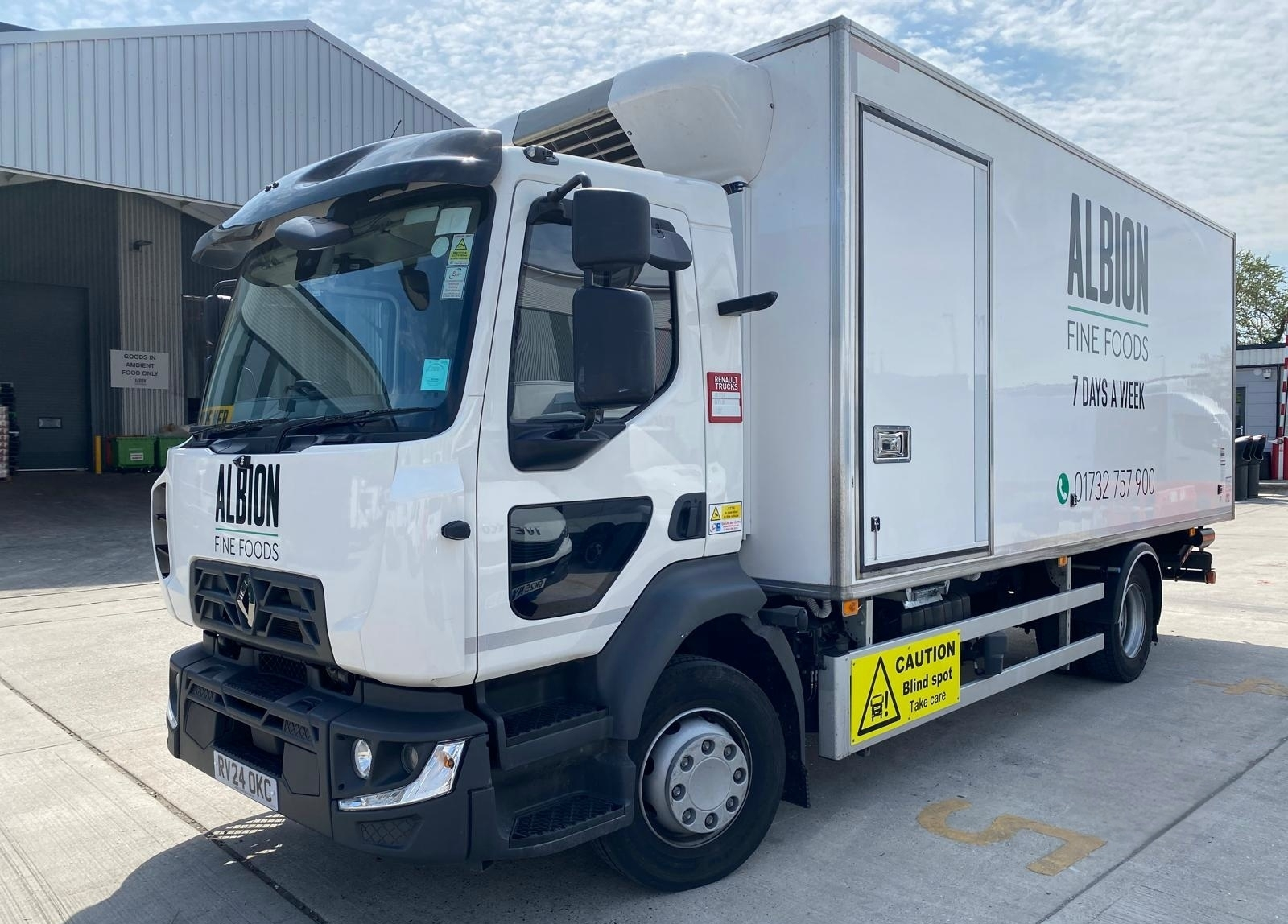
Albion Fine Foods has integrated vehicle tracking and temperature monitoring into its refrigerated distribution operation, using Webfleet alongside Prolius fleet management software. The Dartford-based food supplier operates 45 heavy goods vehicles and 90 vans delivering fresh, chilled and frozen produce to hospitality customers. The systems combine live vehicle information, refrigerated delivery records, driver compliance data and incident-handling workflows across the company’s UK network.
The business serves chefs, restaurants, hotels and other food-service customers from Dartford and satellite depots in Stoke, Chippenham and Aylesbury. A refrigerated delivery route may involve several customers, varying stop durations and different products, so a problem identified at the end of a shift can be difficult to reconstruct from paper records alone. Albion’s connected setup is intended to give its transport office vehicle location, temperature information and compliance status while the delivery is still under way.
Webfleet supplies vehicle location and movement data, while Prolius combines that information with driver and vehicle workflows in one back-office view. If a van breaks down or a lorry suffers a tyre failure, the incident can be managed in Prolius with the current location available from Webfleet. The integration can flag exceptions when a vehicle moves without a completed safety check or is operated despite a recorded roadworthiness concern. Such alerts are prompts for investigation; the software cannot carry out an inspection or establish a vehicle’s mechanical condition by itself.
Temperature readings are available during refrigerated journeys, including those made by smaller vans fitted with onboard logging equipment. Albion previously depended on temperature printouts and sometimes discovered a recording problem only when a driver was asked to produce one. Live visibility gives the transport team an opportunity to contact the driver when a deviation appears, examine the circumstances and decide how to handle the consignment before the vehicle reaches its destination.
A refrigeration unit’s displayed set point does not by itself verify the temperatures experienced by every product in the load. Sensor position, calibration, door openings and the length of any deviation affect how the readings should be interpreted. A temperature history is useful evidence for identifying when conditions changed; it is not a laboratory test of food condition. Where several orders share a vehicle, the recorded journey must still be matched to the goods, collection and handover concerned.
Customers can also request historical temperature information for a previous delivery. The system gives Albion a digital audit trail associated with the relevant vehicle and journey, reducing reliance on retrieving physical records after an enquiry. That record can assist internal checks and customer assurance, although it does not remove the need to trace which consignments were carried on the journey. Matching the temperature series to the correct load, departure, arrival and handover remains an operational control.
Remote tachograph downloads give Albion’s HGV team more regular access to driving and working-time records, supporting the investigation of possible compliance exceptions. Vtec Solutions’ FLEETiQ reporting adds analysis of Webfleet data covering driving behaviour, idling and wasted fuel. These reports can reveal patterns across journeys and drivers, but do not establish that an individual driver has breached a rule or that a particular volume of fuel has been saved without further assessment.
Albion also uses a MANTIS vehicle camera system to capture evidence when a road traffic incident occurs. A recording can help establish sequence and circumstances where an insurance claim is disputed, especially on congested urban routes, although relevant footage still has to be retained and reviewed. The company has linked the availability of camera evidence to its approach to managing claims, without isolating how much of the reported improvement came from cameras rather than other operational changes.
Albion says claims cost per vehicle fell by 74% and the number of claims dropped by one third during the six months to 31 March 2026, compared with the corresponding period a year earlier. These are company-reported claims figures, not a controlled assessment of the telematics rollout. The operator has not disclosed the underlying claims expenditure, insurer adjustments or a causal breakdown between fleet monitoring, driver practices and camera evidence. The result should therefore be reported as an observed comparison, not a saving attributable solely to Webfleet or Prolius.
The connected records leave the operator with three different forms of evidence: live alerts for immediate action, vehicle histories for later customer enquiries and video or compliance records for disputed events. Their usefulness rests on the accuracy of the sensors, the response to exceptions and matching the right data to the right vehicle and load. Albion has not disclosed a project cost, a quantified reduction in food spoilage or a measure of refrigeration energy use, so the claims statistics remain the only financial outcome reported in the announcement.