IN Brief:
- Evergreen's 16,556-TEU EVER EON transited the Suez Canal on 8 November while travelling from the Netherlands towards Singapore.
- The vessel operates within Ocean Alliance's NEU7 service, connecting Northwest European and Far Eastern ports.
- Further Evergreen transits are planned, although the completed passage does not establish a full restoration of the carrier's Suez network.
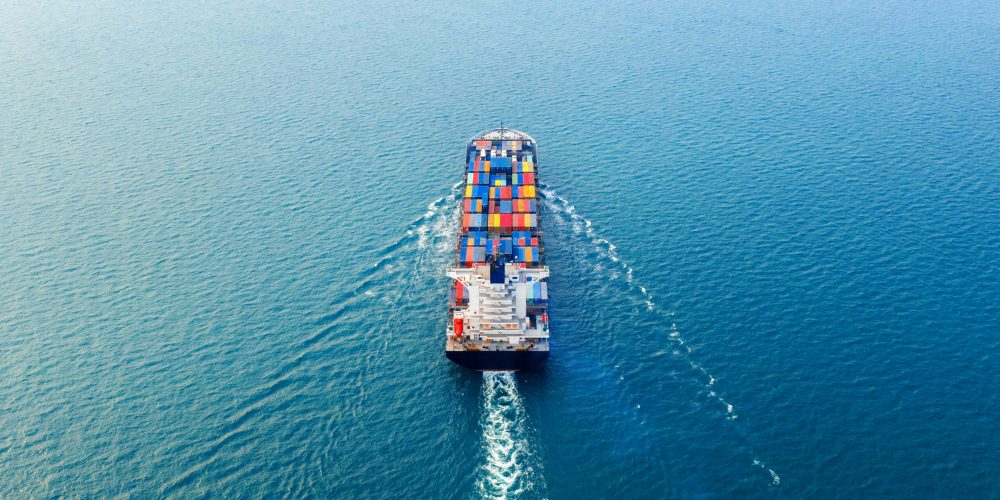
Evergreen has resumed transits through the Suez Canal after nearly three years, with the 16,556-TEU container vessel EVER EON completing a passage on 8 November. The ship was travelling from the Netherlands towards Singapore when it entered the Egyptian waterway, providing a confirmed operational step in the carrier’s return to a route disrupted by the Red Sea security crisis.
The Suez Canal Authority confirmed the movement on Sunday, identifying EVER EON as the first vessel in Evergreen’s renewed canal transit programme. The ship measures 369 metres in length and 53.6 metres across its beam, with nominal capacity for 16,556 twenty-foot equivalent units (TEU). It is deployed on Ocean Alliance’s NEU7 service, which connects major Far Eastern ports with Northwest Europe.
Evergreen intends to schedule additional canal passages, according to the authority, although the number of forthcoming voyages and their precise operating arrangements have not been confirmed. The completed transit therefore establishes the carrier’s return to the waterway without demonstrating that all previously diverted services have resumed their original routing.
Shipping companies have been reconsidering Suez passages following the prolonged disruption that diverted numerous vessels around the Cape of Good Hope. The longer route became a substantial element of Asia–Europe container service planning, affecting the number of ships required to maintain scheduled departures and the movement of equipment between major trading regions. A return to the canal changes those calculations, but individual service structures must be adjusted before the effects become visible across an entire network.
The Suez Canal Authority has identified CMA CGM, Maersk, MSC, Hapag-Lloyd, and COSCO among the carriers that have restored selected maritime services through the canal. Their movements have taken place through different operating arrangements rather than a simultaneous return by every shipping line. Evergreen’s completed passage adds another large carrier to that process, while leaving the status of individual routes dependent on their published schedules.
Earlier preparations for additional canal transits had involved revisions to vessel rotations and proposed passage dates. The EVER EON movement provides confirmation that one of the planned operations has been completed, distinguishing it from a service announcement that remains subject to subsequent execution.
The distance between Asian and European ports can be substantially shorter through Suez than around southern Africa. The actual saving varies with the origin, destination, intermediate calls, and operating speed of the vessel. A shorter route can reduce the sea time required for an individual voyage and the associated consumption of propulsion fuel, provided other operating conditions remain comparable.
Those differences feed into the organisation of scheduled container services. A weekly service requires enough vessels to cover the complete round voyage while maintaining the intended interval between departures. When a route becomes longer, carriers may need to deploy additional ships, increase speed, or revise the timetable. Shortening the voyage through Suez potentially releases capacity from that cycle, but changes to the vessel fleet depend on the wider rotation rather than one completed transit.
Ocean Alliance’s NEU7 service also involves coordinated operations across multiple ports. Its ships must arrive within agreed terminal windows, discharge and load containers, and maintain connections with subsequent services. A routing adjustment can change arrival times at several ports, even where the number of weekly departures remains unchanged. The service must therefore be considered as a connected operating cycle rather than a collection of independent voyages.
Container availability introduces another consideration. Loaded boxes arriving at import destinations must be collected and emptied before they can be returned to the carrier’s equipment pool or repositioned for another export movement. Changing transit duration affects the timing of those flows, particularly where shipping lines have organised their current container inventories around longer Cape voyages.
For cargo already booked, the applicable vessel schedule remains the operational reference. A confirmed canal transit does not establish that every sailing on the same service will follow an identical route or reach its destination on the same revised timetable. Container discharge dates, terminal collection arrangements, and onward inland transport bookings still depend on the schedule assigned to each consignment.
The decision to operate through Suez also remains linked to security assessments covering the Red Sea and surrounding maritime approaches. Attacks on merchant shipping prompted the original diversions, and individual carriers continue to determine their operating arrangements in response to conditions affecting their vessels. The completion of EVER EON’s passage does not establish that those risks have been removed from every route.
The canal authority has described the renewed movements as part of the recovery of East–West maritime traffic. Operational confirmation will depend on repeated passages, the regularity of scheduled services, and subsequent adjustments to vessel deployment. A single successful transit cannot establish the total capacity that will ultimately return to the route.
EVER EON’s movement nonetheless provides a specific milestone: a large container vessel operating on a major Asia–Europe service has completed a journey through the canal after a prolonged absence by its carrier. The next Evergreen passages will establish whether this becomes a regular service pattern and how the company incorporates Suez routing into its wider network.