IN Brief:
- The 15,516-TEU Maersk Cincinnati struck a ship-to-shore crane at Yantian berth 12 on 9 November.
- Images reported by maritime sources show the structure collapsed towards the container yard; the extent of damage remains unconfirmed.
- Neither the carrier nor terminal had issued a detailed operational assessment in the reporting checked for this draft.
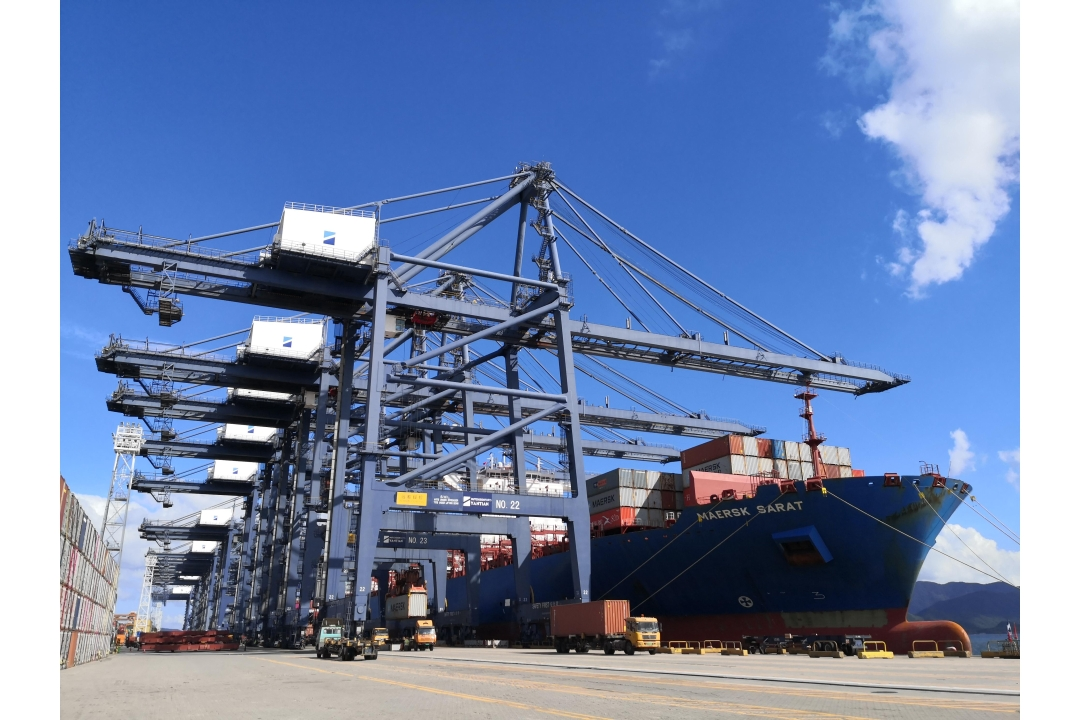
A container ship operated by Maersk struck a ship-to-shore crane while berthing at Yantian International Container Terminals in Shenzhen on 9 November. The structure collapsed towards the container yard, according to images and accounts published by maritime sources. The collision occurred at berth 12, but neither the carrier nor the terminal operator had issued a detailed account of the damage or cargo-handling implications in the reporting available for this draft.
The vessel, Maersk Cincinnati, is 366 metres long and has a nominal capacity of 15,516 twenty-foot equivalent units (TEU). It was operating voyage 645W on the Gemini Cooperation’s Asia–North Europe network. Maritime reporting places the collision at around midday in Shenzhen, during the berthing manoeuvre. The photographs establish that a crane came down; they do not independently establish the cause of the impact or the condition of the remainder of the berth.
No injuries have been confirmed in the available reporting, although the absence of confirmation does not establish that nobody was hurt. Neither the extent of any damage to the ship nor the condition of other quay cranes has been established. Reports that the vessel remained alongside on 10 November describe its position at that point, rather than confirming a terminal-wide closure or the number of delayed containers. A change in the ship’s subsequent sailing schedule would also require confirmation against a current carrier advisory.
Yantian handles long-distance container services serving manufacturing and distribution networks across the Pearl River Delta. Export containers may be delivered, cleared, and assigned to a particular sailing several days before the vessel arrives. Import containers are similarly linked to release instructions and inland transport appointments. A serious incident on an operating berth can therefore require changes to planned container exchanges, depending on which handling equipment and parts of the terminal remain available.
Ship-to-shore cranes move along rails on the quay and use a waterside boom to extend lifting equipment over container stacks aboard a vessel. The spreader is lowered onto a container, locked to its corner castings, and lifted before the load is transferred between ship and shore. The crane’s running gear, structure, electrical systems, and the movement of ground vehicles form a connected handling operation; an obstruction or damaged section can prevent work in the affected area.
Where part of a crane has collapsed, recovery planning ordinarily starts with establishing the stability of the remaining steelwork and securing the working area. Inspection may then cover crane rails, quay fixtures, power connections, and equipment that was close to the structure at the time of impact. These are general engineering considerations, not steps confirmed by Yantian. No verified repair scope or timetable has been released for the 9 November incident.
The position of a large ship beside damaged equipment can complicate access for surveyors and lifting contractors. Any movement of the vessel or dismantling of the structure must be coordinated with the berth operator and marine authorities, taking account of mooring conditions and safe working clearances. Whether the Maersk Cincinnati needs to be moved before recovery work is an open question because the operator has not published a recovery plan.
Alternative cranes or berths may provide options for handling displaced cargo, although their availability cannot be assumed. A substitute crane needs sufficient outreach for the vessel and the correct connection to the terminal’s transport systems. Quay slots are also shared with other scheduled ships. The number of unaffected cranes at the relevant berths and the availability of substitute handling capacity have not been disclosed.
The impact on shippers depends on the stage reached in the vessel’s loading and discharging programme. Export shipments already loaded aboard the ship would be in a different position from containers still awaiting transfer from the yard. Inbound containers that had not yet been discharged might require a revised collection appointment. Freight forwarders would need a specific carrier or terminal instruction before treating a booking as rolled or amending onward transport.
Yard sequencing can be affected even when physical damage is confined to a single berth. Container stacks are organised around planned vessel moves, and the movement of terminal tractors and other equipment needs to follow the revised loading sequence. Reassigning crane time or a vessel window may require changes to that plan. The available reporting does not establish that these adjustments have occurred at Yantian or quantify any delay arising from the collision.
Weather conditions were raised in the initial reporting. Shenzhen’s meteorological authorities issued a monsoon warning on the morning of 9 November, with strong gusts forecast for the Yantian area. Wind can influence the control of a large vessel during a berthing manoeuvre, but the warning alone does not show that wind caused this collision. No investigation finding has been published attributing the impact to weather, vessel handling, or equipment condition.
Berthing a vessel of this size requires coordination between its bridge team, pilotage arrangements, mooring personnel, and the terminal. Clearance from the quay, the position of cranes, vessel movement, and local wind and current conditions all form part of the operating environment. The detailed circumstances of the approach at berth 12 have not been established, so attributing a particular failure to any one participant would be premature.
The terminal experienced a different quay-crane accident in September 2024 involving the smaller MSC Riona at berth two. That event provides historical context for the type of equipment involved, but it was a separate accident at a different berth. The two incidents cannot be treated as evidence of a common cause without technical findings connecting them.
Outstanding questions concern personnel safety, the status of berth 12, the availability of handling equipment, and the vessel’s confirmed onward movements. Updated guidance from Maersk or Yantian would establish whether collection, delivery, or booking arrangements need changing. The available facts do not support a repair cost, a reopening date, or an estimate of the number of containers affected.