IN Brief:
- Radiant Logistics reported fiscal first-quarter revenue of $279.8m, up 23.4%, and gross profit of $66.3m, up 16.1%.
- Adjusted EBITDA increased 79.4% to $12.2m, supported by international air freight, intermodal transport, and US road brokerage.
- The group has more than 150 active Navegate customers and completed a Dallas brokerage acquisition after the reporting quarter ended.
Radiant Logistics has reported a 23.4% increase in first-quarter revenue to $279.8m, with stronger freight forwarding, intermodal transport, and road brokerage activity contributing to improved profitability. The US logistics group generated gross profit of $66.3m for the three months ended 30 September 2026, compared with $57.1m in the corresponding period a year earlier.
The results cover the first quarter of Radiant’s 2027 financial year. Revenue rose by $53.1m from $226.7m, while gross profit increased 16.1%. Adjusted gross profit, a non-GAAP measure used by the company to assess transport-related operating performance, reached $68.6m, up 15.3% from $59.5m.
Adjusted earnings before interest, tax, depreciation, and amortisation (EBITDA) increased 79.4% to $12.2m from $6.8m. The company’s adjusted EBITDA margin, calculated against adjusted gross profit rather than total revenue, rose to 17.7% from 11.4%. The distinction is necessary because the stated margin is not the proportion of total revenue represented by adjusted EBITDA.
Reported net income attributable to Radiant increased to $6.1m, compared with $1.3m a year earlier. Adjusted net income rose to $8.6m from $4.5m. These adjusted figures exclude specified items and should be distinguished from the company’s statutory results, which account for the full set of recognised income and expenses.
Radiant’s gross profit as a proportion of revenue actually declined, from 25.2% to 23.7%, despite the increase in total gross profit. Adjusted gross profit as a proportion of revenue also fell, from 26.2% to 24.5%. The improvement in adjusted EBITDA margin therefore reflects changes further down the operating cost structure rather than a general increase in every profitability measure.
Management attributed part of the stronger adjusted EBITDA performance to lower selling, general, and administrative expenses relative to adjusted gross profit. The comparison also benefited from the absence of a $1.3m credit loss associated with the First Brands bankruptcy that affected the prior-year period. Radiant identified the consolidation of its transportation management systems as another contributor to the operating leverage reported during the quarter.
US operations accounted for much of the improvement, with their adjusted EBITDA more than doubling. International air freight, intermodal services, and over-the-road brokerage were among the strongest activities. These businesses arrange transport across different carrier networks and equipment types, allowing the group to serve shipments requiring varied transit times, routes, and handling arrangements.
Air freight performance was partly supported by disaster relief shipments following typhoon activity in the Western Pacific earlier in 2026. Those movements contributed to the quarter’s activity, although Radiant has not disclosed a separate revenue or profit figure attributable to relief operations. The result therefore includes demand associated with a specific disruption rather than only routine commercial shipments.
Domestic road freight conditions also influenced the quarter. Radiant reported that capacity had continued to leave sections of the North American truckload and intermodal markets, reflecting carrier exits, tighter driver availability, and the adjustment of fleets expanded during previous periods of stronger demand. Tender rejections remained elevated, while contract rates had increased compared with the previous year.
Those conditions affect the commercial arrangements of freight brokers, which secure transport from carriers on behalf of customers. The price charged to a shipper and the cost of purchasing carrier capacity can change at different rates, depending on existing contracts, local demand, and equipment availability. Higher published freight rates do not therefore translate automatically into higher brokerage profits.
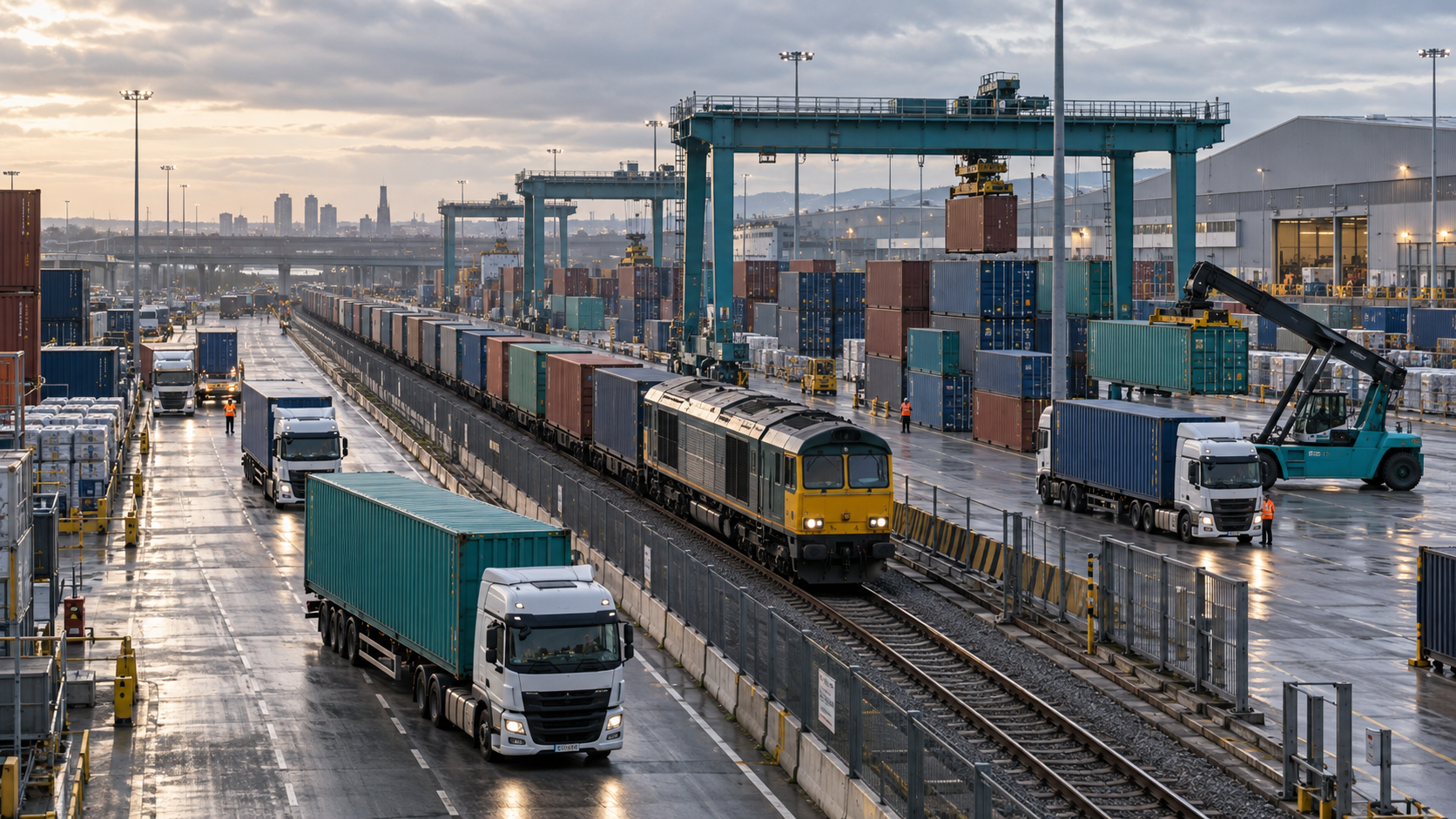
Radiant also described an increase in some longer-haul freight movements shifting towards intermodal transport. Intermodal services combine rail for part of the journey with road transport and terminal handling at either end. Their suitability depends on the locations served, rail schedules, available containers or trailers, and the delivery requirements of the consignment. Such movements form part of the group’s combined road and rail brokerage offering.
The company expanded that brokerage business in August through an independent agent programme, initially involving two agency owners. The model gives participating agents access to Radiant’s carrier network, technology, and administrative support. It extends an approach already used in freight forwarding into domestic road and intermodal operations, although the company has not quantified the revenue contribution attributable to the new programme.
Radiant also acquired the Dallas operations of Whitacre Logistics Services through Radiant Road & Rail, effective 1 October. The acquired business handles intermodal and road brokerage serving customers in industrial manufacturing, building materials, packaging, and related markets. Because the transaction became effective after the 30 September quarter-end, it did not contribute to the reported first-quarter results.
Technology activity continued through Radiant’s Navegate supply chain platform, which now has more than 150 active customers. One enterprise customer manages more than 1,500 vendors through the system, whose users booked more than 7,500 shipments during the quarter. Those figures describe a particular customer’s activity, not average usage across every organisation subscribing to Navegate.
The platform provides tools for coordinating shipments and managing information across suppliers and logistics providers. Its use can bring booking and shipment records into a common system, but operational performance remains dependent on the accuracy of the information supplied and the way participating businesses handle exceptions. Radiant has not disclosed a measured reduction in transport costs or processing time directly attributable to the latest growth in Navegate usage.
In August, Radiant extended its $200m revolving credit facility to August 2031 and increased the additional borrowing provision available for acquisitions from $75m to $100m. At 30 September, the company reported $25m drawn against the facility and $27.8m in cash, leaving it with no net debt on the measure used in its financial reporting.
International trading conditions remain a constraint on the business. Radiant identified maritime disruption in the Middle East, elevated fuel costs, and changing US tariff requirements among the factors affecting freight movements and compliance activity. Its future performance will reflect the persistence of domestic transport demand, the contribution of subsequent acquisitions, and the costs associated with arranging capacity across different international networks.