IN Brief:
- Construction and structural assembly are under way on a 55,000 sq m Lidl logistics building at Barcelona ZAL Port, with operation targeted for mid-2027.
- CILSA reports an investment of €42.1m, a 99,135 sq m plot and a planned 15-metre clear internal warehouse height.
- The building would increase Lidl’s occupied floor area at ZAL Port from 110,000 to 165,000 sq m for non-food distribution in southern Europe.
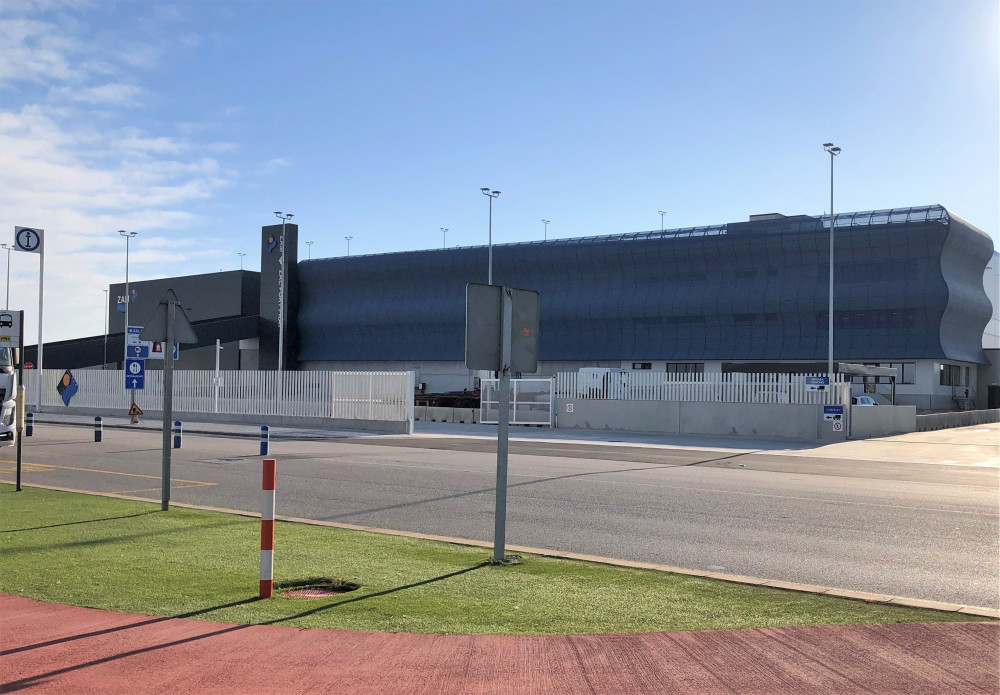
Lidl is expanding its southern European non-food distribution operation after structural work began on a 55,000 sq m warehouse at Barcelona’s ZAL Port. CILSA, the logistics park’s operator and developer, is delivering the €42.1m project on land in El Prat de Llobregat. The facility is expected to enter operation in mid-2027, although its final handling capacity and equipment specification have not been published.
Structural assembly is now under way following the completion of deep piled foundations in September. The Port of Barcelona and Lidl reported that progress on 9 November, providing a new construction milestone. Permissions and the initial site arrangements were settled earlier, including a port concession in June 2025, and should not be represented as newly awarded contracts.
When commissioned, the new warehouse will increase Lidl’s occupied operational area within ZAL Port from 110,000 sq m to 165,000 sq m. The 50% expansion will complement two existing facilities and make Lidl the largest private occupier in the logistics park by floor area, according to the Port of Barcelona and the company.
CILSA is developing the building on a 99,135 sq m site. The warehouse itself will provide 55,000 sq m of logistics floor area and a planned clear internal height of 15 metres, the highest within ZAL Port. The building footprint, the larger plot and the available internal height measure different aspects of the development; none alone establishes how many pallets or product units it will accommodate.
The unusually high clear interior creates scope for vertical storage, but the number of usable levels depends on the racking configuration, aisle widths, fire protection, lifting equipment and product load characteristics. No confirmed pallet-position count, automated storage system or daily throughput target appears in the 9 November information. The reported 50% expansion is therefore an increase in occupied floor area, not a verified 50% improvement in order processing.
Lidl will incorporate the new building into its existing non-food logistics operation for southern Europe. Non-food inventories can contain widely varying product dimensions and seasonal ranges, creating storage and replenishment requirements distinct from the retailer’s temperature-controlled grocery flows. The announcement does not establish the precise future allocation of goods between Lidl’s three sites at the park.
The ZAL Port location places the facilities close to the Hutchison Ports BEST container terminal. Lidl and the port authority expect that proximity to help coordinate imported merchandise with services provided by Tailwind Shipping Lines, the shipping business within Lidl’s wider group. Shorter distances between terminal and warehouse can simplify the physical transfer, but do not remove customs clearance, terminal release or road handling requirements.
Cargo arriving at a container terminal must be discharged, cleared for release and transferred before it becomes available for warehouse operations. The practical benefit of a nearby distribution building will depend on berth schedules, gate access, road capacity and the receiving system at the completed site. Neither Lidl nor the port authority has supplied measured future savings in handling cost or transport time.
The 2025 port concession gives CILSA 34 years of administrative rights over the property. The logistics developer also has a binding lease with Lidl for an initial 15 years, with options for extension. Both agreements predate this week’s construction milestone, and the agreed terms should not be confused with the target period for completing the building.
CILSA’s concession, the Lidl lease and the works programme each serve a separate purpose. The concession governs the development of port land, the lease provides for the proposed commercial occupancy, and the construction programme sets out the work needed before that occupancy can begin. Actual commissioning will also require appropriate warehouse equipment, operating systems and safety checks.
Port and company information places the project at the structural assembly stage in November, after completion of the deep foundations in September. This is more advanced than the earlier planning and lease commitments but still short of equipment installation, commissioning and the movement of stock. The mid-2027 operating target remains prospective rather than a confirmed handover date.
The €42.1m investment figure remains the amount associated with the project in both the 2025 port documents and the November update. No new spending total has been published for the structural works, and the earlier concession should not be counted as a separate second warehouse investment. Fit-out spending, staffing arrangements and expected handling costs were not specified.
Albert Lavín, director general of expansion and property at Lidl Spain, described the project as a way to reinforce the group’s southern European non-food distribution centre. His comments relate to a larger operation within an established logistics complex rather than the creation of an entirely new regional supply network.
CILSA says that completing this facility will exhaust the remaining available logistics development land at ZAL Port. Its director general, Jordi Guerrero, connects the project with Lidl’s long-term occupation of the site. For the port estate, this means future capacity increases may depend more heavily on the use of developed space than on access to additional undeveloped plots.
When the building is operational, order-handling capacity will depend on goods receipt arrangements, storage equipment, picking processes and dispatch resources, as well as available floor area. The project partners have not published a planned number of loading bays, operating shifts or pallets handled per day. Those missing specifications prevent a defensible calculation of the facility’s final throughput.
As of 9 November, deep foundations were complete and structural assembly had begun. The mid-2027 operational target remains prospective, with stock commissioning and the detailed equipment layout still to be confirmed. The firm commitments are the expansion of warehouse floor area and the associated investment, rather than any stated reduction in delivery time or increase in inventory turnover.