IN Brief:
- The Supply Chain Integrity & Fraud solution launched on 10 November, combining Quantexa entity resolution with PwC supply chain risk services.
- Its graph analysis and scoring tools link internal procurement and financial records to external intelligence, with investigations and Power BI reporting.
- Quantexa and PwC report existing deployments in Europe and North America but have not supplied independently assessed customer performance measures.
Quantexa and PwC have launched Supply Chain Integrity & Fraud, a supplier intelligence platform designed to connect purchasing records, business identities and external information across complex procurement networks. Introduced on 10 November, the system combines Quantexa’s entity resolution and network analysis technology with PwC’s investigative services, using Microsoft Azure to support data processing and the monitoring of financial, compliance and operational exposure.
The software combines Quantexa’s entity resolution and graph analytics capabilities with PwC’s supply chain risk and investigative services. Internal procurement and financial records can be linked with third-party intelligence, creating a contextual view of suppliers, intermediaries, counterparties and their relationships. The parties say the product is available internationally through PwC member firms and can be deployed locally or hosted by PwC.
A procurement ledger normally records the legal or trading identity used for an individual transaction. It may not show whether a manufacturer, regional distributor and payment intermediary are linked by ownership, a shared director, or another commercial relationship. Different spellings, historical company names and repeated addresses can also leave related records separated across purchasing, accounting and supplier management systems. The platform is designed to join these records before analysts assess the connected network.
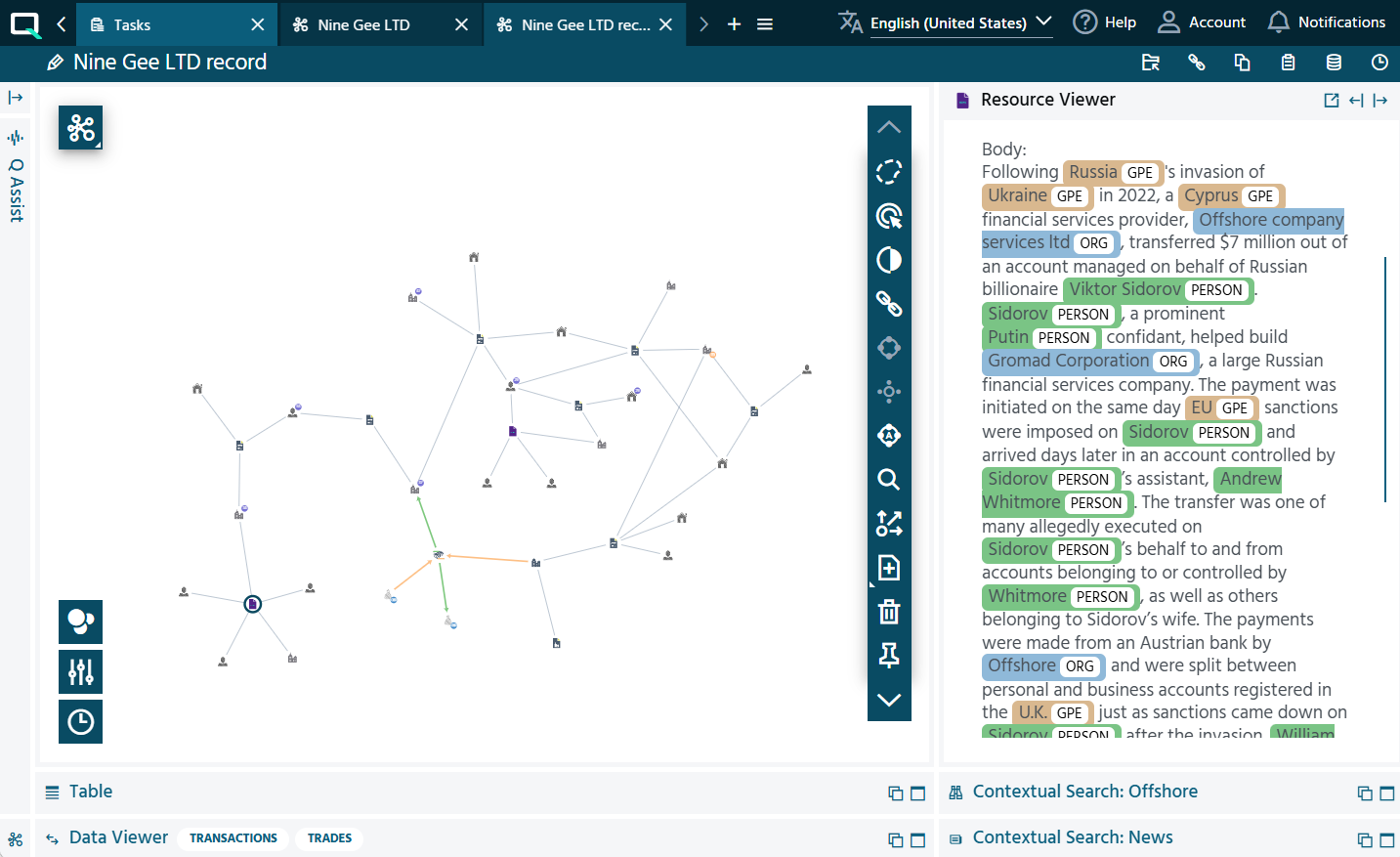
Quantexa’s entity resolution software compares multiple identifiers and contextual attributes to establish whether records refer to the same organisation or connected parties. Once identities are reconciled, graph analysis maps links between suppliers, intermediaries, counterparties and other entities. This can expose a relationship several steps removed from a company’s direct contractual supplier, where the relevant records are available for analysis.
Quantexa says the platform combines procurement and financial information with external sources to produce continuous monitoring and automated scoring across compliance, financial and operational risks. The new solution also incorporates investigation and escalation workflows, together with Microsoft Power BI dashboards intended to provide an executive view of the findings.
A risk score draws attention to a pattern or association that requires examination; it is not proof of fraud. Analysts need access to the underlying documents, the nature of the relationship and any relevant regulatory test before deciding whether a supplier can continue to receive orders. Combining network analysis with investigation workflows means that an alert can be assigned and reviewed without losing its supporting records.
Ross Aubrey, global head of supply chain intelligence at Quantexa, said: “Hidden risk emerges in the connections between suppliers, not in individual records.” His observation describes the operating assumption behind the product: a direct supplier check may miss risks that lie with an upstream organisation, a common intermediary or another connected entity.
The software is intended for industries whose purchasing structures extend through contract manufacturers, distributors, service providers and raw-material suppliers. Quantexa names manufacturing, fast-moving consumer goods, energy, mining, healthcare and pharmaceuticals among the target sectors. In such networks, a buyer may have contracts with only the first tier despite substantial dependencies further upstream, including suppliers of materials that are difficult to replace quickly.
Sanctions and trade compliance checks can change when the ownership or location of a company in the network changes. A purchasing department may need to reassess a long-standing supplier if newly available intelligence connects it to a restricted party, a conflict of interest or an adverse financial event. Environmental and labour due diligence can require similar scrutiny beyond the immediate invoice counterparty.
Quantexa and PwC have incorporated escalation and case management into the solution, linking risk alerts to the people authorised to investigate them. The distinction between identifying an exposure and making a procurement decision remains important: a temporary pause, enhanced due diligence or supplier substitution requires the purchasing organisation’s own authority and supporting evidence.
Craig Fitzpatrick, partner at PwC, said the system is intended to help organisations “strengthen due diligence, and make confident procurement decisions at scale.” Quantexa and PwC report that several large retailers, beverage distributors and logistics companies across North America and Europe already use the solution. They have not named those customers or published deployment-specific measures of risk detection accuracy, time saved or successful intervention.
PwC’s 2025 Digital Trends in Operations Survey found that 91% of surveyed supply chain leaders said trade policy changes and geopolitical risks were driving significant strategy changes, while 92% reported that technology investments had not fully delivered their required visibility and risk management. Its 2024 Global Economic Crime Survey also identified a 42% gap in third-party risk programmes or risk scoring. These results describe the survey populations rather than the performance of Quantexa’s new platform.
The companies say pilot deployments can be delivered within weeks, with installations available locally or through PwC hosting. The scope of a customer’s supplier map still depends on the quality of master records, the availability of third-party ownership and risk intelligence, and the process used to confirm a flagged relationship. A fast technical deployment does not establish that every upstream supplier is visible from the outset.
Microsoft Azure supplies the infrastructure used for the integrated service. The announced components include Microsoft Foundry, Fabric, OneLake, Azure Kubernetes Service, Containers and Azure Database for PostgreSQL. These services provide data integration, storage, computing and application infrastructure; Quantexa’s identity and graph capabilities support the supplier analysis, while PwC contributes risk investigation and compliance expertise.
Access controls must be set around purchasing records, commercial contracts and investigative findings, particularly when the system draws data from subsidiaries or suppliers in more than one jurisdiction. Quantexa has not specified a single data residency arrangement or uniform set of external data feeds for every customer, so organisations must establish those parameters for the configuration they select.
Supply Chain Integrity & Fraud is available internationally through PwC member firms and is listed on Microsoft Marketplace. Its adoption among named customers, and evidence of investigations leading to changes in sourcing or compliance decisions, will provide a more precise measure of the system’s effectiveness than the scope of the network it is designed to analyse.