IN Brief:
- Lytica introduced the Direct Sourcing Experience on 10 November 2026, joining electronic component pricing, supplier risk and purchasing workflows.
- The software uses aggregated buyer transaction information and specialist AI assistants named Lisa, Neo and Rik to support supplier evaluation and sourcing decisions.
- Strategic sourcing and new product introduction functions are available, while customers retain responsibility for qualifying components and authorising purchasing changes.
Lytica has launched the Direct Sourcing Experience (DSX), connecting electronic component pricing intelligence, supplier risk information and guided procurement workflows in a single software environment. Introduced on 10 November, the system is intended to help sourcing teams evaluate supplier quotations, prepare negotiations and consider component alternatives before a new product enters production.
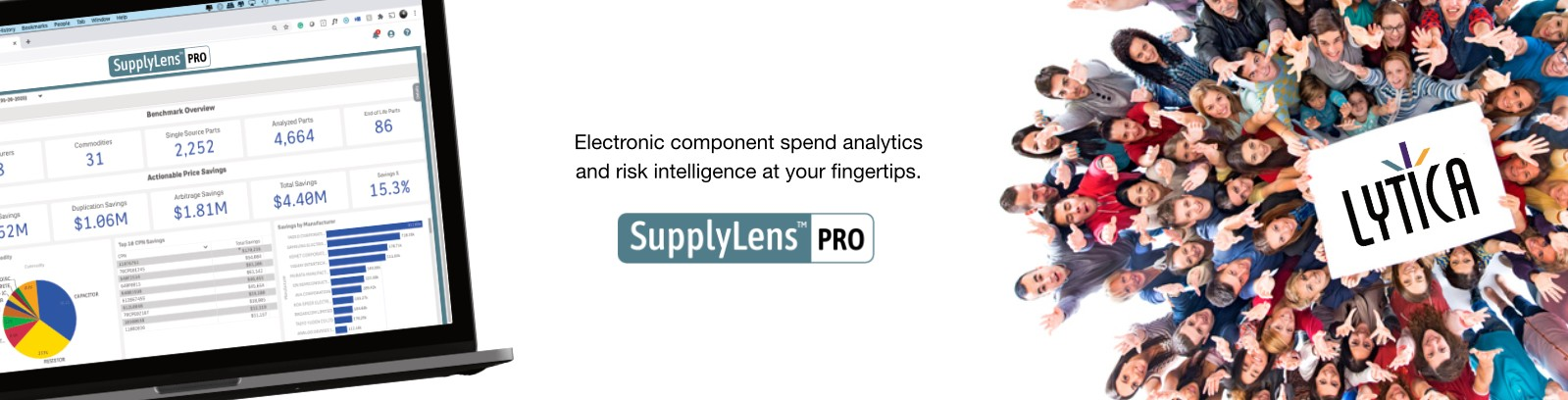
The Ottawa-based company’s launch covers strategic sourcing and product sourcing during new product introduction (NPI). The first area brings pricing comparisons and supply risk information into purchasing negotiations, while NPI functions connect bill of materials (BOM) reviews with component cost validation and sourcing options before engineers finalise a design. DSX is presented as part of the company’s SupplyLens Pro environment, rather than as a replacement for a manufacturer’s entire enterprise software system.
Electronic manufacturers may purchase thousands of approved part numbers, often across several product families and production sites. An inexpensive component can become a costly constraint when its producer changes lead times, capacity becomes unavailable or a technically acceptable substitute cannot be approved quickly. Price information is consequently useful only alongside the item’s specification, sourcing status and the production requirement it supports.
Those records are rarely held together. Enterprise resource planning software documents orders and the prices previously paid, product lifecycle management records define approved engineering parts, and quotations describe proposed future terms. A buyer can be left comparing separate spreadsheets when a supplier requests an increase, even though the commercially meaningful question is what comparable customers have actually paid for the same item under similar conditions.
Lytica says its market intelligence draws on anonymised and aggregated electronic component transactions, rather than only supplier list prices or online quotations. The claim of access to billions of proprietary market signals is the company’s description of its underlying data assets; it is not a disclosed count of independently validated prices covering every part number. The sample, its coverage by supplier and the method used to adjust comparisons are not published in sufficient detail to reproduce each benchmark independently.
Transaction prices can provide negotiating evidence, but an apparent gap needs explanation. Two orders for the same component can differ in quantity, delivery commitment, location, exchange rate and customer contract. DSX places price evidence beside supplier intelligence and sourcing actions, while the buyer still needs to determine whether a benchmark represents a genuinely comparable commercial transaction.
The strategic sourcing workspace connects price validation, cost intelligence and predictive supply risk signals. It is designed to help purchasers prioritise negotiations, test the justification for a proposed price increase and review components exposed to rising supply pressure. A risk alert is a reason to investigate an item or supplier rather than proof that a scheduled delivery will fail.
A separate NPI workflow takes the process upstream into product development. An electronic product’s bill of materials can include components with multiple approved sources, sole-source parts or items nearing the end of their commercial lifecycle. Assessing supplier quotations and potential alternatives before a design is fixed can leave more time to qualify a component and prevent procurement choices becoming expensive engineering changes.
Product sourcing during NPI includes cost checks against a BOM, consideration of alternative components and supplier risk analysis before parts are locked into the design. The product page also identifies technical and sourcing readiness as separate considerations. A lower-cost alternative still requires engineering assessment of electrical performance, package fit, manufacturing qualification and any sector-specific regulatory obligations; price intelligence cannot make those decisions on its own.
Lytica describes three specialist AI assistants. Lisa helps users navigate DSX workflows and select relevant intelligence; Neo supports identification and negotiation of savings opportunities; and Rik is intended to identify emerging supply risks. These functions use the company’s data and business context to make recommendations, while its own product materials describe human teams as retaining decision control.
Decision ownership remains important when recommendations could alter approved supplier arrangements. An alternative part may have a lower quoted cost but require engineering approval, a new supplier audit or a revised delivery schedule. A purchasing team must also check contractual terms before shifting volumes or challenging prices. DSX is designed to bring those considerations into a connected workflow, although individual authorisation steps depend on the user’s organisation.
Lytica presents DSX as a connected system of work, but the launch information does not establish identical integration, pricing or deployment requirements for every customer. Organisations evaluating it would need to confirm how existing enterprise resource planning, engineering and supplier records can be connected, which users may approve a supplier change and how commercially sensitive transaction information is handled.
Aggregating purchasing records can reduce exposure of individual transactions, although anonymisation does not eliminate every confidentiality or security question by itself. Buyers considering the platform must assess who supplies source data, what contractual permissions apply and how access to their own supplier and BOM information is controlled. Lytica states that its security controls have achieved SOC 2 Type II assurance, which should not be confused with an audit of the accuracy of every market price or AI recommendation.
Chief executive Martin Sendyk described the launch as a way to organise sourcing tasks around the work buyers need to complete. Lytica’s product page promotes potential material cost savings and earlier supply-risk visibility, but these are broader product claims, not independently verified results attributable to the new DSX launch on 10 November. No controlled before-and-after productivity assessment for the connected workflow was provided with the announcement.
A contract manufacturer comparing a long BOM with several supplier bids and an equipment maker examining a sole-source component may both benefit from seeing price and supply indicators in the same workflow. Their decisions nevertheless depend on different constraints: the first must reconcile quotations and approved vendors, while the second may need to qualify a new part and update design records. The software’s usefulness therefore rests partly on the identity and quality of the customer data connected to it.
DSX is available now, and Lytica has scheduled a product demonstration for 17 November. The next evidence of its operating performance will come from how customers use the integrated workflows to manage negotiations, component qualifications and shortages, rather than from the size of the proprietary dataset alone.