IN Brief:
- AI servers, high-performance computing equipment, and semiconductor shipments are absorbing air freight capacity from Taiwan and South Korea.
- Dimerco reports load factors near 90% on some South Korea-US services, with Taiwan capacity also constrained.
- Typhoons, port congestion, and routing limits are supporting ocean freight rates even as underlying demand softens on some corridors.
Dimerco Express Group expects AI, semiconductor, and other high-value technology exports to keep air freight capacity tight at several major Asian origins as the market enters the fourth quarter. Its September freight assessment describes a market increasingly divided by commodity, with technology shipments supporting high aircraft utilisation even while consumer and e-commerce volumes remain comparatively soft on a number of lanes.
Taiwan remains the most visible pressure point. Shipments of AI servers, high-performance computing equipment, and advanced semiconductors are absorbing available air capacity, particularly on routes to the United States. Dimerco expects rates on Taiwan-US services to rise as the fourth quarter approaches, while European capacity remains constrained. South Korea is showing a similar pattern, with load factors on some US-bound services close to 90%.
The difference between technology cargo and the wider market is becoming more pronounced. Kathy Liu, vice-president of global sales and marketing at Dimerco Express Group, said: “The split isn’t by lane any more, it’s by commodity. AI out of Taiwan fills aircraft while everything else drifts.” Aggregate air freight indicators can therefore obscure the position facing manufacturers whose products sit inside the strongest demand categories, because available capacity can disappear even when total regional demand appears moderate.
China-US demand is softer by comparison, while intra-Asian activity is running below the previous year’s levels in parts of the market. European air freight has also been affected by the loss of some e-commerce traffic following changes to the EU’s de minimis treatment of low-value parcels. The result is an uneven network in which capacity may be available at one origin while being difficult to secure at another only a short flight away.
For semiconductor and electronics supply chains, those differences have direct operating consequences. High-value components and production equipment are frequently moved by air because inventory cost, factory downtime, product-launch schedules, and short technology cycles can outweigh the premium charged for faster transport. When AI-related cargo occupies a larger proportion of scheduled capacity, other industrial shippers compete for the remaining space or change gateway, departure date, carrier, or transport mode.
The imbalance also complicates allocation decisions for forwarders and carriers. When a high-yield technology lane fills quickly, capacity may be shifted towards origins or services where demand is strongest, leaving exporters in softer markets with nominally available space but fewer attractive schedules. Manufacturers using several Asian production locations therefore face different transport economics even when the final destination is the same.
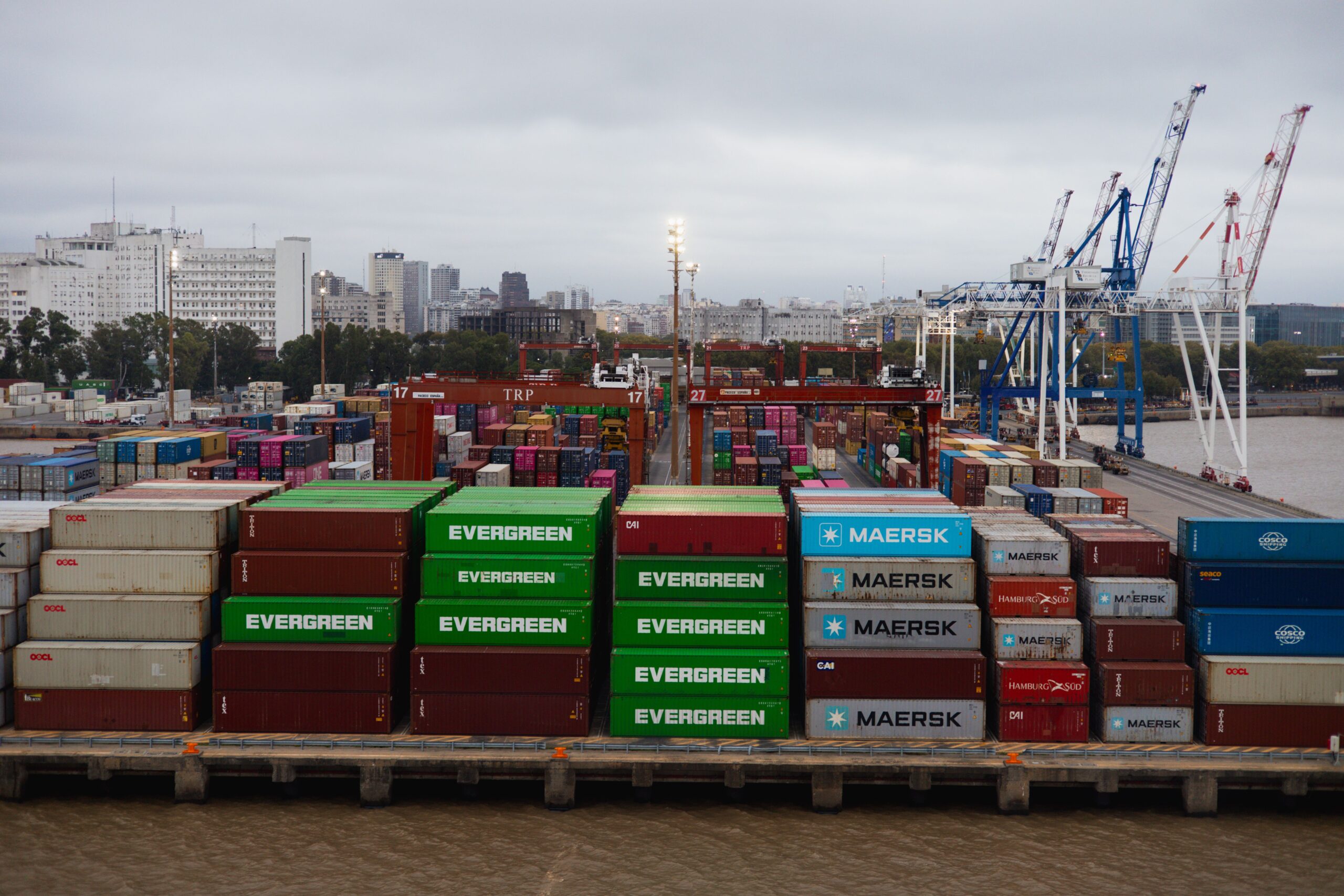
Ocean freight is facing a different imbalance. Dimerco describes underlying demand as softer in parts of the market, yet disruption is preventing that weakness from translating cleanly into lower rates and predictable transit times. Typhoons have affected operations at Shanghai, Ningbo, Yantian, and Hong Kong, while congestion has extended vessel and cargo delays. The company estimates that around 400,000 TEU were awaiting clearance following a shutdown of close to three days at affected Chinese gateways.
Waiting times were reported at roughly three to eight days in Shanghai and two to four days in Ningbo. Panama Canal draft restrictions due to take effect from 3 September add another planning variable, while carriers remain cautious about routings through the Red Sea and Suez Canal. None of those factors creates additional underlying cargo demand, but each can remove effective capacity from the network by slowing assets, altering schedules, or forcing longer rotations.
Pressure is also building across Southeast Asia ahead of the fourth-quarter peak. Dimerco expects air capacity to remain tight in Malaysia, Thailand, and Singapore, while India is experiencing backlog conditions on services to Europe and the US West Coast. Ocean rates on a number of Southeast Asia-Europe and North America trades are also rising as utilisation increases and carriers apply peak-season and bunker surcharges.
Modal substitution has limits. Some semiconductor equipment and urgent electronic components can move by ocean only if production schedules contain enough buffer to absorb several additional weeks of transit. Sea-air combinations and alternative Asian gateways can reduce some pressure, but they introduce extra handling points and customs interfaces. The value of those options rises when aircraft capacity tightens, yet so does the operational complexity needed to use them without losing the time they are intended to save.
The result is a freight market in which headline softness offers limited comfort to technology manufacturers concentrated at constrained origins. Capacity is being consumed unevenly, so the cost of maintaining routing flexibility rises just as the fourth-quarter production cycle begins to accelerate.
Dimerco’s August freight assessment had already identified strong AI and semiconductor demand from Taiwan and Korea against softer consumer and e-commerce volumes. September extends that split rather than replacing it with a broad regional shortage. Manufacturers shipping high-value technology out of Asia are facing a market shaped less by average demand than by where scarce aircraft space is being absorbed.