IN Brief:
- Amazon is behind a proposed Norwich retail distribution facility with a baseline footprint of roughly one million sq ft.
- The first-mile operation would receive bulk goods before picking, packing, and shipping inventory to downstream facilities.
- Norwich has scheduled a public hearing for 1 October as the project progresses through its wetlands review.
Amazon is behind plans for a roughly one-million-square-foot retail distribution facility in Norwich, Connecticut, designed as a first-mile operation feeding inventory into middle-mile sortation and local delivery centres.
The project is being developed with Bluewater Property Group and Norwich Community Development Corporation at the Occum Industrial Center. It remains at an early planning stage, with the city’s Inland Wetlands, Watercourses and Conservation Commission due to hold a public hearing on 1 October.
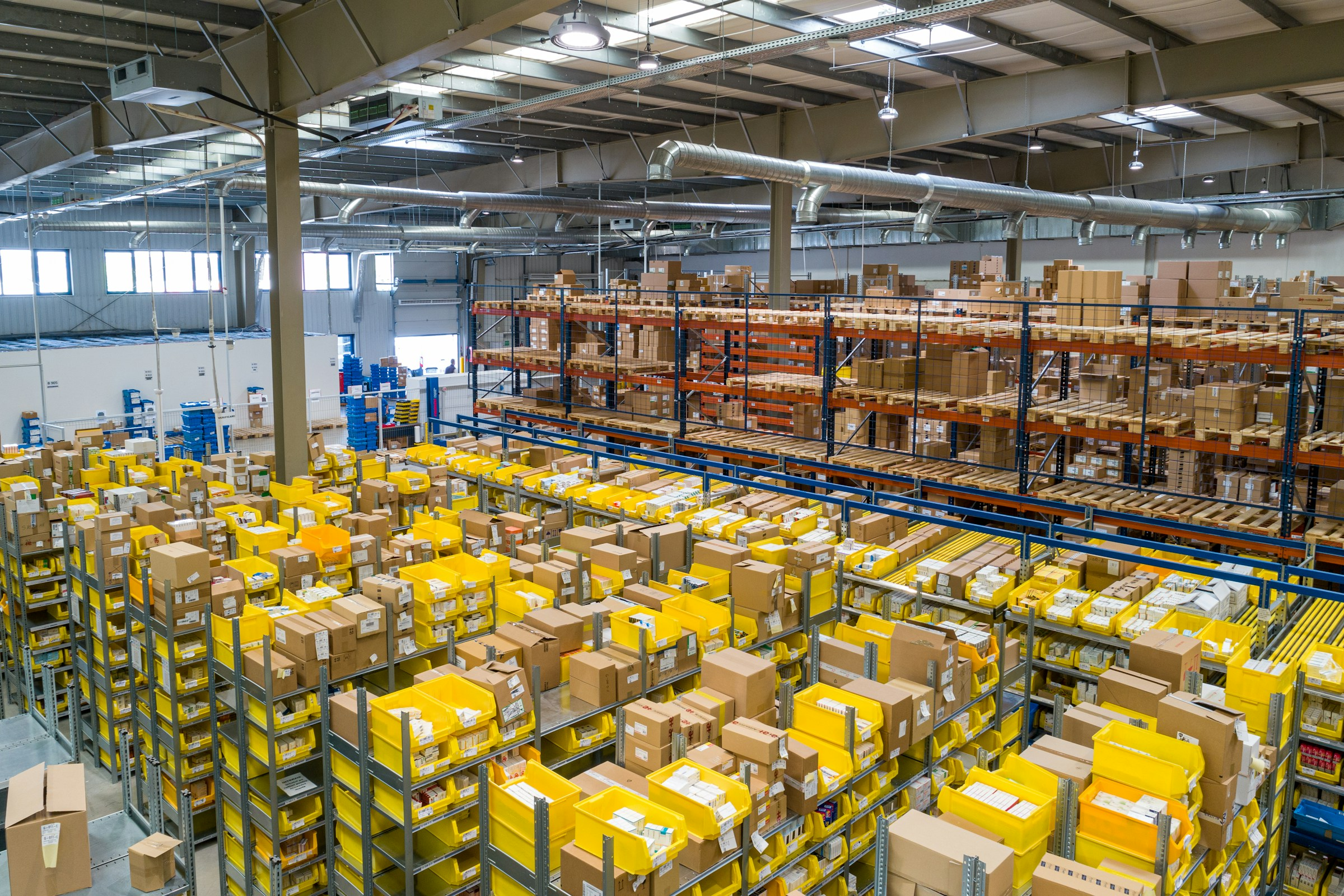
Project information presented to the commission describes a baseline building footprint of roughly one million sq ft, together with a large internal mezzanine, offices, and employee support areas. The building would use high-tech sortation equipment and operate on a 24/7 basis.
Bulk goods would be received and stored for later fulfilment before orders are picked, packed, and shipped to localised delivery centres. Bluewater described the proposed Norwich operation specifically as a first-mile facility, feeding middle-mile sortation sites before goods move through last-mile centres to customers.
That role places the building further upstream than a conventional delivery station. Its purpose is not principally to dispatch individual vans into surrounding neighbourhoods but to receive larger inventory flows and divide those goods into more specific downstream requirements.
The distinction helps explain the scale. Large first-mile facilities need enough storage and material-handling capacity to absorb bulk inbound deliveries while continuously replenishing smaller facilities serving individual markets.
High-tech sortation is therefore integral to the proposed operation. Inventory has to move accurately from receiving into storage and then towards the correct downstream destination without allowing a million-square-foot warehouse to become a large holding area for static stock.
Twenty-four-hour operation gives the network more time to move goods between layers. Downstream facilities can be replenished overnight as well as during conventional daytime shifts, allowing trailer departures and sortation workloads to be spread across a larger operating window.
Continuous use equally raises the standard expected from equipment and maintenance. Conveyors, sorters, controls, warehouse-management systems, dock operations, and supporting utilities have to remain available across several shifts because an extended outage can interrupt inventory flows well beyond the Norwich building.
Large upstream nodes also concentrate risk. Combining substantial volumes inside one operation can reduce duplicated handling and make automation more economical, but it increases the amount of inventory affected by power failure, systems disruption, labour shortages, weather, or transport constraints at that site.
The surrounding transport network consequently matters almost as much as the building. First-mile operations require reliable trailer access, substantial yard and parking capacity, and road connections capable of handling repeated inbound and outbound movements without creating a bottleneck before goods reach the sortation equipment.
Amazon’s network uses several different facility types for precisely that reason. Large buildings can receive and position inventory, middle-mile centres sort movements by destination, and delivery stations prepare orders for the final journey to customers.
Separating those functions allows individual buildings to be designed around a narrower operational purpose, but it also creates dependencies between them. Inventory arriving late from a first-mile site can leave a downstream operation waiting, while congestion at a local facility can interrupt the flow of trailers from further upstream.
The Norwich proposal is therefore more significant as a network node than its square footage alone suggests. Additional first-mile capacity gives Amazon another location from which bulk inventory can be distributed into its wider North-eastern US operating footprint.
Amazon is also making more of its logistics network available to external businesses, offering freight, storage, distribution, fulfilment, parcel shipping, and customs services beyond the company’s traditional marketplace operation.
That broadens the commercial importance of infrastructure originally developed around Amazon’s own retail volumes. Warehouses, transportation capacity, sortation technology, and delivery systems can increasingly support logistics revenue as well as the sale and fulfilment of Amazon orders.
The proposed Norwich facility has not yet received final approval and Amazon has not announced an opening date. The applications have been received and tabled for the October public hearing while technical and environmental review continues.
That status matters because the operating concept is clearer than the delivery timetable. Plans identify Amazon as owner and establish the building’s intended first-mile function, but a project of this scale still has to progress through local approvals and detailed engineering before construction can be treated as certain.
If developed broadly as proposed, Norwich would add another large automated upstream node to Amazon’s US distribution network. Its contribution would be measured less by how many parcels leave directly for local homes and more by how efficiently it can keep the facilities further down the chain supplied with the right inventory at the right time.