IN Brief:
- Automate 2026 attracted more than 50,000 registrants and 1,230 exhibitors at McCormick Place in Chicago.
- The event filled 425,000 sq ft with robotics, AI, machine vision, motion control, and industrial automation.
- Humanoid robots, industrial AI, workforce development, and education were among the main themes.
The Association for Advancing Automation has reported record attendance for Automate 2026, with more than 50,000 registrants and 1,230 exhibitors gathering at McCormick Place in Chicago.
The event, held from 22 to 25 June, filled 425,000 sq ft of show floor space with robotics, artificial intelligence, machine vision, motion control, and industrial automation technology. It was the tenth edition of Automate and the largest to date.
Humanoid robots, industrial AI, workforce development, and education were prominent across the programme. The conference included more than 1,600 registrants and over 140 sessions covering robotics adoption, US competitiveness, supply chain resilience, industrial AI, workforce transformation, and automation beyond traditional manufacturing.
The scale of the event shows how automation demand is spreading from production lines into warehouses, parcel networks, e-commerce fulfilment, food plants, pharmaceutical logistics, and contract logistics operations. Throughput pressure, labour constraints, safety requirements, and service expectations are all pushing automation further into daily operations.
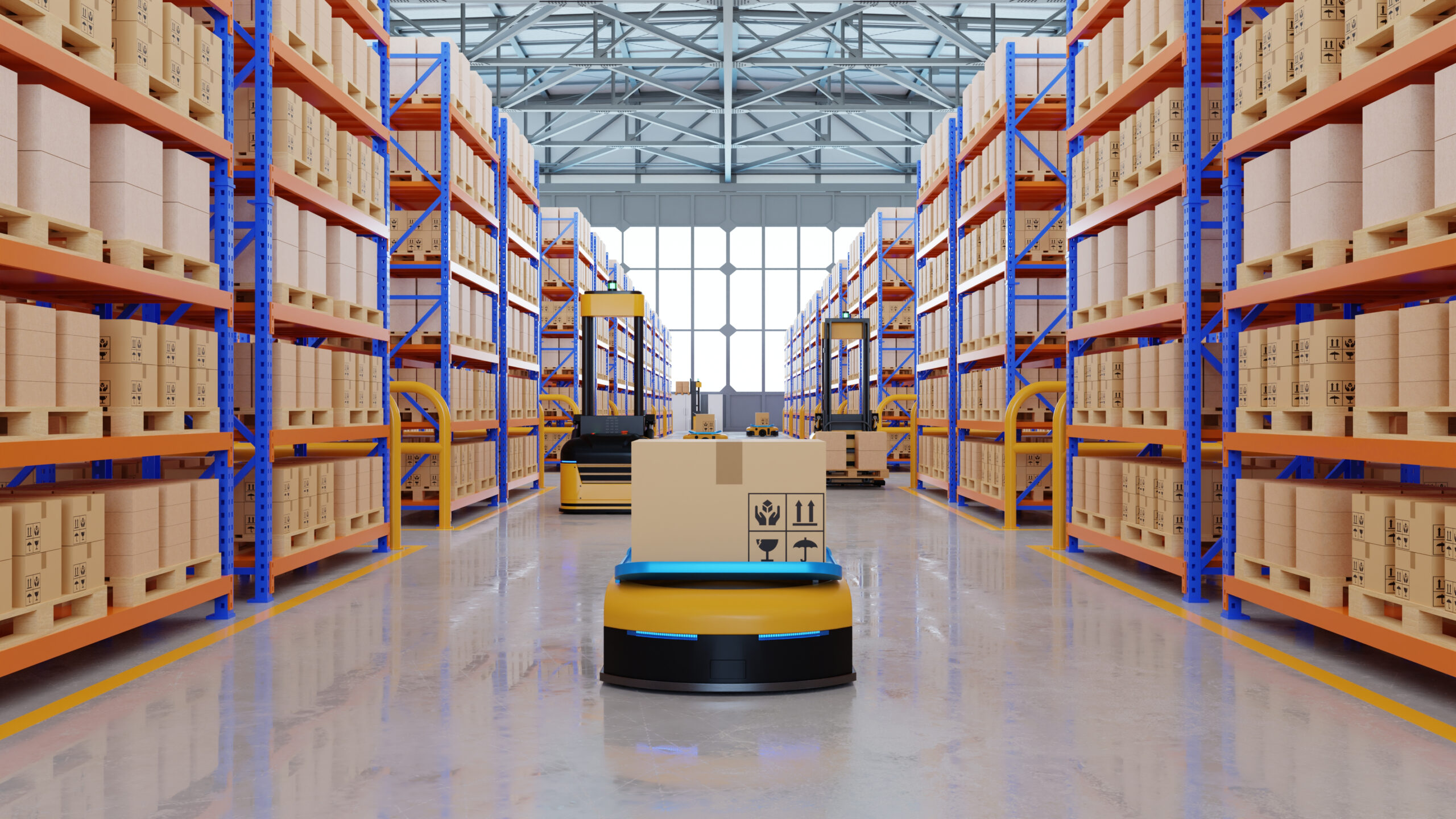
Robotics adoption in logistics has already moved through several phases. Early projects tended to centre on fixed automation in high-volume environments, including conveyors, sorters, automated storage and retrieval systems, and palletising. Newer investment has moved toward autonomous mobile robots, goods-to-person systems, robotic picking, machine vision, AI planning, and software orchestration.
Comau and Automha’s intralogistics offer, with its emphasis on linking inbound movement, storage, retrieval, order preparation, and outbound shipping, shows how the market is moving toward connected automation rather than isolated systems. Automate’s record attendance suggests buyers and suppliers are now converging around that broader model.
Industrial AI is one of the strongest drivers of change. Warehouses and factories already generate large volumes of operational data, but many still use it for reporting after the event. AI tools are being applied to forecasting, maintenance, route optimisation, quality inspection, labour planning, robotics coordination, and exception management.
The most useful systems are those that turn operational data into earlier decisions without removing accountability. A warehouse that can predict congestion, maintenance risk, order surges, or labour imbalance has more room to act before the issue damages service. AI becomes valuable when it improves control over the whole flow, rather than optimising a single task in isolation.
Humanoid robots attracted attention at the show, although their industrial role remains more complex. Warehouses and factories are built around human movement, so humanoid form factors offer an appealing route into existing environments. Their practical value will depend on whether they can deliver safe, reliable, and cost-effective performance in repetitive tasks and variable settings.
Machine vision is another critical layer. Vision systems support inspection, barcode reading, parcel recognition, pallet checks, robotic guidance, safety monitoring, and inventory control. As automation becomes more flexible, machines need a more reliable understanding of their environment. Vision is becoming an enabling technology rather than a specialist inspection tool.
Workforce development remains a constraint. Automation changes the labour requirement rather than removing it. Facilities need technicians, engineers, supervisors, data specialists, safety professionals, and operators who can work with automated systems, diagnose faults, and manage exceptions. Without training, automation can create a new bottleneck around maintenance and control.
Procurement discipline is also becoming sharper. The supplier market is crowded, and show-floor demonstrations do not always translate into stable industrial deployment. Buyers need to test integration capability, software architecture, service support, safety compliance, lifecycle cost, and scalability against real site conditions.
Automate’s expansion to Las Vegas in 2027 underlines the scale of the market. Robotics, AI, and motion systems are no longer specialist interests for a narrow group of manufacturers. They are becoming part of productivity strategy across sectors, and logistics is one of the clearest areas where pressure to move more goods through constrained networks will keep demand high.