IN Brief:
- Canmoor has appointed Muir Group for the next phase of Westway Court.
- The £15m scheme sits beside Glasgow Airport and will provide nine industrial and logistics units.
- The development is targeting EPC A and BREEAM Excellent ratings.
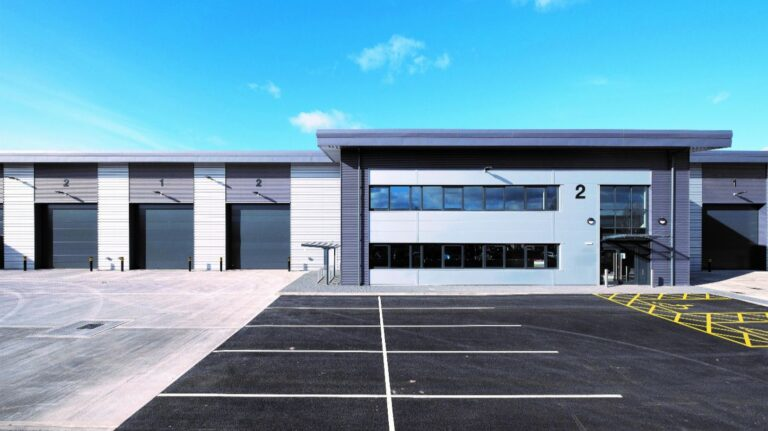
Canmoor has appointed Muir Group as main contractor for the next phase of Westway Court, a £15m speculative industrial and logistics development beside Glasgow Airport.
The scheme will deliver nine units designed for storage, manufacturing, distribution, and service occupiers. Westway Court sits within Westway, one of Scotland’s major industrial and logistics locations, with direct access to Glasgow Airport and close links to the M8.
The development is being positioned around modern specification and sustainability performance, with units targeting EPC A and BREEAM Excellent ratings. Energy efficiency, occupier ESG requirements, and long-term operating cost control are now central to industrial property decisions rather than optional additions.
Muir Group’s appointment moves the project into its next construction phase as regional logistics markets look for space that can support both conventional warehousing and more complex industrial uses. Airport-adjacent locations can serve distribution, aerospace support, manufacturing supply chains, maintenance activity, and time-sensitive freight operations.
Glasgow Airport gives the site a strategic setting, although the broader value lies in access to roads, labour, and regional industrial demand. Occupiers increasingly need buildings that can combine stockholding, light production, returns, service engineering, and distribution within one footprint.
Well-specified mid-sized industrial units are becoming more important as companies adjust supply chains around flexibility rather than simply chasing maximum building size. The ability to use one building for several operational functions can reduce handovers and shorten the distance between inventory, service teams, and customers.
Scotland’s central belt continues to offer a strong industrial base, access to major consumer markets, and connections into wider UK and international freight networks. Modern space near transport infrastructure can reduce operational friction and support faster mobilisation for new contracts, particularly where occupiers need a balance between regional reach and specialist capability.
Specification is now a decisive factor in these decisions. EPC ratings, solar readiness, power capacity, yard space, loading access, office provision, and building flexibility all influence whether a site can support future operations. A unit that meets today’s storage requirement but cannot accommodate automation, EV charging, or changing customer demands can quickly become a constraint.
The same property dynamic is evident in MX Park reaches practical completion at Maple Cross, where building specification, location, and sustainability were central to the logistics offer. Westway Court adds that model to the Glasgow market, with operational readiness carrying as much weight as square footage.
Speculative development also plays a practical role where occupiers cannot wait for a full design-and-build programme. Fast-moving logistics contracts, manufacturing support requirements, and service-led distribution models often need space that can be occupied quickly. Developers able to provide flexible, high-quality units in strategic locations are better placed to capture that demand.
Airport-linked industrial sites remain sensitive to changes in freight and manufacturing patterns. Even where a tenant is not moving goods by air every day, proximity to airport infrastructure can support time-critical operations, specialist service teams, spare parts networks, and customers that value rapid national and international connections.
Westway Court will add another layer of capacity to the Glasgow market and strengthen airport-adjacent industrial space within Scotland’s logistics network. Its success will depend on how closely the units match occupier requirements around energy performance, fit-out flexibility, loading efficiency, and access to regional and national transport routes.