IN Brief:
- CEVA Logistics is strengthening its e-commerce fulfilment capability as online retail demand continues to grow.
- Its e-commerce proposition covers warehousing, fulfilment, returns, cross-border services, transport, and last-mile logistics.
- The development reflects pressure on retailers to scale digital channels without losing control of inventory, service, and cost.
CEVA Logistics is sharpening its UK e-commerce fulfilment offer as retailers continue to wrestle with order volatility, returns pressure, stock accuracy, cross-border compliance, and delivery cost.
The company’s e-commerce logistics proposition covers warehousing, fulfilment, online returns, cross-border services, transportation, and last-mile carrier networks. CEVA’s wider e-commerce operation handles hundreds of millions of order lines annually and continues to grow with e-commerce and omnichannel customers.
UK online retail logistics has moved well beyond the simple question of warehouse capacity. Retailers now need operations that can handle fragmented demand, marketplace channels, parcel carrier integration, customer service expectations, and returns flows without allowing fulfilment cost to erode margin.
Online orders behave differently from store replenishment. They are smaller, less predictable, more labour-intensive, and more visible to the end customer. Picking accuracy, packaging control, parcel labelling, returns processing, and inventory visibility all sit inside the customer proposition, even when the customer never sees the warehouse.
CEVA’s role as a 3PL places it in the part of retail logistics where scale and variability meet. Many retailers want access to larger operating networks, carrier relationships, fulfilment systems, and returns capability without owning every asset themselves. Outsourcing can provide flexibility, but only where the logistics provider can manage complexity rather than simply absorb volume.
Amazon’s locker expansion with MyFlexBox in Germany showed how e-commerce networks are becoming denser at the delivery interface. CEVA’s fulfilment activity sits further upstream, where inventory accuracy, order processing, and carrier handover determine whether those delivery options can perform without creating avoidable service failures.
Returns remain one of the most punishing parts of the model. Reverse logistics requires inspection, grading, refurbishment, repackaging, restocking, resale, disposal, or supplier return decisions. Poor returns processing traps working capital and leaves saleable stock outside the live inventory pool.
Cross-border e-commerce adds another layer. Sellers moving goods between the UK, Europe, and wider international markets have to manage classification, duty exposure, product compliance, consumer delivery expectations, and carrier performance. A small documentation issue can quickly become a customer service problem, especially where delivery promises are measured in days rather than weeks.
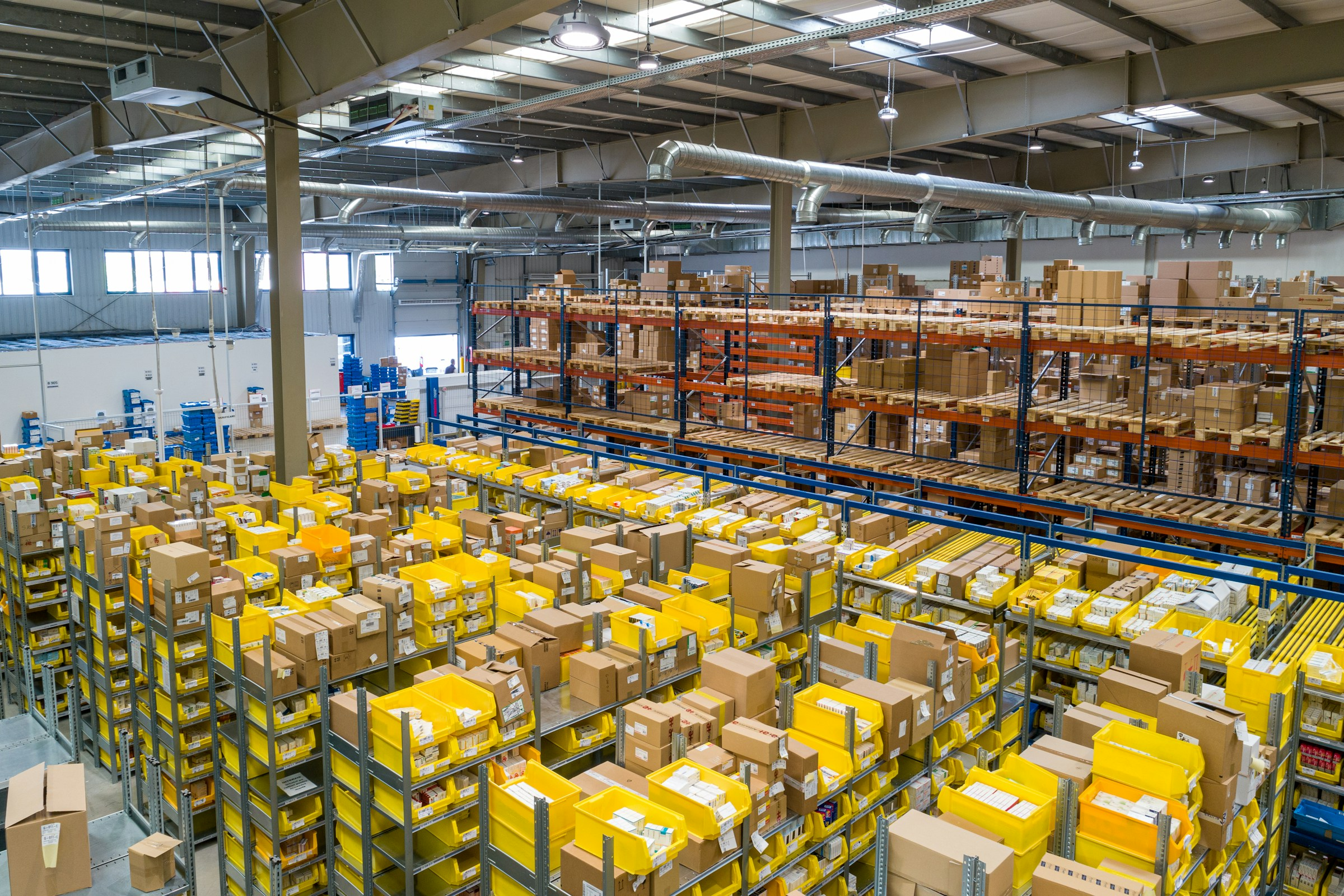
Warehouse design is changing in response. E-commerce facilities need flexible pick faces, parcel sortation, returns benches, carrier staging, value-added services, and strong systems integration. Automation can support higher throughput, although the right level of mechanisation depends heavily on order profile, SKU range, and demand predictability.
Long-tail SKU ranges remain difficult to automate fully. High-volume, predictable flows can justify more mechanised systems, while volatile ranges may require a more balanced mix of labour, software, and selective automation. The most effective fulfilment model is rarely the most automated one in isolation; it is the one that can absorb demand variation without breaking cost control.
The UK market adds density and complexity. Retailers often serve urban addresses, regional customers, wholesale accounts, marketplaces, and direct-to-consumer channels from overlapping stock pools. Inventory must be visible and available across those channels, with allocation rules that prevent one route to market starving another.
The line between freight forwarding, contract logistics, fulfilment, and last-mile delivery continues to blur as customers ask for fewer handovers and clearer accountability. CEVA’s e-commerce proposition sits inside that structural change, where logistics groups increasingly compete on their ability to manage the whole order flow rather than a single link in the chain.
E-commerce growth no longer looks like the emergency expansion seen during the pandemic, but the operating standard has changed permanently. Consumers expect speed, retailers need cost discipline, and warehouses are being asked to handle more complexity with fewer mistakes. CEVA’s focus on fulfilment capability reflects a market where online retail performance is won or lost in inventory control, returns processing, and the carrier handover lane.