IN Brief:
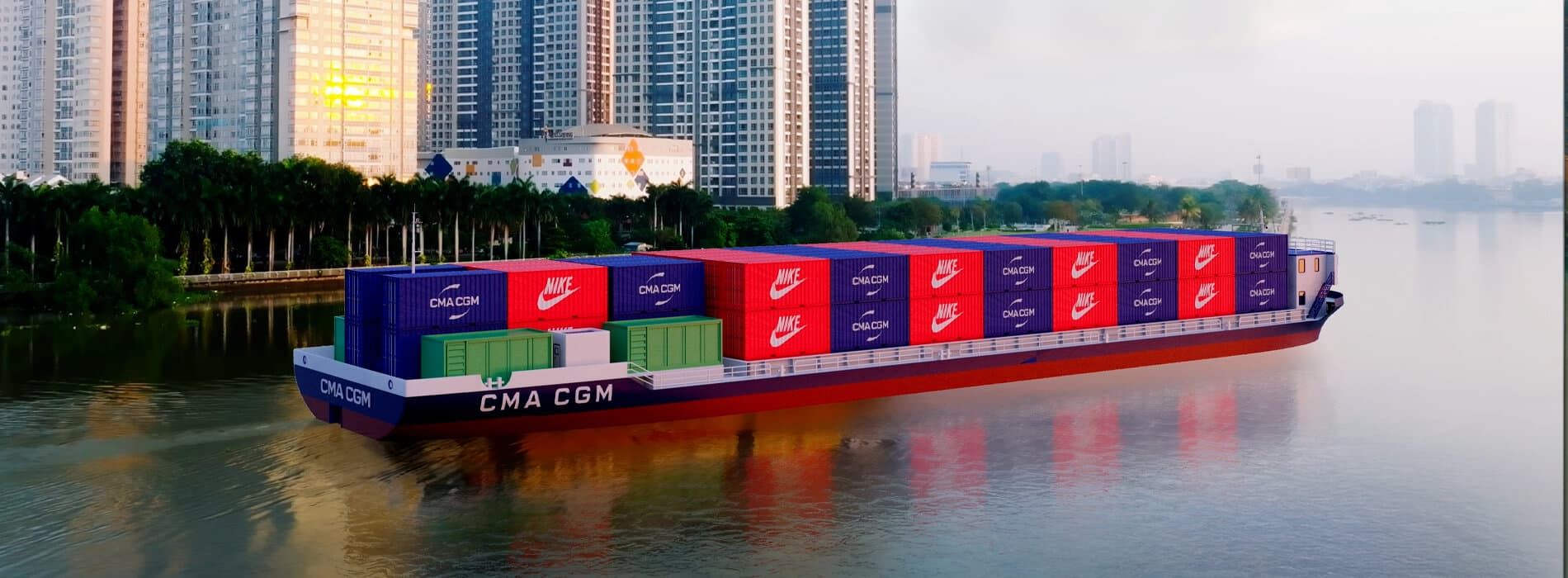
- CMA CGM, Nike, and Gemadept have launched a battery-electric inland barge serving the Gemalink container terminal in southern Vietnam.
- The 180km return route uses CATL battery technology and dedicated charging supplied by certified renewable electricity.
- The partners expect the system to handle more than 50,000 TEU annually and avoid approximately 778 tonnes of CO₂ each year.
CMA CGM, Nike and Vietnamese port group Gemadept have launched a fully electric inland barge connecting Nike’s cargo collection operation near Ho Chi Minh City with the Gemalink deep-sea container terminal at Cai Mep. The service covers a 180km round trip and forms part of a dedicated logistics system incorporating battery propulsion, charging infrastructure and renewable electricity.
The vessel is designed to move more than 50,000 twenty-foot equivalent units (TEU) a year, replacing some container journeys that would otherwise use road transport. Its batteries are supplied by CATL, while the charging system installed at Gemalink is connected to electricity from a dedicated solar farm. CMA CGM says a recharge takes approximately four hours and estimates that the operation will avoid around 778 tonnes of carbon dioxide annually.
The launch puts into operation a scheme developed over an extended period by CMA CGM’s New Build and research and development teams alongside Nike and Gemadept. Nike’s inland drop-off location lies in an area of southern Vietnam previously administered as Binh Duong province, with the river route leading to the deep-sea terminal in Cai Mep. The new waterway movement serves the inland-to-port section of the export chain; ocean carriage begins once the containers have been transferred into the terminal system.
During the inland voyage, electric motors draw stored power from batteries instead of burning fuel aboard the barge. This removes direct greenhouse gas emissions from propulsion during normal operation. The route’s wider emissions footprint also includes the electricity used for charging, vessel manufacture and activities around the terminals, so the quoted annual saving of approximately 778 tonnes remains a project estimate rather than a lifecycle measurement.
At Gemalink, dedicated chargers are supplied using certified renewable electricity associated with the terminal’s solar installation. CMA CGM puts the recharge time at approximately four hours, which must be built into the cycle alongside loading, unloading and berthing. The energy arrangements are tied to a specified transport corridor: the barge can recharge at its planned terminal stop rather than depending on charging facilities being available along the entire waterway route.
A 180km round trip also places practical demands on the vessel’s battery system. The energy available after charging must cover propulsion and on-board electricity requirements under the route’s operating conditions, while retaining an appropriate operating margin. River currents, cargo loading and vessel speed all affect energy consumption in electric marine transport. CMA CGM has published the approximate charging period but has not stated the battery capacity, vessel payload per sailing or number of daily rotations.
The projected annual throughput of more than 50,000 TEU is a design figure rather than a verified count of containers already carried. A TEU expresses container capacity in standard 20-foot units: a 40-foot container counts as two TEU. Actual annual movements will depend on the mix of containers, the cargo supplied to the service, terminal handling arrangements and the number of trips completed during the year.
Nike’s containers must reach the inland collection point in time for barge loading, with identification, documentation and customs requirements aligned to the relevant deep-sea departure. After the river voyage, Gemalink receives the boxes into its terminal operation, where they are handled and allocated to ocean services. A regular inland sailing can make that handover more predictable, provided the barge schedule is coordinated with terminal receiving windows and the vessel connections used for the export cargo.
Gemadept operates the terminal interface for both the electric barge and the onward deep-sea shipping network. That places the charging installation and container handling within the same port environment, while Nike supplies the recurring inland cargo volumes and CMA CGM coordinates the transport service. Their roles give the project a defined route, identifiable cargo demand and a terminal location at which charging and vessel transfers can be planned together.
Nike has set a target to reduce greenhouse gas emissions across its extended supply chain by 35% by 2030 compared with financial year 2020. The barge will contribute through one defined inland transport activity, with CMA CGM expecting approximately 778 tonnes of avoided CO₂ emissions each year. The target covers a wider manufacturing and transport footprint, while the barge estimate covers the scheduled Vietnam movement between Nike’s collection point and Gemalink.
CMA CGM has pursued other shipping-related emissions initiatives, including lower-carbon fuel arrangements with logistics partners. A separate DSV and CMA CGM agreement addressed the carbon intensity of maritime freight movements, whereas the Vietnam barge changes the propulsion and power supply for a defined inland segment. Both approaches involve selecting a transport activity and then specifying how its energy demand will be met.
The companies intend to assess whether the arrangement can be adapted to other waterways and customers. Replication would require an appropriate navigable corridor, sufficient regular freight volumes, suitable terminal access and charging capacity. The first operating case is the 180km Nike–Gemalink route, with its battery-electric barge and associated renewable electricity infrastructure now forming a single cargo transport system.