IN Brief:
- Walmart and Symbotic agreed an initial additional commitment of approximately US$6bn for automation systems and development programmes over several years.
- Symbotic will provide further automation capabilities at 25 US regional distribution centres, including systems supporting upstream ecommerce inventory, storage, and replenishment.
- The contract framework also accommodates additional Walmart global supply chain work, with US$125m of the initial commitment earmarked for racking and picking research.
Walmart has agreed an initial additional commitment of approximately US$6bn to warehouse automation specialist Symbotic under an expanded commercial arrangement covering multiple locations over several years. The programme includes further systems and capabilities at 25 regional distribution centres in the United States, as well as a framework for work across Walmart’s wider international supply chain.
The companies signed an Enterprise Master Automation Agreement on 29 October 2026. Symbotic’s US securities filing sets out an initial additional purchase and development commitment of approximately US$6bn across multiple locations over several years. The agreement includes market programmes for automated material handling systems in ambient areas of distribution and fulfilment centres in the US and selected markets in the Americas; it also provides a framework for further programmes.
Within that initial commitment, Walmart has earmarked US$125m for development of next-generation racking and related picking, process flow and inventory management capabilities. The figure is part of the approximately US$6bn, not another investment to add on top. The filing separately allows for licensing, maintenance, system support, spare parts and related service fees for deployed systems.
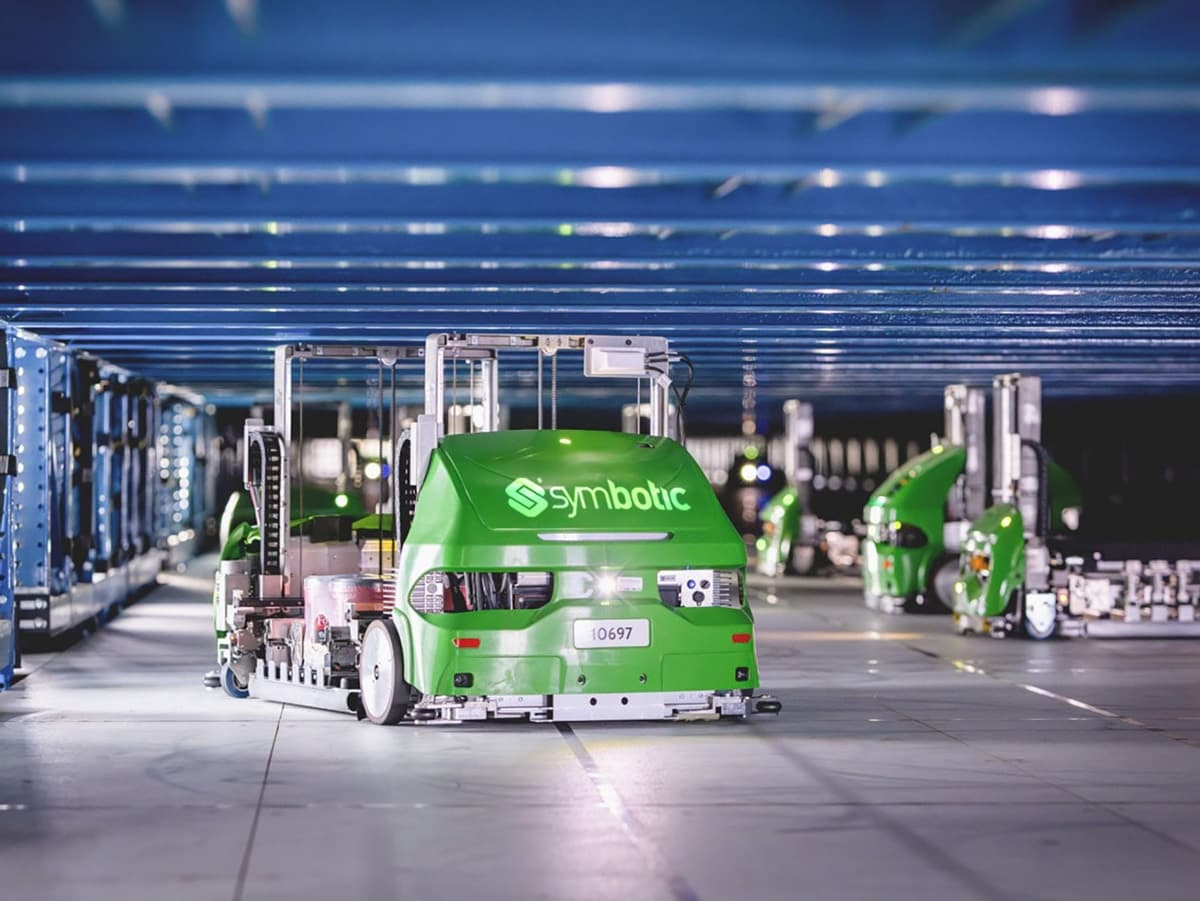
Symbotic has supplied Walmart with robotic warehouse handling for more than a decade, and its platform coordinates storage and case movements through a combination of mechanised equipment and software. The October agreement expands that relationship to new functions and locations, rather than beginning an entirely separate automation programme. Existing commercial agreements remain in effect unless the latest contract specifically changes them.
Large distribution centres receive inventory in bulk and despatch goods to stores or other parts of a retail network. A conventional handling process may require separate steps to put incoming cases away, retrieve them and assemble outbound loads. The number of touches and the distance covered inside the building influence how much time and equipment the operation requires.
Automated handling systems change that workflow by assigning movement tasks to machines and coordinating the sequence through warehouse software. A case must first be identified and associated with the correct inventory record, then directed towards a storage location or another handling process. Reliable operation depends on matching physical movements with system records so that a unit is not retrieved from a position that has already been emptied.
Symbotic’s technology portfolio now includes BreakPack each picking and SymMicro micro-fulfilment alongside automated case handling. BreakPack addresses orders requiring individual items removed from cases, while micro-fulfilment supports assembly of smaller orders using stock held in a compact local system. These functions depend on accurate links between the physical stock, available storage locations, and the orders that warehouse software releases for picking.
Each picking deals with individual articles rather than an entire sealed case. The contents, packaging and dimensions of those articles influence the types of grippers, storage positions or operator tasks required. Although software can select and sequence work, successful handling still depends on equipment designed for the physical items moving through the process.
A micro-fulfilment system can shorten the movements needed to assemble smaller orders by placing a defined range of stock closer to the point of picking. Its useful performance depends on the assortment kept in those positions, replenishment frequency and the flow of completed orders to packing or dispatch. A shortage in upstream replenishment will still interrupt fulfilment, even when the local picking equipment is operating normally.
Walmart expects the new capabilities to support upstream inventory management for ecommerce, increased storage capacity and more reliable replenishment. The distribution centres can hold and release goods for different sales channels, while software determines which stock should be presented for a particular task. Faster fulfilment will depend on how well upstream replenishment and downstream order processing are coordinated across the network.
Higher storage density creates useful capacity only when handling equipment can still reach the required cases in the right sequence. The rate of inbound receipt, automated retrieval and outbound transfer must be balanced, or a bottleneck can simply move from the storage area to a conveyor or loading point. Symbotic’s software coordinates those operations, while the physical installation determines the accessible storage positions and mechanical handling limits.
Operations across 25 centres introduce implementation challenges beyond a single pilot or installation. Equipment has to be delivered, commissioned and linked to the local control environment while each centre continues serving its supply chain. The rate at which the work can proceed will depend on site preparation, installation access, testing and the production performance achieved during transition.
The framework also provides for Walmart affiliates outside the US, with the present market programme covering selected international markets in the Americas. Further location commitments can be agreed through additional programme addenda. The company has identified the 25 US regional centres for extra automation capability but has not set out a commissioning schedule or per-site spending allocation.
The US filing says the initial commitment cannot be reduced without both companies’ written agreement, subject to contractual termination rights. Symbotic estimates it could add up to US$6.92bn to future backlog, a separate accounting measure from the US$6bn spending commitment. The filing also preserves existing programme agreements unless they are specifically amended or superseded, placing the latest work alongside earlier projects.
Implementation now moves through site-specific engineering, equipment installation and operational testing across the designated centres. Completion dates and achieved handling rates will depend on commissioning at each location, while the US$125m development programme supports the racking and picking technologies intended for the wider system.