IN Brief:
- One rebuilt through track at Arken Intermodal Terminal has released around 4,000m² for trailers and other cargo units.
- The Port of Gothenburg says roughly five per cent more available area has almost doubled the terminal’s yard capacity.
- Arken has seven electrified tracks totalling 3,360 metres and a stated annual handling capacity of around 100,000 units and trailers.
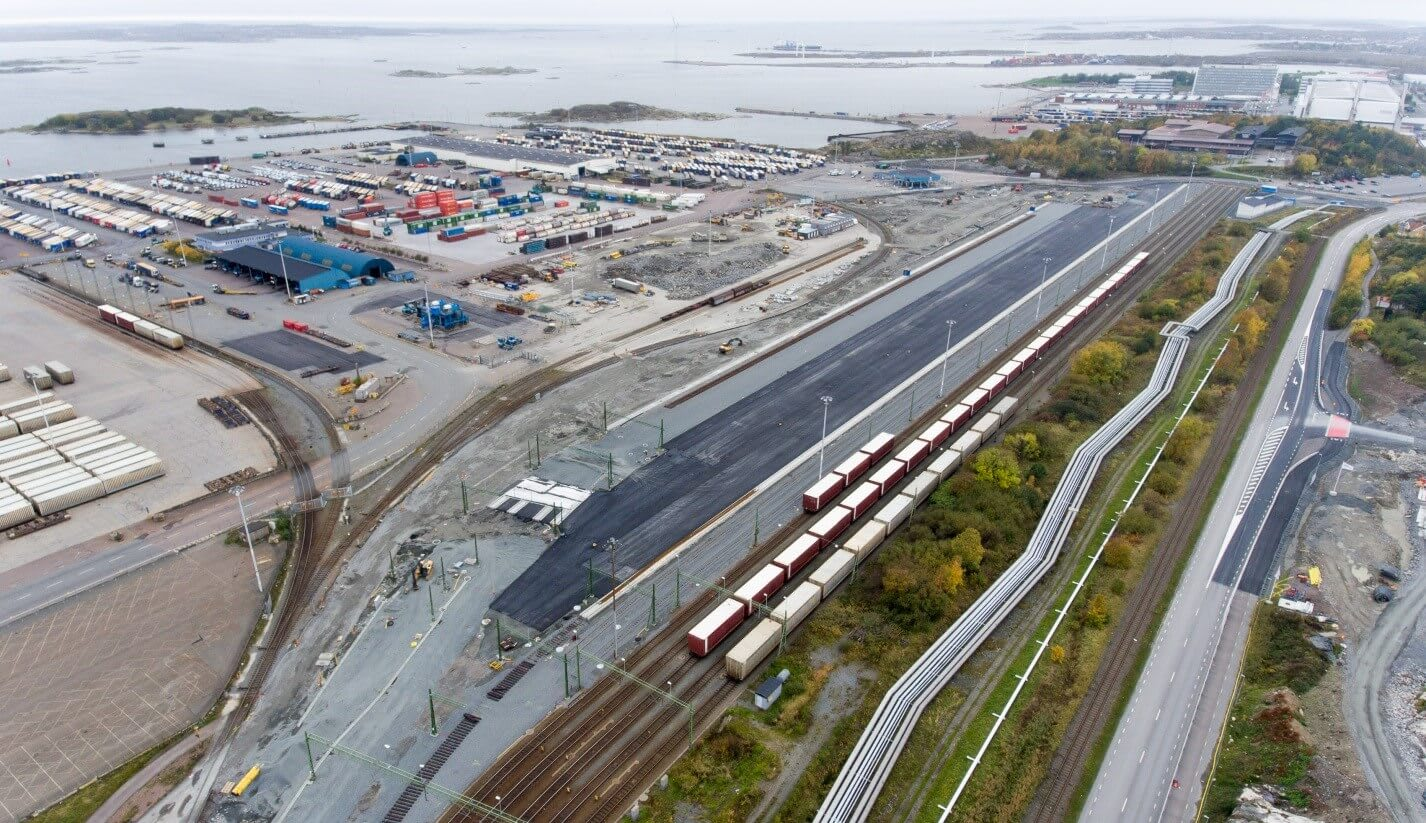
The Port of Gothenburg has increased available cargo storage at Arken Intermodal Terminal by redesigning part of its railway track layout. The work has released approximately 4,000 square metres for trailers and other freight units, with the port reporting that around five per cent more usable area has produced almost twice the previous yard capacity.
Engineers rebuilt one of Arken’s through tracks and rationalised the surrounding layout, opening ground previously constrained by rail infrastructure for trailers and other cargo units. The project increases practical standing and circulation space within the established terminal boundary. It therefore addresses a physical bottleneck between train arrivals, cargo handling, and onward collections rather than adding land through a new terminal development.
Arken occupies approximately 65,000 square metres beside Gothenburg’s container and roll-on/roll-off terminals. The facility is described as having seven electrified railway tracks with a combined length of 3,360 metres and the capacity to handle around 100,000 trailers and other freight units annually. Gothenburg RoRo Terminal has operated the site since 2022, integrating its intermodal activity with nearby terminal operations.
When trailers arrive before their onward train or vessel is ready, the terminal must hold them without obstructing active handling lanes. Inbound units awaiting road collection compete for the same space, particularly during peaks or schedule changes. Tight standing areas can force additional shunting and cargo repositioning, consuming equipment time and reducing the space available for the next arrivals.
The redesigned track area releases room for freight units to be staged closer to the movements they await. Although the port describes a gain of around five per cent in usable space and almost double the yard capacity, the comparison concerns the number of units that can stand within the working area. It is separate from Arken’s stated annual handling capability of approximately 100,000 units and trailers.
Carl Johan Andersson, Senior Logistics Developer at the Port of Gothenburg, attributed the increase to better use of existing infrastructure. He said the layout had delivered “almost twice the yard capacity” from about five per cent more space. The scale of that gain indicates how access lanes, turning space, and the geometry of storage positions can limit usable capacity even where land remains inside a terminal fence.
More standing positions allow cargo to be grouped by destination, booked departure, or collection time, reducing the need to move the same unit repeatedly. This is especially useful when rail arrivals and RoRo sailings are concentrated into overlapping periods. The operator can separate units ready for immediate transfer from those awaiting later movements while keeping access to cranes, vehicles, and loading points clear.
Emma Meltin, Bridge Manager Intermodal at Gothenburg RoRo Terminal, said the additional room makes it easier to plan traffic flows and handle peaks without unnecessary moves. That operational flexibility can reduce conflicts between handling equipment and trucks in a restricted yard. Neither the port nor the terminal operator has reported a specific change in hourly handling productivity or cost per unit following the track reconstruction.
The terminal’s proximity to Gothenburg’s container and RoRo operations allows cargo to change modes within the port area. Trailers may arrive by road or rail before maritime departure, while inbound units require collection or onward rail transport after discharge. Each transfer needs a coordinated sequence of terminal access, unit identification, handling, and departure arrangements. Storage space provides the buffer between activities that cannot always happen simultaneously.
Arken’s seven electrified railway tracks have a combined length of 3,360 metres, providing the rail access used to exchange freight with road and maritime operations. Train paths, arrival allocations, and wagon handling still influence throughput alongside storage space. The current improvement reallocates ground around the tracks; it does not constitute an expansion of the railway network or a doubling of freight movements.
The Port of Gothenburg handles containerised goods, vehicles, energy products, and other bulk and unitised freight. The port reports more than 30 daily rail shuttle connections linking the harbour with destinations in Sweden and Norway. The Arken terminal contributes to this wider system by allowing cargo arriving by different modes to be consolidated or transferred near the maritime facilities.
Previous work at Gothenburg has included quay reinforcement and improvements to adjoining RoRo infrastructure. Arken’s rail layout change tackles a different constraint: trailer standing space during transfers. By working within the existing footprint, the port has increased the amount of cargo it can stage while retaining the established train, road, and vessel interfaces.
Higher standing capacity can be especially useful when vessel or train schedules shift. Cargo may remain at the terminal longer than intended after a delay, while new arrivals continue to enter the site. The enlarged yard gives the operator more room to absorb that overlap, although service reliability will still depend on the adjoining transport links and the rate at which cargo can be collected.
The extra 4,000m² will give Arken more standing space when cargo builds up between scheduled movements, while rail and maritime connections continue to govern the flow of units through the site. The operator can now assess the redesign through storage occupancy, the frequency of unnecessary cargo moves, and its performance during periods of concentrated arrivals.