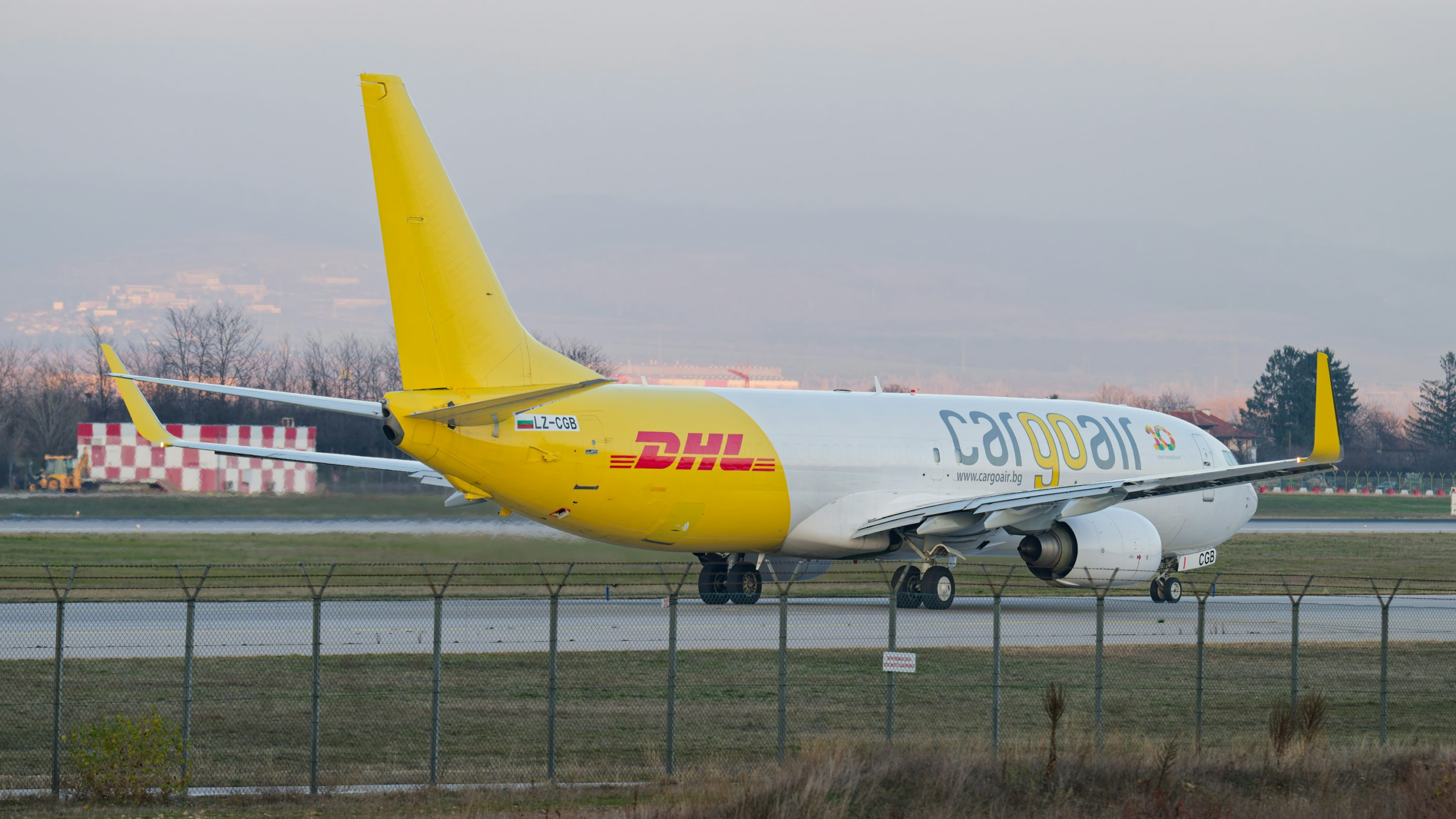
IN Brief:
- The weekly Boeing 767 service creates DHL's first direct aviation link between Bahrain and South Africa.
- Johannesburg feeds DHL's sub-Saharan network, while Bahrain connects into wider gateways including Hong Kong, Leipzig, and Cincinnati.
- The route adds dedicated capacity for heavier express freight from manufacturing, technology, healthcare, and other time-sensitive sectors.
DHL Express has opened a weekly Boeing 767 freighter service between Bahrain and Johannesburg, creating its first direct aviation link between Bahrain and South Africa and adding dedicated capacity between the Gulf and sub-Saharan Africa.
The inaugural flight arrived at OR Tambo International Airport in Johannesburg, where DHL operates one of its principal gateways for the region. The new lane increases inbound and outbound capacity for South Africa and neighbouring markets, with Bahrain acting as the connecting hub into DHL’s wider Middle Eastern and intercontinental air network.
The Boeing 767 gives DHL widebody capacity on a lane where heavier industrial shipments can be difficult to accommodate within passenger belly space or parcel-led networks. The aircraft also supports the company’s expansion in heavyweight express traffic from manufacturing, technology, healthcare, and other time-sensitive B2B sectors.
Johannesburg functions as more than a South African destination. Freight arriving there can feed DHL’s regional network into neighbouring countries, while export cargo can move north through Bahrain and connect onwards to major gateways including Hong Kong, Leipzig, and Cincinnati. The direct weekly flight removes at least one intermediate network step for selected shipments between the two regions.
DHL has also been reporting stronger demand for heavier express cargo elsewhere. Earlier this month, the company said Time Definite International weight per day across Asia-Pacific markets excluding China increased 16% between January and July, with technology, engineering, manufacturing, and automotive cargo making up a large share of the heavyweight segment. That heavyweight express growth is consistent with an aviation strategy that is putting more dedicated lift behind industrial shipments.
A weekly service adds a controlled operating window for cargo that benefits from predictable uplift. Urgent replenishment, spares, samples, medical products, and production-critical components can be planned around a direct network connection rather than depending entirely on routings through Europe or other hubs. The value lies in network control and transit certainty rather than frequency alone.
Bahrain is already a significant node in DHL Express’s Middle Eastern aviation system. Dedicated regional capacity through the hub connects with long-haul gateways in Asia, Europe, and North America. Johannesburg therefore extends an existing hub-and-spoke structure southwards rather than creating an isolated point-to-point route.
Companies are also spreading production, suppliers, and customer markets across a wider range of regions, while Gulf states continue to deepen commercial links with African economies. Established Europe–Africa and Asia–Africa routings remain important, but another network path is useful when a shipment is urgent, heavy, or tied to a production schedule that cannot absorb an additional transfer.
Air freight carries a substantial premium over ocean or road alternatives, so the new lane is most relevant where delay costs more than the transport uplift. Maintenance parts, electronics, medical consignments, and production-critical components fit that profile. A dedicated express freighter also gives DHL greater control over acceptance rules, departure timing, and network recovery than third-party belly capacity can provide.
The weekly rotation will need enough two-way demand to remain efficient. Southbound cargo has to be matched, where possible, by export volumes from South Africa and surrounding markets, because severely imbalanced lanes increase empty capacity and operating cost. Johannesburg provides a broad regional catchment, while Bahrain offers several onward destinations for northbound freight.
The Bahrain–Johannesburg sector sits within a wider aircraft rotation through the DHL Air Bahrain network, allowing the new lane to use existing aviation assets and hub connections. Utilisation, transfer performance, and onward connectivity will therefore be more useful measures than the existence of the direct sector alone.
Weekly frequency will also make cut-off discipline important. Freight missing the planned uplift may need to be rerouted through another gateway, so shippers using the lane for production-critical cargo will need clear tendering windows and contingency options. DHL can use its wider network to recover exceptions, but the direct route delivers its strongest advantage when cargo reaches Bahrain or Johannesburg in time to make the scheduled connection. Consistent ground handling at both gateways will therefore be part of the service proposition.
The first direct flight establishes a new physical link between the two hubs. Its longer-term role will depend on repeat industrial freight volumes, but it adds a controlled Gulf–Southern Africa route at a point where reliable heavy-cargo capacity can be more valuable to supply chains than raw schedule frequency.