IN Brief:
- DHL Supply Chain Philippines has opened its first Cebu warehouse, dedicated to Teradyne.
- The 4,200m² facility combines temperature-controlled storage, multilevel picking, and inventory transaction visibility.
- Its location near Teradyne’s manufacturing site supports closer coordination of materials movements and dispatch.
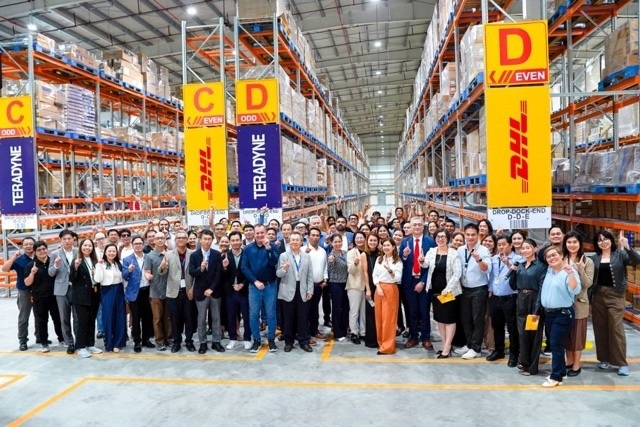
DHL Supply Chain Philippines has opened a 4,200m² warehouse dedicated to Teradyne Philippines in Lapu-Lapu City, Cebu, adding temperature-controlled storage and handling capacity beside the electronics manufacturer’s existing operations. The built-to-suit facility was inaugurated on 30 October and represents DHL Supply Chain’s first warehouse in Cebu. It is designed to receive, store, pick, and dispatch technology products while linking inventory records with the movement of materials between the warehouse and the nearby manufacturing site.
The warehouse is organised around Teradyne’s production requirements and will operate as a dedicated site, rather than as shared storage for unrelated customers. DHL provides the building’s warehousing resources, handling assets, and transport services, with the location selected close to the existing manufacturing operation. Production requirements and incoming deliveries can be coordinated against stock physically held nearby, with transport services covering the link from the warehouse to the factory.
Inbound receiving and put-away form the beginning of the warehouse process. Goods entering the facility need to be identified, assigned a storage location, and made visible in the inventory record before they can be called forward for manufacturing or outward movement. The warehouse supports picking at pallet, carton, and crate levels, allowing handling to be matched to the size and configuration of the items required. Dispatch and truck loading complete the physical sequence, while transport services connect it with Teradyne’s neighbouring site.
Temperature control forms part of the warehouse specification for Teradyne’s technology products. The operator must manage storage conditions while moving items through receiving, put-away, picking, and dispatch, with the required handling procedures determined by each product’s characteristics. The specification covers storage of technology products that need appropriate environmental conditions during handling, with temperature control maintained as goods move through the facility.
A dashboard provides real-time visibility of inventory and warehouse transactions, connecting physical stock movements with the record used to plan subsequent picks. An inbound pallet can be recorded as received before it occupies an available storage location; the distinction affects whether its contents can be allocated to a manufacturing requirement or an outbound load. Transaction updates at receipt, location assignment, selection, and dispatch are therefore essential to keeping the reported inventory position consistent with goods actually available to handlers. A shared view of these stages makes it easier to reconcile inventory before a shipment is loaded or a factory collection is requested.
The mix of pallet, carton, and crate picking allows the warehouse to prepare different quantities without treating every order as a complete pallet movement. Larger units may be moved together where handling equipment and load configuration permit, while selective picks require accurate item and location records to prevent the same inventory being allocated twice. These controls become particularly important when a factory calls for a small quantity of components while other goods are being prepared for dispatch. Matching each pick to the relevant handling unit can reduce the number of unnecessary movements between storage locations and dispatch.
Teradyne designs and manufactures automated test equipment and robotics systems and has operated in Cebu for more than 25 years. The company identifies Cebu as its largest manufacturing facility, making the local logistics footprint significant within its production network. Dedicated space near the plant gives the logistics provider an established location from which to support current operations and potential future changes in material flows.
DHL’s assignment covers movements beyond the warehouse doors, linking its storage function to transport between the facility and Teradyne’s operation. The handovers require matching inventory and transport records: goods are received into stock, selected against a requirement, confirmed for loading, and then transferred to the recipient site. Without accurate updates at those points, a physical transfer can be completed while the inventory record still shows goods at the previous location. The dashboard provides visibility into those transactions for the warehouse and factory teams coordinating the next movement.
The dedicated arrangement concentrates storage, handling, and dispatch alongside a manufacturing site that must manage both incoming materials and movements of finished goods. Distance between premises can affect vehicle turnaround and the ability to respond to altered production requirements, while the selection of storage units determines how efficiently orders of different sizes can be picked. Coordinating the physical transfers with the live inventory record enables staff to prepare mixed quantities for production or dispatch without relying on a single stock count taken earlier in the day.
The Lapu-Lapu City warehouse was inaugurated on 30 October and is now DHL Supply Chain Philippines’ first warehouse in Cebu. Its dedicated operation for Teradyne provides a fixed receiving and dispatch point close to the manufacturer’s production facilities. Its contribution to Teradyne’s supply chain will be determined by the accuracy of stock movements, the preparation of required quantities, and the reliability of transfers between the two sites.