IN Brief:
- FedEx is adding 567,000kg of weekly trans-Pacific capacity using Boeing 777 freighters.
- The revised network links Guangzhou, Shanghai, Osaka, and Clark with US gateways via Anchorage.
- An additional Dallas–Fort Worth connection targets time-sensitive technology and industrial shipments.
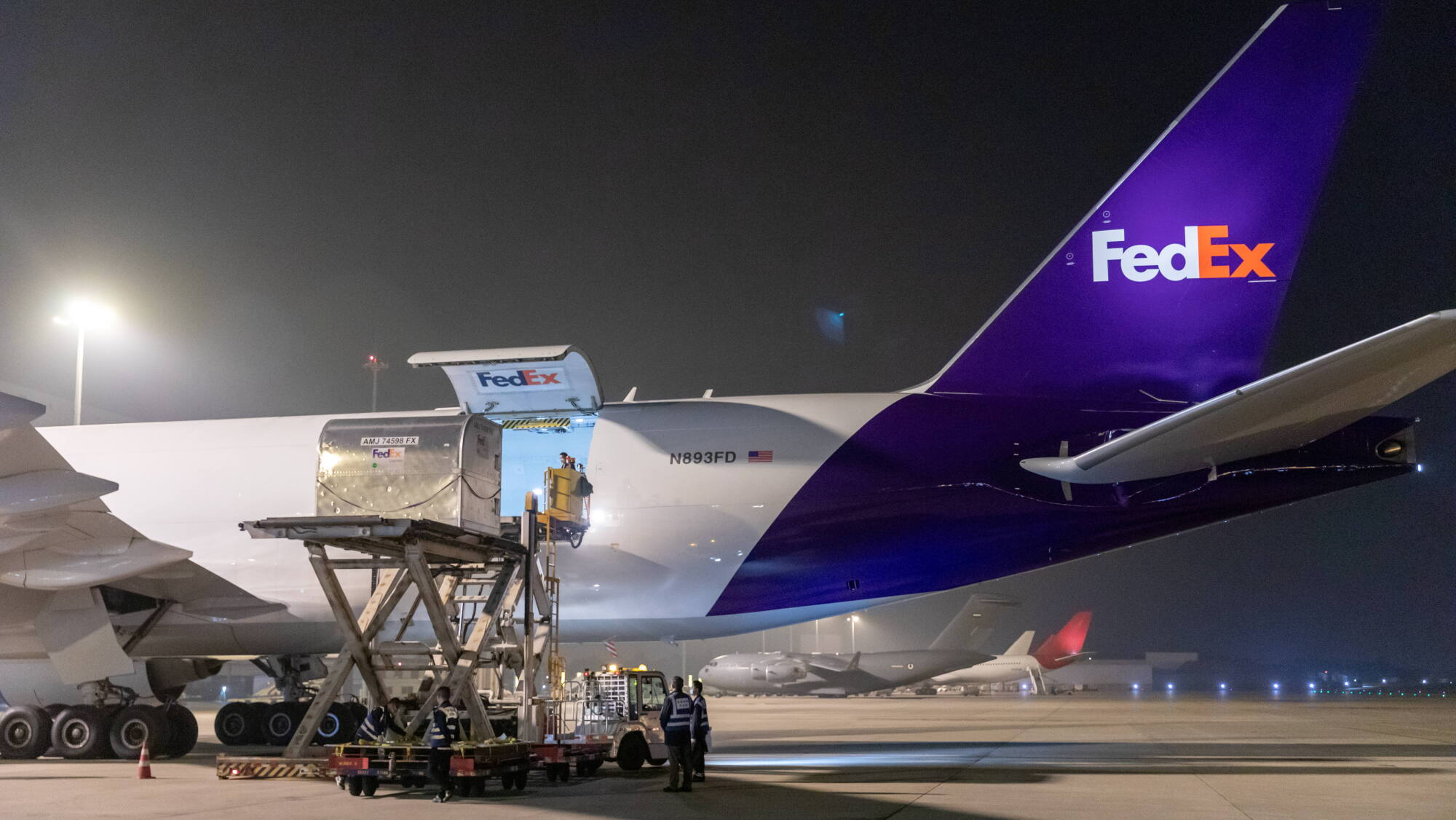
FedEx has added a stated 567,000kg of weekly air cargo capacity between Asia-Pacific and the United States through a five-times-weekly Boeing 777F service. The expanded trans-Pacific operation connects manufacturing and distribution locations in China, Japan, and the Philippines with American gateways via Anchorage, Alaska, supporting movements of semiconductors, computer servers, industrial components, and other time-sensitive goods. The additional flights form part of the carrier’s capacity planning ahead of the year-end shipping peak.
The new service uses three routing variations across the FedEx Asia-Pacific hub in Guangzhou, its sub-regional facilities in Shanghai and Osaka, and its gateway at Clark in the Philippines. These connections route through Anchorage to the FedEx World Hub in Memphis, Tennessee. FedEx also identifies a five-times-weekly connection into Dallas–Fort Worth through Anchorage, giving Asian shippers access to a second major US market for technology and data centre equipment.
Shipments from Singapore, Malaysia, Thailand, Vietnam, and Hong Kong can reach the new trans-Pacific service through FedEx connections into Clark or Shanghai. Freight collected at different points is consolidated through the carrier’s existing hubs before the long-haul movement, then transferred into US sorting and distribution networks. That process makes connection times and available aircraft space important alongside the advertised intercontinental capacity. The announced 567,000kg is the additional weekly network capacity, not a guaranteed allocation from each Asian origin or on each individual route.
The Dallas–Fort Worth connection is aimed at industrial and technology supply chains that require components to arrive within relatively narrow delivery windows. Semiconductor manufacturing equipment, replacement parts, and AI-related computing hardware can be expensive to hold in reserve or delay during commissioning. Airfreight creates a faster intercontinental transport option than sea freight, although actual end-to-end delivery still depends on the availability of connecting services, customs release, handling at the destination, and inland movement.
Semiconductor production and the expansion of AI infrastructure are among the cargo markets identified by FedEx. Chipmaking equipment, computing servers, and industrial components are often sourced from several countries before reaching a plant or installation site, so shipment sequencing can affect equipment commissioning and production schedules. High-value loads may also require carefully specified packaging, security, and receiving arrangements. The routing brings several established Asian manufacturing gateways into the same long-haul network, allowing goods to be consolidated at different departure points before crossing the Pacific.
FedEx attributes its investment partly to growth in trans-Pacific air cargo. Citing International Air Transport Association analysis for July 2026, it reports that the Asia–North America corridor grew 9% year on year, making it the fastest-growing major air cargo lane in that reporting period. The carrier also cites a joint research project with Frost & Sullivan describing Asia-Pacific’s considerable share of semiconductor industry revenue, reinforcing the concentration of electronics production in the region.
FedEx has previously expanded flight connections from Bangkok, Penang, and Sydney into Guangzhou, allowing those origin markets to feed its wider Asia-Pacific network. The new long-haul capacity extends the range of US destinations available through that network. An additional flight at an international gateway does not automatically shorten every end-to-end journey; consignments still depend on the published departure schedule, transfer cut-offs, and available onward service. The additional scheduled uplift provides more options for moving consolidated freight across the Pacific and onward through the US distribution network.
Salil Chari, president of FedEx Asia Pacific, associated the additional flights with advanced manufacturing, AI-related demand, and the seasonal trading peak. The network expansion consequently covers two different traffic patterns: recurring industrial parts movements and higher-volume shipments concentrated around year-end. Both use the same aircraft and connections, so the mix of freight on each departure will influence capacity available to individual industries. Demand from both sectors will be handled through the new departure patterns and the carrier’s existing hub connections.
Anchorage remains a transit point on the announced long-haul routings, while Memphis provides the established US sorting hub and Dallas–Fort Worth offers an additional destination for shipments bound for Texas and neighbouring markets. The latter connection may reduce the need for some loads to be routed through more distant domestic gateways, depending on the final delivery address and service purchased. Customs release, transfer handling, and inland distribution remain separate stages after the aircraft reaches its US destination.
The five-times-weekly Boeing 777F service is the operational change confirmed by FedEx, with the company stating a combined 567,000kg increase in weekly capacity. Its release does not give utilisation forecasts, average door-to-door transit times, or capacity reserved for any one customer sector. Shipment volumes and connection performance after the peak-season expansion will show how much of the new uplift is used by semiconductor, data centre, and wider industrial supply chains.