IN Brief:
- The inaugural double-stack operation discharged 90 TEU and loaded 180 TEU.
- Terminal handling was completed within seven hours.
- The service connects Nhava Sheva with the National Capital Region through the Dedicated Freight Corridor.
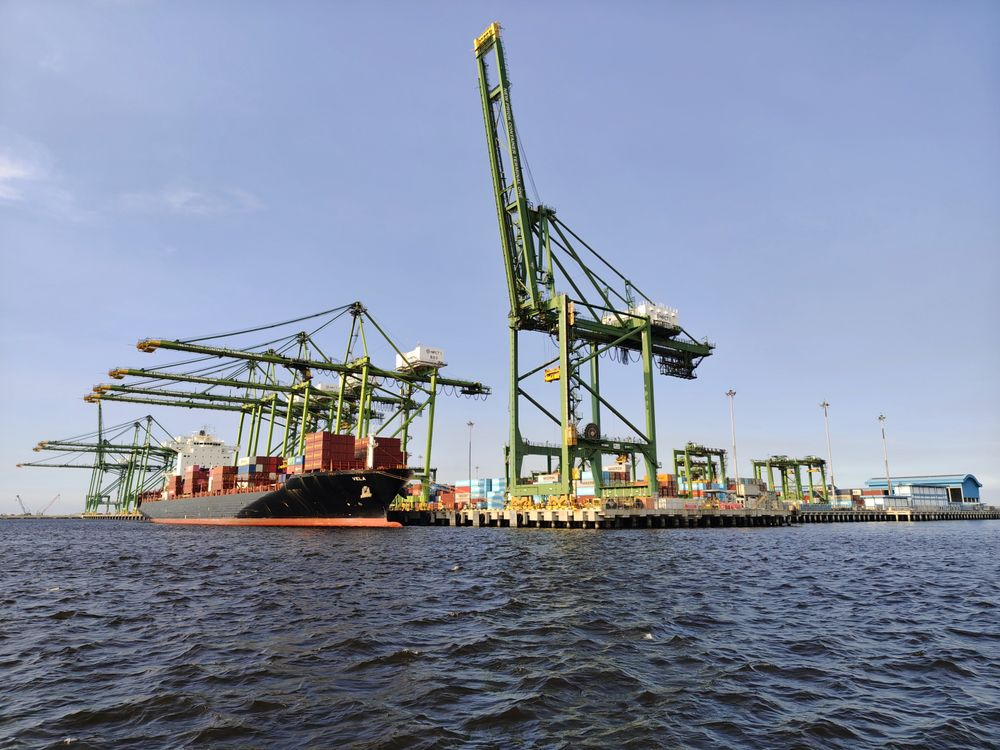
APM Terminals Mumbai, also known as Gateway Terminals India, has completed its first double-stack container-train operation to Dadri through India’s Dedicated Freight Corridor, opening a higher-capacity rail connection between Nhava Sheva and the National Capital Region.
The inaugural working handled 270 TEU, with 90 TEU discharged from the arriving train and 180 TEU loaded for its onward movement. The complete terminal exchange was finished within seven hours.
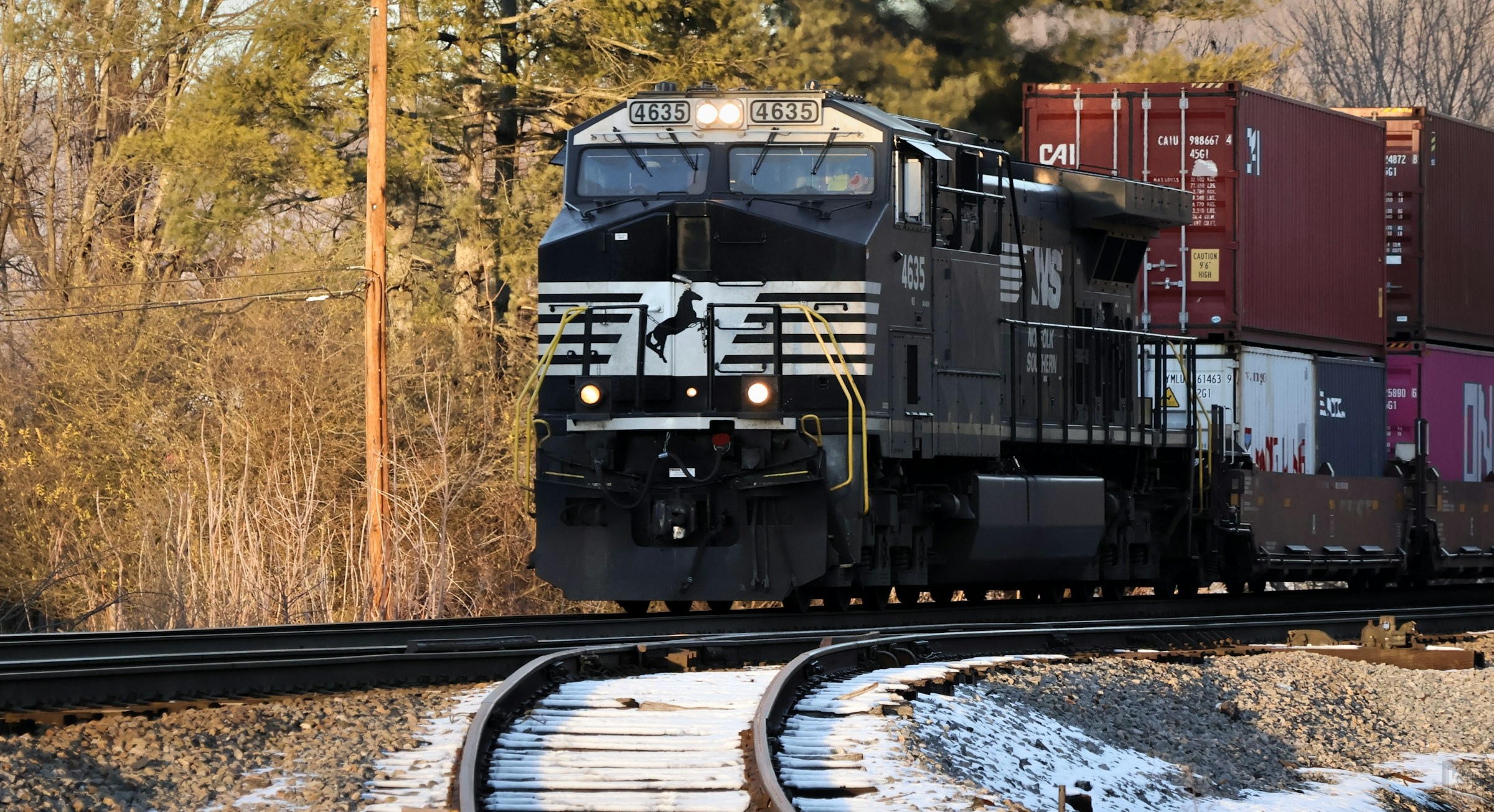
Double-stack trains carry two containers vertically on compatible wagons, allowing each train path to move substantially more cargo without a corresponding increase in length. Their operation requires sufficient loading gauge, suitable bridges and tunnels, compatible electrification, specialised rolling stock, and terminals equipped for efficient high-level lifting.
India’s Dedicated Freight Corridor provides much of that infrastructure between western ports and inland industrial markets. Higher axle loads, longer train formations, and freight-focused scheduling remove many of the conflicts encountered where cargo services share conventional routes with intensive passenger traffic.
Dadri is a major inland-container and logistics centre serving Delhi, the wider National Capital Region, and manufacturing clusters across northern India. A regular double-stack service gives importers and exporters a higher-capacity link to the marine terminals at Nhava Sheva.
The seven-hour exchange demonstrates the importance of terminal handling within the overall rail proposition. Containers must be identified, staged, lifted, and positioned in a sequence aligned with customs status, vessel cut-offs, train formation, and onward transport requirements.
When terminal processes lag behind train performance, faster infrastructure produces little improvement in total transit time. A service arriving on schedule but waiting for a working window occupies track, locomotive, wagon, and crew resources, while export cargo risks missing its intended vessel.
Gateway Terminals India already handles substantial vessel, road, rail, customs, and yard activity. Its rail operations must therefore be fitted around deep-sea berthing, gate appointments, inspection activity, empty-equipment movements, and the continuous repositioning of containers between storage blocks.
The first Dadri operation forms part of a wider effort to increase rail’s share of Indian port traffic. Road transport remains indispensable for origin collection and final delivery, although long-distance trunk movements become more efficient when sufficient cargo can be consolidated into scheduled trains.
Double stacking strengthens that economic case by spreading locomotive, crew, and infrastructure costs across a larger number of boxes. Each train path also carries more loaded and empty equipment, reducing the number of long-haul truck journeys required along heavily used highway corridors.
Balanced flows will remain essential. Import-heavy inland markets can accumulate empties, while exporters and ports require a steady supply of suitable containers. Poor equipment balance increases storage, repositioning, and road-transfer costs even when the loaded rail service performs efficiently.
A major empty-container facility taking shape at JNPA will provide additional storage, inspection, and maintenance capacity close to the port, as outlined in coverage of the new port-side equipment yard. Comparable inland capability will be needed to maintain fluid double-stack operations at scale.
Digital coordination will influence how effectively trains are assembled. Punjab’s integration with the Unified Logistics Interface Platform, detailed in the state freight-system programme, reflects the growing use of shared shipment and infrastructure data to coordinate cargo across roads, railways, terminals, and ports.
Concentrating more cargo into each departure also increases the effect of disruption. A missed train path, equipment fault, or terminal closure can delay a larger number of shipments simultaneously, requiring contingency capacity and clear procedures for late-arriving or customs-held containers.
Terminal layout will become increasingly important as frequency grows. Rail-mounted and rubber-tyred gantry cranes, inspection areas, internal roads, and storage blocks must support train activity without obstructing vessel and truck flows.
Manufacturers in northern India can gain more predictable long-distance transport for automotive parts, engineering products, textiles, chemicals, food, and consumer goods. Sealed containers reduce repeated handling, while scheduled rail services can provide greater consistency than large numbers of independent long-haul truck movements.
Importers benefit from the same structure in reverse, particularly where factories require regular deliveries of components and raw materials. Reliable performance at Dadri will depend on final-mile trucking capacity being available when trains arrive rather than after containers have begun accumulating in the inland yard.
The inaugural movement establishes an operating benchmark rather than a complete service transformation. GTI must now maintain dependable schedules, assemble balanced volumes in both directions, and coordinate train planning with shipping lines, inland terminals, cargo owners, and road operators.
Its first 270 TEU operation nevertheless shows how the Dedicated Freight Corridor is moving from infrastructure project to commercial freight network. Higher-capacity trains are beginning to connect deep-sea terminals with inland production and consumption markets through repeatable scheduled movements.