IN Brief:
- The MGR IFR rotation calls at Cochin, Nhava Sheva, Fujairah, Sohar, and Aden on a fortnightly schedule.
- Marsa Virgo and Marsa Zenith each provide more than 500 TEU of capacity, with the inaugural Cochin call handling more than 1,000 TEU.
- DP World Cochin recorded 97,952 TEU in August, 51% above the same month a year earlier.
DP World has added a fortnightly container service linking southern India with ports in the United Arab Emirates, Oman, and Yemen, broadening direct connections from its Cochin terminal into the Middle East.
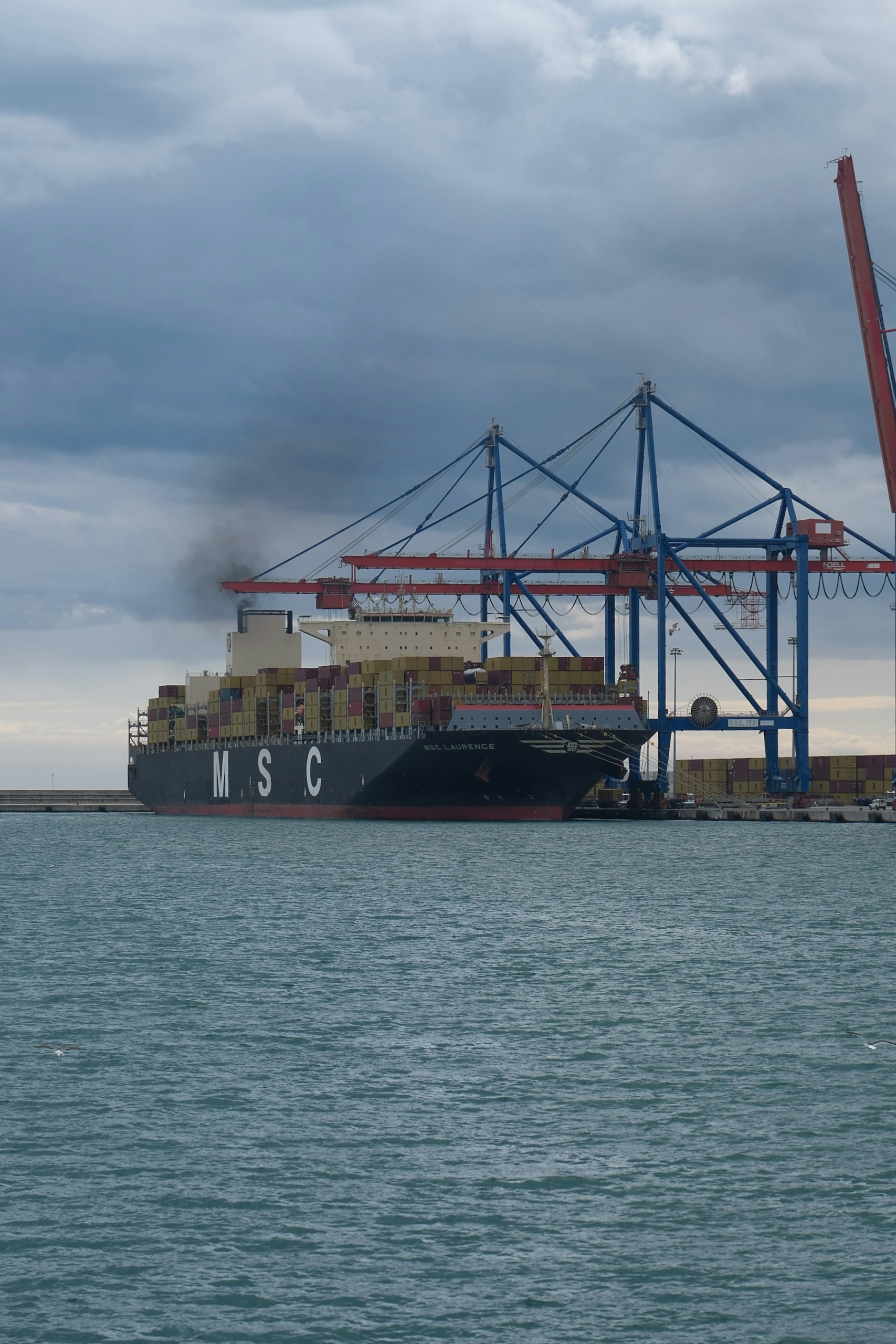
The MGR IFR service calls at Cochin and Nhava Sheva in India before continuing to Fujairah, Sohar, and Aden, then returning to Cochin. It is operated by M.V. Marsa Virgo and M.V. Marsa Zenith, each offering more than 500 TEU per voyage. The inaugural Marsa Virgo call at DP World Cochin saw the terminal handle more than 1,000 TEU.
The rotation gives exporters and importers in southern India another route into Gulf and Arabian Peninsula markets without first depending on a larger east-west mainline loop. Its fortnightly frequency is modest beside high-volume trunk services, but it adds another routing option for cargo that is poorly served by existing schedules or needs a more direct regional connection.
The service also strengthens Cochin International Container Transhipment Terminal as both a Kerala gateway and a connecting point between Indian coastal cargo and international services. The terminal handled 97,952 TEU in August, its highest monthly throughput to date and 51% above the same month a year earlier. That growth gives the service a larger local cargo base, although sustained volumes will depend on repeat bookings from exporters and forwarders.
Industrial and food exporters in southern India often need regular access to Gulf markets without commanding the volumes required for dedicated mainline services. Calls at Fujairah and Sohar create additional connections through established regional port networks, while Aden extends the rotation into Yemen. Schedule reliability, slot availability, equipment positioning, and onward transport will determine how useful the new route becomes in day-to-day supply planning.
DP World has been expanding the logistics surrounding its port estate rather than treating terminal handling as a standalone activity. At Cochin, the operator has developed Kerala’s first Free Trade Warehousing Zone alongside the terminal, giving customers access to bonded storage and value-added logistics close to the quay. Elsewhere in the Gulf, the company has expanded inland road and rail capacity, with 500,000 TEU moved through its GCC inland network since March.
Direct maritime connectivity removes only one source of friction in an export chain. Containers still have to be positioned near production, moved into the terminal, cleared, stored where required, and collected after discharge. Bringing those functions closer to gateway infrastructure can reduce handovers, but it also increases the consequences of disruption at the terminal, feeder service, or inland leg.
The MGR IFR rotation arrives as shippers continue to spread risk across more routes and ports. Red Sea disruption, changing carrier networks, and uneven congestion have increased the value of secondary connections that sit outside the largest east-west loops. A feeder of more than 500 TEU cannot replace mainline capacity, but it can bridge regional cargo pools and larger trading hubs where service patterns leave gaps.
Nhava Sheva gives the service access to India’s largest container gateway cluster, while Cochin contributes cargo from the south and sits close to major east-west shipping lanes. Combining the two Indian calls allows the vessels to aggregate demand before crossing to the Middle East, improving the chance of viable load factors while giving customers in both regions another sailing option.
The commercial comparison will be made against existing transhipment alternatives rather than against an idealised weekly direct service. Total transit time, cut-off reliability, demurrage exposure, container availability, and onward connections will decide whether the additional port pairings reduce logistics risk. Those measures usually carry more operational weight than sailing frequency in isolation.
A fortnightly service also places more weight on inventory planning than a higher-frequency loop. Missing one sailing can create a two-week gap before the next scheduled departure, so exporters will need dependable cut-offs, inland collections, and container availability around each call. The same discipline applies at destination, where delayed onward movement can erase much of the benefit gained from a more direct sea connection.
The inaugural call has established the operating pattern, but repeat cargo will determine whether the fortnightly rotation becomes a durable part of the network. Sustained demand would give DP World Cochin another layer of connectivity alongside its transhipment and warehousing activities, while southern Indian exporters gain another path into three distinct Middle Eastern markets.