IN Brief:
- A federal indictment charges 14 defendants over alleged thefts exceeding $22.5 million from at least 36 freight trains.
- Prosecutors allege that participants forced trains to stop, removed containerised merchandise, and transported it to storage locations for resale.
- The allegations cover activity between February 2024 and August 2026; the defendants remain presumed innocent unless proven guilty.
The US Department of Justice has charged 14 people over an alleged organised cargo theft operation involving at least 36 freight trains in Southern California and merchandise worth more than $22.5 million. Federal prosecutors allege that participants deliberately stopped trains carrying imported goods, removed products from shipping containers, and transported them to locations where the merchandise was stored or prepared for resale.
A federal grand jury returned a 17-count indictment containing allegations of conspiracy, theft of interstate railroad cargo, possession or receipt of stolen merchandise, and violence against railroad carriers. Thirteen defendants were arrested when the indictment was announced on 19 November. Subsequent law enforcement reporting provided further details of the investigation, although the number of people charged remains 14.
The alleged offences took place between February 2024 and August 2026, targeting freight moving through the rail network serving the Los Angeles region. Prosecutors say the merchandise included Nike footwear, Milwaukee tools, and other consumer products. The goods were being transported through established commercial supply chains rather than through a separate or unauthorised freight service.
Investigators allege that participants selected trains carrying valuable cargo and coordinated the movements needed to intercept them. The indictment describes interference with railway braking equipment intended to force trains into an emergency stop. Other participants allegedly accessed shipping containers while the trains were stationary and transferred merchandise into trucks and vans waiting nearby.
Freight train braking systems use compressed air distributed through connected railway vehicles. A substantial loss of pressure in the brake pipe can trigger emergency braking, bringing a train to a stop as part of its safety function. Prosecutors allege that participants interfered with this system to create opportunities for theft. Such interference also presents risks to railway operations and people near the tracks, independently of the value of the cargo being carried.
The allegations describe activity involving people assigned different roles. Some allegedly identified suitable trains, others removed merchandise, and additional participants transported stolen goods away from the railway. Prosecutors further claim that communications through Instagram helped coordinate the operation and arrange subsequent sales.
These claims remain allegations contained in a federal criminal case. No defendant should be treated as having committed the charged offences unless that is established through the legal process. The indictment provides details of the conduct prosecutors intend to prove, rather than independently verified findings of criminal responsibility.
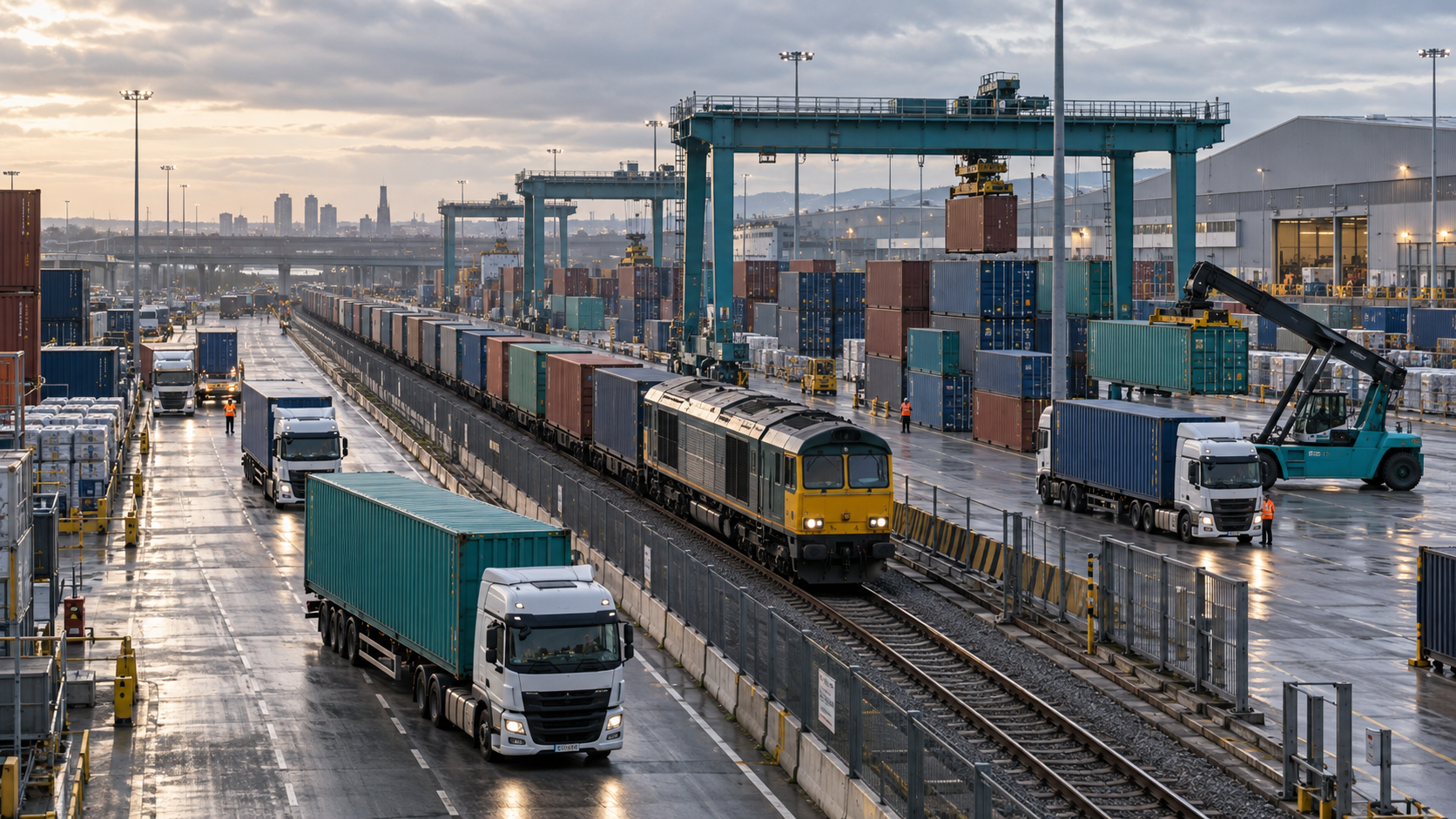
The affected freight movements formed part of the intermodal network connecting the ports of Los Angeles and Long Beach with inland distribution centres. Containers arriving aboard oceangoing vessels can be transferred onto trains for movement to freight terminals elsewhere in the United States. That process allows large volumes of imported merchandise to travel inland without requiring every container to make the entire journey by road.
Intermodal transport involves several stages of custody and handling. A marine terminal records the discharge and release of a container, the rail carrier receives it for inland movement, and another operator may arrange collection at the destination terminal. Information about the container’s identity, location, seal, and transport status must remain consistent as responsibility passes between organisations.
A theft occurring between established handling points can disrupt that record. The shipping container may still be present in the transport network even though part of its contents has been removed. Determining the extent of the loss can require comparison of packing records, terminal information, inspection findings, and the condition of the goods received by the final customer.
Container seals provide evidence of possible unauthorised access, but they are not a guarantee that a consignment cannot be opened or damaged. Their effectiveness depends on correct application, inspection, and the response to discrepancies. Monitoring the wider movement of the container is also important because a compromised shipment may continue towards its destination before the damage or shortage is identified.
Rail freight presents different physical security conditions from a controlled marine terminal. Freight trains travel over extensive networks, including stretches away from major distribution facilities where continuous observation can be difficult. A train stopping unexpectedly may therefore create a different exposure from a container held inside a terminal with controlled vehicle and pedestrian access.
Security measures can include monitoring freight movements, investigating unexplained stops, restricting access to railway facilities, and recording unusual container handling activity. Their suitability depends on the operating environment and the risks associated with particular cargo. The indictment does not establish the precise security equipment or procedures used on every train involved in the alleged thefts.
The scale of the alleged merchandise loss also creates challenges after cargo has left the railway. Products removed from a commercial shipment may retain packaging, identifying marks, or other records linking them to an original consignment. Investigators seeking to trace those goods must establish how they moved between vehicles, storage locations, and subsequent buyers.
The Department of Justice alleges that stolen merchandise was stored and resold through arrangements involving several participants. Financial records and communications can form part of that investigation, although the existence of a payment or commercial transaction does not by itself establish the knowledge or criminal responsibility of every person connected to it.
Investigating agencies included Homeland Security Investigations, the Los Angeles Police Department’s Commercial Crimes Bureau, Union Pacific Railroad Police, and the California Highway Patrol’s Cargo Theft Interdiction Program, with assistance from IRS Criminal Investigation. The participation of several agencies reflects the interstate transport activity and the alleged organisation of the offences.
The stated loss of more than $22.5 million concerns merchandise identified in the federal case. It should not be interpreted as a complete estimate of associated supply chain costs. Damage to containers, delays to rail movements, additional handling, insurance claims, and customer disruption may create further expenses, but the published indictment does not quantify those effects.
The prosecution also concerns a specific alleged operation rather than every form of cargo theft affecting US rail freight. Other incidents can involve different methods, cargo types, and locations. The outcome of this case will establish whether the charges against the defendants are proven, while the investigation has already identified the railway movements, containers, road vehicles, and alleged resale arrangements at the centre of the proceedings.