IN Brief:
- Transport organisations want continued fuel duty protection as operators contend with rising diesel and electricity costs.
- Just 0.3% of licensed UK HGVs were zero-emission at the end of June 2026.
- Industry groups are seeking coordinated funding and infrastructure support for electric freight, particularly for smaller operators.
Freight and logistics operators are calling for immediate relief from rising fuel costs alongside investment in electricity infrastructure, warning ahead of today’s Autumn Budget that financial pressures are making fleet renewal and decarbonisation increasingly difficult.
The Chartered Institute of Logistics and Transport (CILT (UK)) wants Chancellor John Healey to maintain the existing 5p-per-litre fuel duty cut while accelerating measures that would make electric commercial vehicles and other lower-emission transport systems commercially viable.
The demands reflect the different investment pressures facing transport businesses. Diesel remains essential to much of the freight fleet, while electrification depends on access to capital, suitable charging infrastructure and electricity prices that allow competitive operations.
Daniel Parker-Klein, Director of Policy and Communications at CILT (UK), said: “Fuel costs are not just a concern for motorists. They directly affect the cost of keeping supply chains and public transport moving.”
The institute is calling for improved grid access for road freight depots, electrified rail routes and ports seeking to provide shore power for vessels at berth. It argues that businesses need practical support for the transition while managing existing operating costs.
Smaller fleet operators face particular difficulties in absorbing fuel price increases.
Research commissioned by Right Fuel Card among 250 UK fleet decision-makers found that 60% identified fuel as their biggest cost pressure, while 45% expected rising fuel expenditure to reduce profits over the following year. Only 14% expressed confidence that their businesses could withstand further increases.
David James, Revenue Director at Right Fuel Card, said: “For many of our customers, fuel accounts for 25–30% of operating expenses. That applies not only to large transport companies, but to small businesses too.”
Right Fuel Card wants a longer-term fuel duty freeze, targeted assistance for smaller commercial fleets and simpler access to electric vehicle funding. It has also proposed fuel-cost adjustment clauses in public sector contracts, allowing suppliers to respond more consistently to substantial changes in operating expenditure.
Although electrification offers a potential means of reducing exposure to diesel price volatility, the infrastructure required to support electric heavy goods vehicles remains a considerable investment barrier.
A report from the Aldersgate Group and Renewable Energy Association identifies expensive grid connections, uncertain vehicle residual values and difficulties accessing affordable finance as obstacles to wider adoption.
The report, Ready to Move: a framework for decarbonising UK HGVs, states that only 0.3% of the UK’s licensed HGV fleet was zero-emission at the end of June 2026. Zero-emission trucks accounted for 1.1% of new HGV registrations during the third quarter.
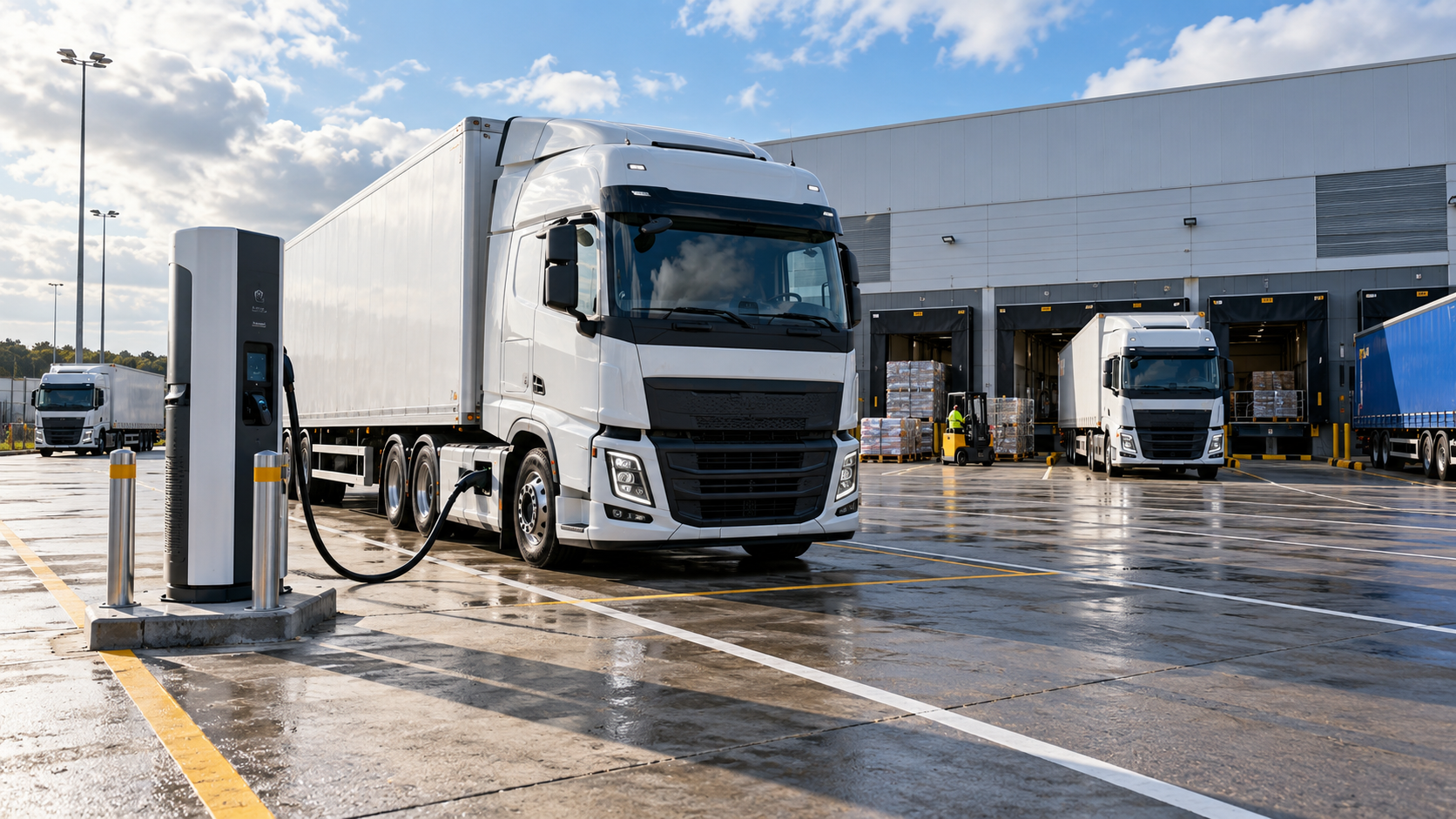
Electric freight operations can place substantial additional demands on depot electrical infrastructure. Charging several heavy vehicles within limited turnaround periods may require considerable network capacity, while connection upgrades can involve costs and lead times beyond those associated with purchasing vehicles and charging equipment.
Where sufficient power is unavailable, operators may be unable to use new charging infrastructure when vehicles arrive. Such uncertainty complicates fleet replacement schedules, financing arrangements and decisions about allocating investment across multiple sites.
Rachel Solomon Williams, Executive Director at the Aldersgate Group, said: “Record diesel prices have shown how exposed our supply chains are to fuel price shocks. Electric trucks are already delivering for British businesses, and the challenge is to make that possible for more operators.”
The report calls for a national HGV transition framework, targeted financial mechanisms to reduce investment risk and electricity infrastructure planned ahead of anticipated freight demand. Shared charging facilities and battery storage could also help address local capacity constraints where technically and commercially suitable.
CILT is seeking corresponding investment in rail freight infrastructure, electricity supplies at ports and the connections linking freight terminals, manufacturing centres and distribution networks.
The Chancellor therefore faces requests for both immediate protection for diesel-dependent businesses and longer-term funding for cleaner transport. Operators will be examining the Budget for decisions on fuel duty, electricity costs, grid connections and financing mechanisms that give them greater certainty over future fleet investment.