IN Brief:
- Heathrow expansion proposals place cargo capacity and trade connectivity alongside passenger growth.
- The airport remains central to UK trade by value, particularly for pharma, electronics, advanced manufacturing, and perishables.
- Any runway expansion must still navigate planning, environmental, surface access, and economic tests.
Heathrow expansion is again being framed around freight as well as passenger growth, with air cargo capacity, high-value exports, and trade connectivity central to the renewed third runway debate.
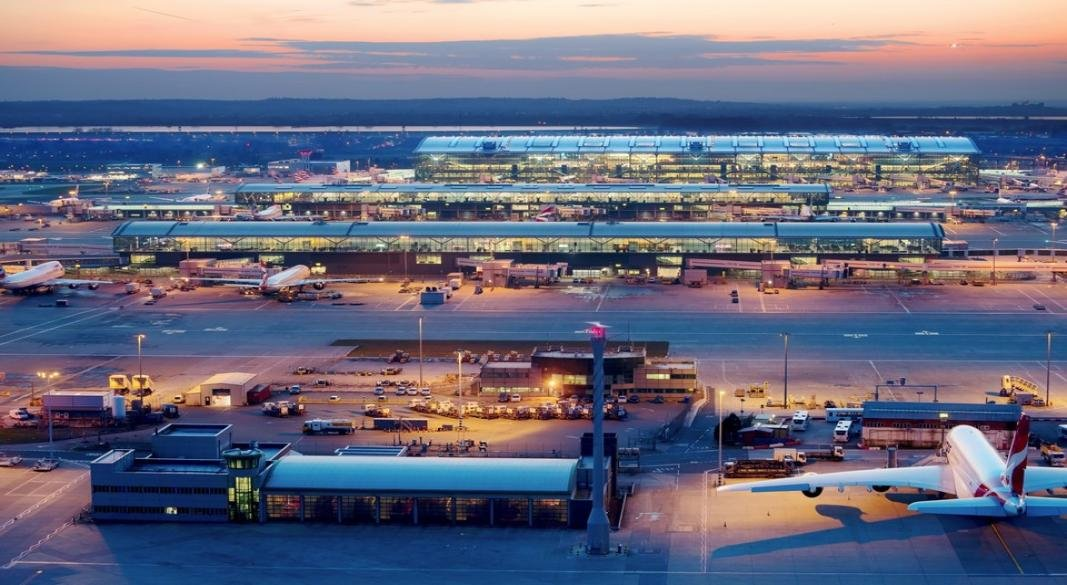
The revised policy framework places Heathrow’s cargo role inside the wider national infrastructure case. The airport remains the UK’s largest air freight gateway and a major route for high-value and time-sensitive goods, including pharmaceuticals, electronics, advanced manufacturing components, aerospace parts, perishables, and premium food exports.
Air cargo through Heathrow is shaped heavily by bellyhold capacity on passenger aircraft. That makes route choice, flight frequency, aircraft type, airline network decisions, and runway availability directly relevant to freight lift. Where passenger capacity is constrained, cargo capacity is constrained with it, particularly on long-haul routes that carry high-value goods in both directions.
The airport’s freight role is measured most clearly by value rather than tonnage. Heathrow handled £293bn of goods in 2025, representing more than a quarter of UK trade by value, with more than 1.59 million tonnes moving through the airport. Those figures, already examined through the lens of UK airfreight concentration, make Heathrow less a conventional airport asset and more a strategic trade gateway.
Expansion supporters see additional runway capacity as a route to more long-haul services, stronger access to growth markets, improved bellyhold availability, and better resilience for goods that cannot tolerate slow routing. The freight argument is strongest in sectors where value density, shelf life, security, compliance, or production urgency makes air movement commercially justified.
Pharmaceutical logistics sits close to the centre of that debate. Temperature-controlled medicine, diagnostics, clinical trial materials, and healthcare products require reliable airport handling, specialist forwarding, cold-chain packaging, customs processes, and road feeder services. Electronics and advanced manufacturing goods carry similar time and value pressures, particularly where delayed parts can stop production or disrupt service commitments.
The expansion proposal will still face heavy scrutiny. Noise, air quality, carbon, local community impact, surface access, planning risk, and financing remain contested. Government analysis has also prompted renewed debate over the scale of economic benefit attached to a third runway. Freight users will be watching whether cargo handling, landside access, security processes, and logistics land receive the same attention as passenger terminal and runway capacity.
Surface access is especially important. Additional flights do not automatically create better freight performance if cargo cannot move efficiently between terminals, forwarder facilities, warehouses, manufacturers, and final delivery networks. Congested road links, limited logistics space, driver constraints, and weak integration with distribution sites could erode the value of increased air capacity.
Heathrow’s cargo dependence also interacts with wider disruption in ocean and road freight. When maritime routes are delayed or uncertain, air cargo becomes a pressure valve for high-priority goods. It cannot replace ocean freight at scale, but it can protect production lines, product launches, medical supply, and perishables flows when time becomes more valuable than transport cost.
Seasonal airline decisions show how fluid that capacity can be. American Airlines’ summer expansion at Heathrow increased cargo lift through bellyhold services, and the additional cargo capacity demonstrated how freight availability can shift with passenger network planning. A third runway would expand the runway side of that equation, but the cargo gain would still depend on airline economics and route allocation.
The Heathrow debate is therefore about more than extra aircraft movements. It concerns how the UK supports high-value trade, temperature-controlled supply chains, export growth, and resilience in sectors where delay carries disproportionate cost. Runway capacity is only one part of the freight system, but without sufficient airside headroom, the rest of the system operates inside a narrow constraint.
The next stage of the expansion process will determine whether cargo remains a supporting argument or becomes a fully integrated part of the infrastructure design. Heathrow’s freight value gives the proposal a strong trade dimension; the test will be whether that dimension is matched by cargo handling investment, surface transport planning, and a credible path through environmental and planning scrutiny.