IN Brief:
- At least eight vessels reportedly turned back while approaching the Strait of Hormuz from the Omani side.
- Some vessels later continued on a route closer to Iran.
- The incident highlights the operational fragility of Gulf routing, even after partial reopening and diplomatic pauses.
United Kingdom Maritime Trade Operations and wider maritime authorities remain central to Gulf security monitoring after multiple vessels reportedly reversed course while approaching the Strait of Hormuz from the Omani side.
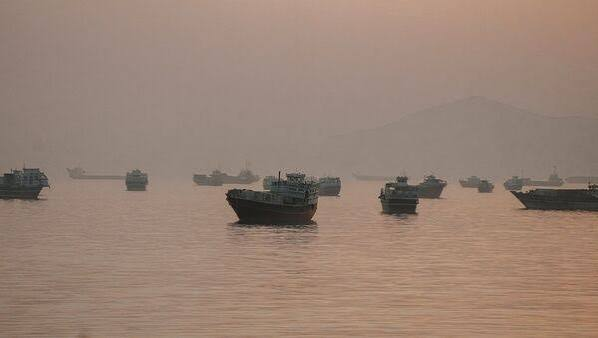
At least eight vessels, including tankers, bulk carriers, and vehicle carriers, were observed turning back between Friday and Saturday after sailing toward the strait along the Omani coast. Some later continued their transits using a route closer to Iran, reflecting the complicated navigational conditions that still surround Gulf shipping.
The Strait of Hormuz remains one of the world’s most important maritime passages, carrying a major share of seaborne energy trade. Its influence extends beyond oil and gas cargoes because energy pricing feeds into bunker costs, chemicals, plastics, fertiliser, manufacturing inputs, and transport pricing across wider industrial supply chains.
Vessel reversals around a chokepoint create uncertainty even when the route is not formally closed. Charterers, shipowners, insurers, cargo owners, and crews all need enough confidence to proceed. A waterway can be technically open while still carrying enough ambiguity to slow movements, alter sailing behaviour, and raise the commercial cost of passage.
Commercial shipping had only recently regained a degree of movement through Hormuz under a temporary negotiation window, with earlier Gulf route analysis pointing to continuing constraints around vessel inspections, mine-clearance work, backlog management, and war-risk cover. The latest reversals show how fragile that recovery remains.
Route compliance is one of the practical pressures. Iran has previously indicated that vessels should use authorised routes designated by the Islamic Republic, creating another layer of decision-making for operators already balancing safety, charter commitments, insurance clauses, and customer delivery windows. Even small changes in route confidence can alter voyage economics.
Gulf uncertainty also interacts with Red Sea disruption. A carrier or shipper managing energy-linked risk near Hormuz may simultaneously face longer Asia-Europe routing because of Red Sea security concerns. These overlapping maritime pressures make it harder to separate energy risk, schedule risk, and freight pricing risk into neat operational categories.
The most visible cargo may be oil, but the cost transmission is broader. Higher bunker prices affect ocean freight, while insurance adjustments can influence both tanker and dry cargo movements. Port congestion, emergency surcharges, vessel bunching, and alternative routings can then move into landed-cost calculations for components, consumer goods, industrial materials, and manufacturing inputs.
Warehouse and inland logistics operators often feel the disruption later than carriers. Delayed vessels create gaps in inbound flow, followed by clustered arrivals that strain drayage capacity, yard planning, labour deployment, and storage space. A navigational decision in the Gulf can therefore surface weeks later as a receiving bottleneck at a distribution centre.
The broader supply chain pressure was evident through the second quarter, when Gulf disruption fed into freight, energy, and routing risk alongside shifting tariff expectations and volatile inventory decisions. The latest tanker movements fit that pattern, with risk travelling through finance, insurance, fuel, and transport capacity rather than through one disrupted cargo lane alone.
Shippers are responding by widening routing scenarios, reviewing delay and surcharge clauses, and building more flexibility into inventory planning. Moving earlier, splitting supplier flows, switching mode, or holding stock closer to demand all carry costs, but so does relying heavily on a corridor where confidence can change within a weekend.
Hormuz remains difficult to substitute, particularly for energy-linked cargo and regional trade. The reversals do not show a collapsed route, but they do show a market still operating on thin confidence. Repeated, safe, insurable, and commercially viable transits will decide whether Gulf freight returns to stable planning or remains trapped in a cycle of partial reprieves and renewed caution.