IN Brief:
- IN Supply’s October edition examines the changing warehouse and the growing demands on supply chain resilience.
- Arvato UK and Fidelity Fulfilment discuss the practical opportunities and limitations of AI and warehouse automation.
- Cybersecurity, nearshoring, and compliance are creating new operational challenges across increasingly connected supply chains.
An automated warehouse can keep orders moving at impressive speed, but a disrupted network connection can still bring the whole operation to a standstill. More technology means more capability, along with more systems that must work together.
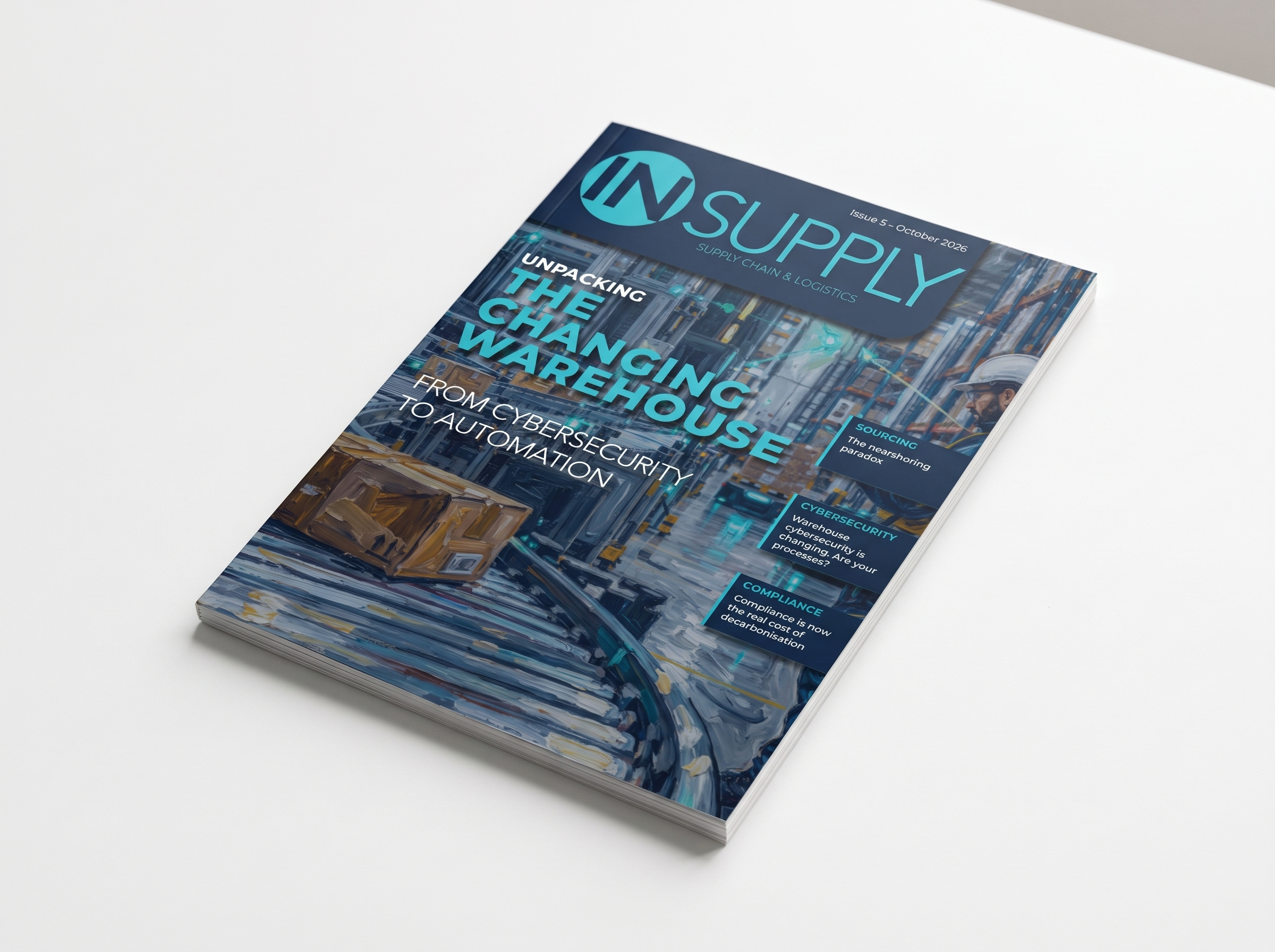
IN Supply’s October 2026 edition is now available, with the changing warehouse at its centre. Arvato UK managing director Dennis Schmitz describes how AI verification at the company’s Hamm facility clears around 95% of orders automatically, while the remaining cases go to people for review. Fidelity Fulfilment co-founder Stephen Williams also makes the case for choosing automation around the work a warehouse actually does, rather than installing technology for its own sake.
There are pressures beyond the loading bay. Microlise examines the security gaps that emerge when older equipment connects to modern platforms, while contributors from Infios and Brushtec explore why shorter supply routes can improve responsiveness without removing the complexities of sourcing.
The edition also considers the growing burden of emissions data and product provenance, where a tidy supplier record may not be enough to establish what a shipment contains.
From the first replacement part to the final delivery, resilience still depends on what happens when the plan changes.