IN Brief:
- InfraRed has agreed to acquire C3 from Brookfield through a fund pursuing its value add infrastructure strategy.
- C3 operates 15 port and inland sites across New Zealand and Australia and handles about half of New Zealand’s log exports.
- The business also handles about half of containers at the Port of Tauranga while serving dairy, agriculture, energy and forestry customers.
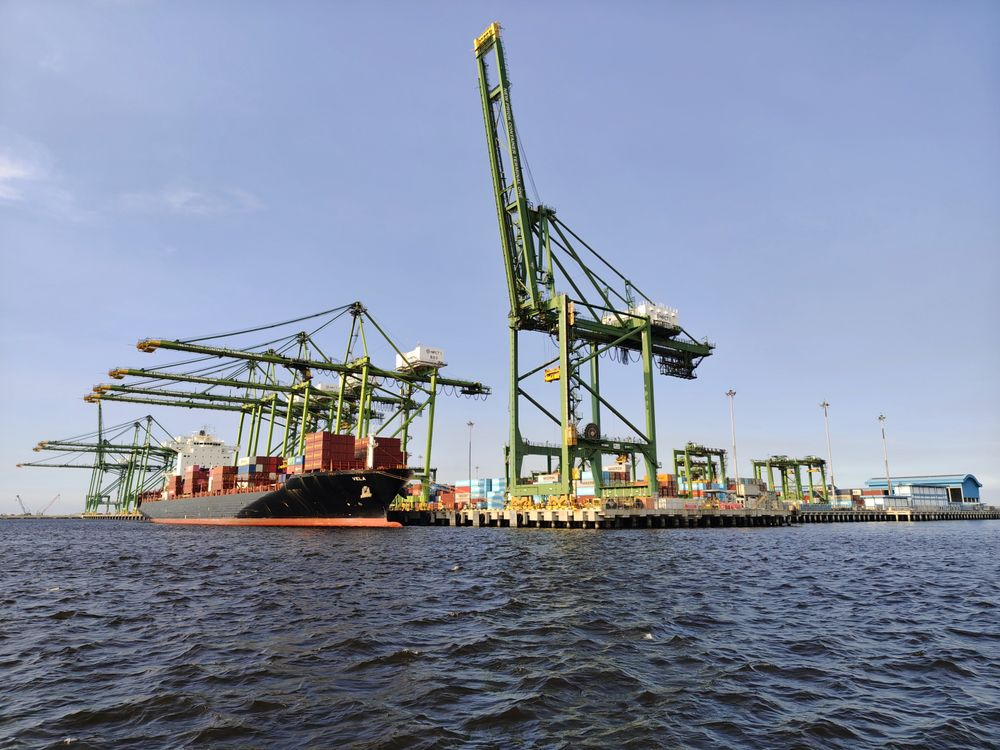
InfraRed Capital Partners has agreed to acquire C3 from Brookfield, adding a network of 15 port and inland logistics sites across New Zealand and Australia to a fund pursuing its value add infrastructure strategy. C3 handles both forestry and container traffic, giving InfraRed exposure to operating assets whose performance depends on equipment, labour and freight flows rather than property ownership alone.
Forestry is C3’s largest sector, covering log marshalling, debarking, chipping, storage and vessel loading as timber moves from inland production towards export markets. InfraRed says the company handles about half of New Zealand’s log exports, representing roughly NZ$3.4 billion of annual export revenue, while its container operations handle about half of the boxes passing through the Port of Tauranga and serve customers in dairy, agriculture and energy.
Those cargo types place different demands on the network. Timber requires large storage areas, specialist loaders and processing equipment, whereas containers depend more heavily on yard positioning, cranes or reach stackers and reliable links between terminal, road and rail. C3 combines those activities across several sites, allowing work to be distributed between inland facilities and ports rather than concentrated around a single berth or yard.
For forestry cargo, that distribution can reduce pressure at the quay because logs can be accumulated, sorted or processed before they reach the vessel loading area. The timing still has to match ship schedules closely: too little cargo positioned near the berth can slow loading, while too much consumes yard capacity and creates additional internal movements. C3’s role is therefore to coordinate inland arrival, processing, storage and vessel loading as one flow rather than treat them as isolated services.
Container operations create a different sequence but the same requirement for coordination. Standard boxes simplify physical handling, yet throughput still depends on equipment availability, yard planning and connections with ocean services. A container positioned at the wrong part of a crowded yard can generate several additional moves before it leaves the site, so network design and information accuracy are as important as available acreage.
The network also has to absorb changes in vessel timing and inland arrivals. Cargo can reach a port earlier or later than planned because of production schedules, road conditions or changes to a ship’s arrival window, leaving the operator to rebalance storage and equipment around a revised sequence. Inland sites give C3 another place to hold and prepare freight before it reaches the most constrained part of the port system.
Completing activities such as debarking and chipping before logs reach the vessel can reduce the workload concentrated at the berth, which is useful for bulky and handling intensive forestry cargo. The benefit depends on processed inventory arriving in the sequence required by the vessel plan, because moving work inland only improves throughput when the right cargo subsequently reaches the port at the right time.
InfraRed has not disclosed the acquisition price or a detailed capital programme, although it plans further investment in C3’s port presence and logistics capabilities. No specific new terminal, warehouse or equipment project has been committed publicly, which means the investment case begins with improving and extending an established network rather than adding a defined block of new capacity immediately.
Some C3 customer relationships extend beyond 20 years, providing a degree of volume continuity that can support investment in specialist handling assets. Long term customers also increase the operational consequence of disruption, particularly in forestry, where C3’s stated market share means a loss of capacity could affect a significant proportion of national export flows.
Equipment utilisation will be central to any expansion because port logistics assets can be expensive while spending part of their time waiting for cargo, vessels or labour. Increasing throughput through an existing loader, processing line or yard can improve returns without requiring a completely new facility, but only if the next stage in the chain can absorb the additional volume.
The acquisition follows InfraRed’s September agreement to buy Scandinavian rail freight operator Hector Rail. The businesses operate in different regions and markets, but both investments centre on transport infrastructure and freight operations whose value comes from keeping physical goods moving through constrained networks.
New Zealand’s geography reinforces that requirement because production centres can sit far from maritime gateways, while most export customers are reached over long shipping distances. Delays at the port can propagate backwards into trucking, rail movements and inland storage, just as poor inland coordination can leave vessels waiting for cargo. C3’s mix of port and inland locations gives InfraRed a platform from which to manage those connections, provided investment does not introduce extra handling stages that offset the intended efficiencies.
Chief executive Gavin Hudson is expected to continue leading C3 after completion. InfraRed will therefore inherit an operating network, management team, equipment base and customer relationships that already sit at the point where domestic production becomes international trade. Growth will depend on using those assets more intensively, extending services around existing freight flows and adding capacity where the network can absorb it without creating new bottlenecks elsewhere.