IN Brief:
- KMTC and Namsung have suspended their jointly operated JPS1/BJS service linking Busan with regional Japanese ports.
- The weekly service used two vessels on a 14-day rotation, with calls including Hakata, Kanazawa, Kushiro, Tomakomai, Ishikari Bay New Port, and Akita.
- The carriers have not confirmed a replacement rotation or publicly established the reason for the suspension.
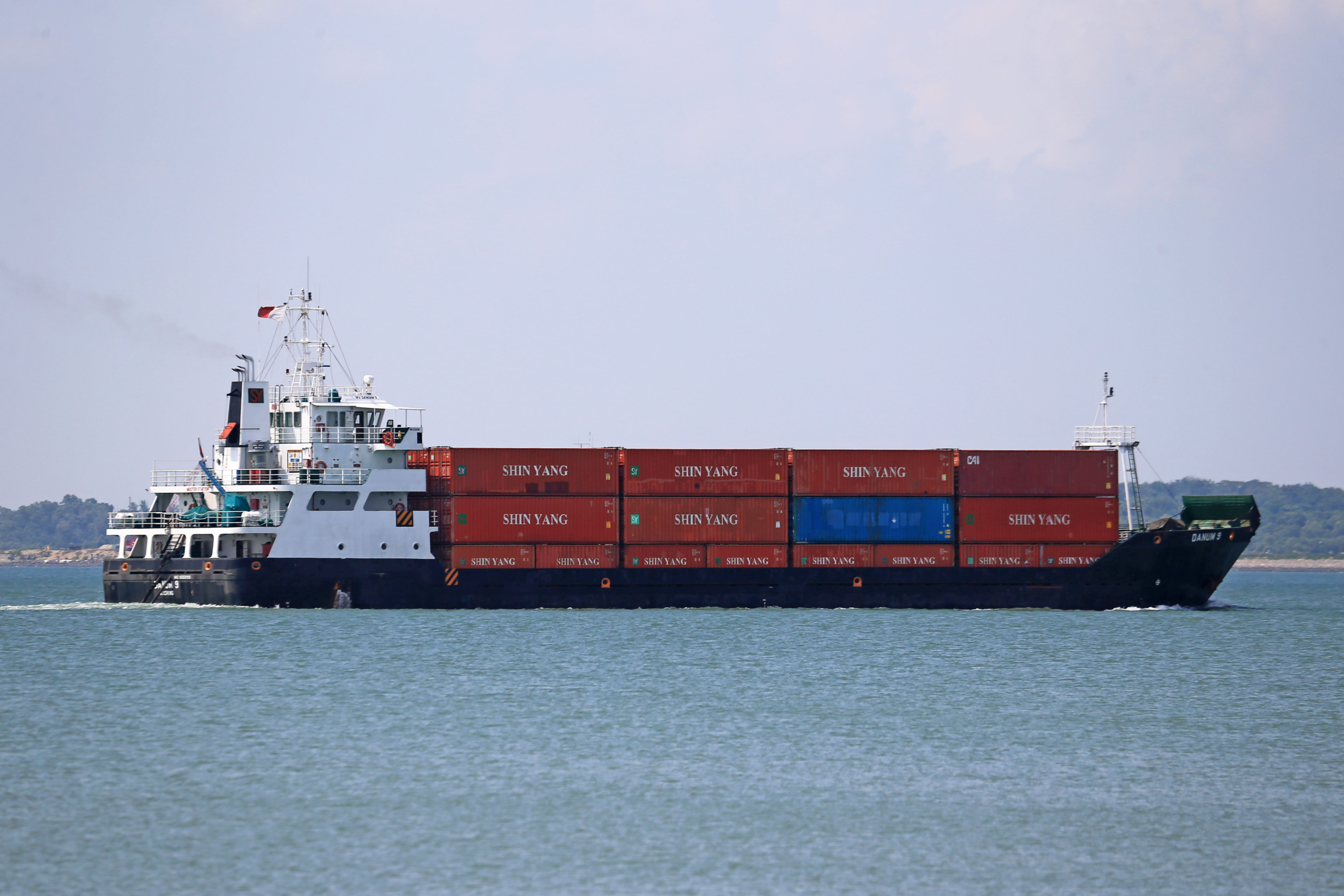
Korea Marine Transport Co. (KMTC) and Namsung Shipping have suspended their jointly operated JPS1/BJS container service connecting South Korea with regional ports in Japan. The weekly rotation used two feeder vessels with capacities of approximately 1,000 twenty-foot equivalent units (TEU), providing regular maritime connections between Busan and ports in western and northern Japan.
The suspension was reported on 20 November, affecting a route that operated over a 14-day round trip. Each carrier contributed one vessel to the service. The available information does not confirm a replacement timetable, the final completed sailing, or the commercial or operational reason for the suspension.
The published rotation connected Busan with Hakata, Kanazawa, Kushiro, Tomakomai, Ishikari Bay New Port, and Akita before returning through Busan New Port. These calls linked South Korea’s principal container gateway with Japanese regional markets in Kyushu, northern Honshu, and Hokkaido.
Hakata provides access to the northern Kyushu region, while Kanazawa and Akita serve areas along the Sea of Japan coast. Kushiro, Tomakomai, and Ishikari Bay New Port provide connections for Hokkaido. The latter serves the wider Sapporo area and should not be described as a port situated within central Sapporo.
Service records identify Star Skipper, operated by Namsung, and Sunny Laurel, operated by KMTC, as the vessels assigned to the rotation. Their listed capacities are 962 TEU and 1,000 TEU respectively. These figures describe nominal vessel capacity, rather than the quantity of cargo carried on a particular voyage or the commercial slots available to every customer.
The two-ship arrangement allowed a weekly service to be maintained while each vessel completed a longer sequence of port calls. A 14-day rotation requires the ships to progress through their scheduled terminals and return to the starting point in time to maintain the departure pattern. Delays at one location can affect later calls and, if they cannot be recovered, subsequent departures.
Feeder services connect smaller and regional ports with larger container hubs, allowing cargo to reach destinations that may not be served directly by long-distance shipping services. A container loaded at a Japanese regional port can move to Busan for transfer onto a different international service. Cargo travelling in the opposite direction can arrive at Busan before being carried onward to its Japanese destination.
This operating model reduces the need for every smaller port to accommodate a large intercontinental container vessel. It also creates dependencies between separate transport services. Containers must arrive at the transfer terminal in time for the intended connection, while the receiving service needs appropriate capacity and equipment for the cargo.
At the transfer port, terminal operators must identify the containers involved, move them between storage positions, and prepare them for loading onto the next vessel. Changes in arrival dates or berth availability can affect whether an intended connection is maintained. Where a container misses its scheduled departure, the resulting delay depends on the frequency and capacity of subsequent services.
Suspending JPS1/BJS removes one published connection within that regional network. Other shipping companies may continue serving some of the affected ports, but the existence of another service does not establish that it offers comparable departure dates, transit times, container equipment, or cargo acceptance conditions. No equivalent replacement for the complete suspended rotation has been confirmed.
Freight moving between manufacturing locations in Japan and South Korea can be sensitive to these differences. Components arriving according to a production schedule need to be available before the relevant assembly or processing stage, while finished products may be committed to onward distribution windows. Replacing a direct feeder movement with a different route can alter the time allocated to export preparation, terminal delivery, customs documentation, and domestic collection.
Where a direct call is no longer available, a shipment may need to be loaded at another port or transferred through a different hub. Both arrangements can introduce additional handling or inland transport. The most suitable alternative depends on the location of the supplier, the final destination, the cargo’s handling requirements, and the services available at the time of booking.
Regional Japanese ports accommodate a mixture of industrial products, manufactured goods, and other freight. The suspension does not establish that every business using those locations will experience disruption. Its practical effect will depend on how much cargo previously moved on JPS1/BJS, how alternative capacity is distributed, and whether existing bookings can be transferred to other sailings.
Jointly operated services allow carriers to share the vessel commitments needed to maintain a scheduled rotation. In this case, the two companies each supplied one vessel, creating a coordinated weekly service without either operator independently providing both ships. The suspension confirms a change in the joint arrangement but does not establish how the vessels will subsequently be deployed.
Vessel redeployment may involve another service, a revised rotation, or a period without scheduled employment, but no such outcome has been confirmed for Star Skipper or Sunny Laurel. Similarly, the suspension should not be presented as evidence that the entire Korea–Japan feeder market is contracting, because the current information concerns one named service.
Shippers with bookings associated with the affected route will depend on instructions from their carrier or freight forwarder concerning available sailings and alternative transport arrangements. Containers already accepted for transport may require different handling from cargo that has not yet entered the terminal. The general service information does not establish the position of individual consignments.
The change also leaves uncertainty over the duration of the suspension. A suspended service may resume under revised arrangements, but no reopening date or new operating structure has been established. Until a new schedule is confirmed, the reliable planning position is that the previously advertised weekly JPS1/BJS rotation is unavailable.
KMTC and Namsung’s withdrawal changes the direct connections available between Busan and the affected Japanese ports. Its wider effect will depend on alternative sailings, the ability of freight operators to rearrange bookings, and whether the carriers subsequently restore or replace the service.