IN Brief:
- KSH Integrated Logistics has opened its first warehouse in eastern India.
- The 60,000 sq ft Kolkata facility will serve FMCG, FMCD, fintech, and regional distribution customers.
- The site includes WMS, TMS, fire safety infrastructure, value-added handling, and EV-supported last-mile delivery.
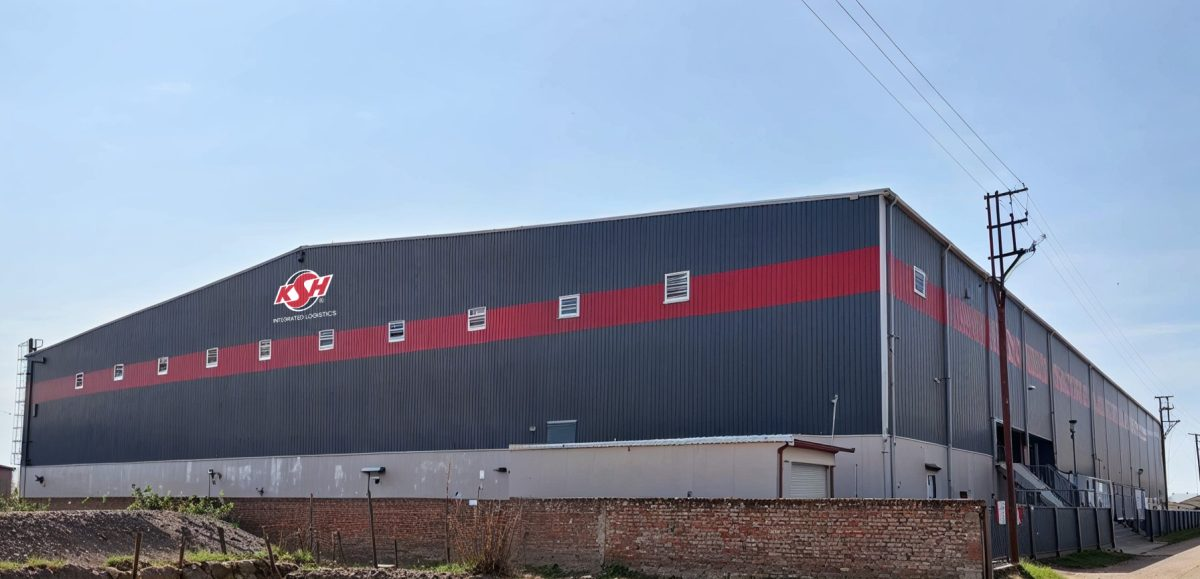
KSH Integrated Logistics has opened a 60,000 sq ft Grade-A multi-client warehouse in Kolkata, marking its first facility in eastern India and extending its network into a region gaining weight in national distribution planning.
The facility has been built for companies expanding across eastern and north-eastern India, with flexible storage capacity and value-added services including kitting, pre-packing, MRP stickering, and customised handling. It will support sectors including FMCG, FMCD, and fintech, where regional reach, service consistency, and scalable capacity are increasingly important.
Digital control is built into the operation through warehouse management and transport management systems, giving customers visibility across inventory, fulfilment, and dispatch activity. The building also includes fire hydrants, sprinklers, and associated safety systems, while last-mile movements will be supported by electric vehicles.
Vinay Patil, chief executive officer of KSH Integrated Logistics, said: “Kolkata is a gateway to an entire region that is evolving rapidly. Businesses today need logistics partners who combine scale with flexibility, and that is exactly what this facility is built to deliver. This is an important step in our vision of building a truly connected logistics network across India.”
The warehouse is expected to create more than 100 direct and indirect employment opportunities. Its opening adds professional multi-client capacity in a market where regional distribution demand is rising alongside industrial growth, ecommerce penetration, retail expansion, and more sophisticated service expectations beyond India’s most mature logistics clusters.
Kolkata’s role as a gateway to eastern and north-eastern markets gives the site strategic value beyond its size. Distribution networks that once leaned heavily on western and southern hubs are being reshaped around shorter regional routes, faster replenishment, and greater proximity to secondary consumption centres. That shift is placing new emphasis on warehousing nodes that can support both storage and active fulfilment.
India’s logistics infrastructure build-out is broadening across several corridors. Technology-led logistics parks planned by YCH in Chennai, Bengaluru, and Mumbai/Bhiwandi show how operators are preparing for demand from electronics, ecommerce, aviation, semiconductor, and manufacturing supply chains. KSH’s Kolkata facility brings the same network logic into eastern India, where capacity has historically been less concentrated than in the country’s western and southern logistics markets.
Multi-client warehousing gives companies a route into regional expansion without the fixed commitment of a dedicated site. It can also smooth volume uncertainty, especially where brands are testing new markets, adding product categories, or adjusting retail distribution. The trade-off is operational complexity: multiple customers, order profiles, SKUs, and service levels have to be managed within one building without weakening accuracy or throughput.
Value-added services give the site additional relevance. Kitting, pre-packing, and MRP stickering move some product configuration activity closer to demand, reducing the need to push every task back into manufacturing or central distribution. When managed well, that can shorten response times and give customers more flexibility around promotions, channel-specific packaging, and regional requirements.
The inclusion of EV-supported last-mile delivery also shows how sustainability is becoming part of standard logistics design rather than an optional overlay. Urban and regional delivery routes are among the more accessible areas for electric vehicle deployment because routes are more repeatable and vehicles can return to base. The benefits still depend on vehicle utilisation, charging discipline, payload fit, and transport planning.
KSH’s Kolkata opening gives the company an eastern platform at a time when India’s logistics geography is becoming more distributed. The first test will be customer uptake; the longer-term test will be whether the site becomes a foundation for a denser regional network.