IN Brief:
- Lineage is constructing a highly automated refrigerated and frozen distribution centre in Hutchins, Texas.
- TGW Logistics will supply shuttle storage, energy-efficient conveyor technology, palletising, and depalletising.
- The project reflects growing automation demand in food logistics, grocery distribution, and temperature-controlled warehousing.
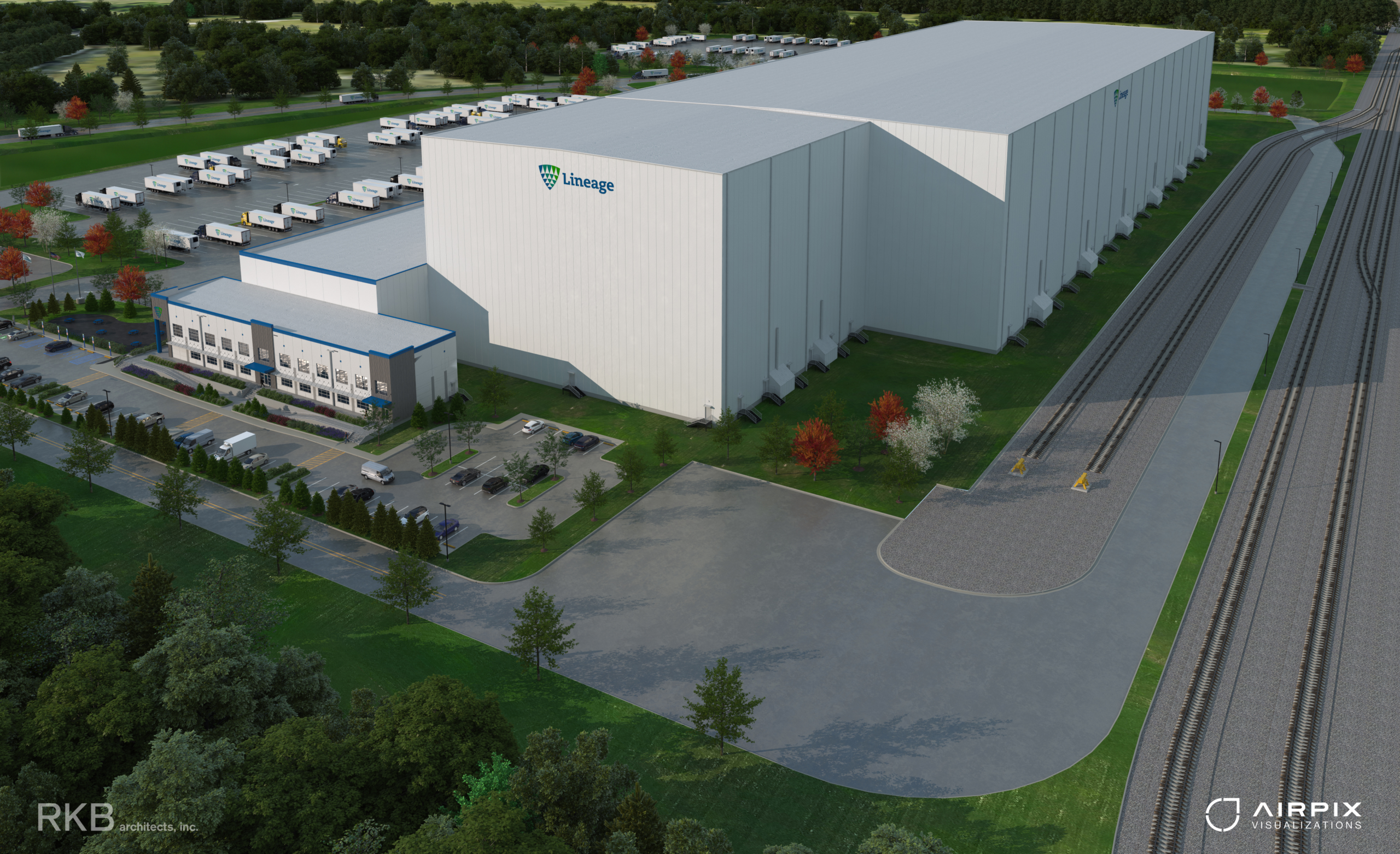
Lineage is constructing a highly automated temperature-controlled distribution centre in Hutchins, Texas, with TGW Logistics supplying the core warehouse automation systems.
The facility is being developed in the Dallas–Fort Worth metroplex and is expected to go live at the end of 2027. It will support a major US grocery producer and strengthen Lineage’s North American cold-chain network for refrigerated and frozen products.
TGW Logistics will deliver a shuttle warehouse, energy-efficient conveyor technology for pallets and cartons, automated palletising, and automated depalletising. The system is designed for high throughput, reliable order fulfilment, shorter lead times, and improved ergonomics in an operating environment where manual work is physically demanding and tightly controlled.
Freezer automation places heavier demands on equipment than ambient warehousing. Systems must operate reliably at temperatures as low as -30°C, while coping with condensation, icing, maintenance access, safety requirements, and the reduced tolerance for downtime that comes with temperature-sensitive goods. TGW’s refrigerated and frozen warehouse technologies are designed for those conditions, with shuttle, conveyor, and palletising systems built around low-temperature performance.
Cold-chain automation has been gaining pace as grocery, food production, and e-commerce networks face higher service expectations and tighter labour conditions. Nestlé’s automated California distribution investment has already shown how food manufacturers are pairing AS/RS technology, renewable electricity, and distribution capacity to redesign temperature-controlled operations. Lineage’s Texas project applies that same industrial logic through a third-party logistics network.
Cold storage has traditionally been harder to automate than ambient fulfilment because the operating penalties are higher. Equipment failures are more difficult to resolve, employees face tougher working conditions, and products cannot be allowed to drift outside temperature control. Manual handling in freezer environments is slower and more demanding, while product integrity depends on disciplined flow through receiving, storage, picking, staging, and dispatch.
Automation can reduce the number of manual touches and limit exposure inside cold zones, but it only works when the building, refrigeration system, storage technology, and order assembly logic are designed together. A shuttle system may improve density and retrieval speed, yet if palletising, depalletising, staging, or dispatch cannot keep pace, the bottleneck simply moves downstream.
The Dallas–Fort Worth location gives the project additional weight. DFW is one of the United States’ most important logistics regions, with strong road, rail, and air connectivity. For temperature-controlled logistics, that position can support national distribution patterns while keeping refrigerated and frozen products close to major demand corridors.
Grocery and food production networks are also shifting. Retailers expect shorter replenishment cycles, broader product ranges, and more dependable order accuracy, while manufacturers are managing labour pressure, energy cost, and shelf-life risk. Frozen and chilled goods carry less tolerance for delay because temperature excursions can affect quality, compliance, and customer confidence.
Sustainability sits in the background of every cold-store project because refrigerated buildings consume significant energy. Automation does not automatically solve that problem, but high-density storage, energy-aware conveyor systems, reduced movement, and disciplined door control can all help improve operational efficiency. The commercial prize is not merely a lower labour bill; it is a more controlled cold-chain process with less waste, fewer errors, and more predictable throughput.
Lineage operates more than 500 temperature-controlled facilities worldwide, giving the Texas development wider network significance. The Hutchins project adds automated capacity in a major US logistics hub and points to where cold storage is heading: larger, more engineered facilities where throughput, labour, energy, data, and product integrity are managed as one system.