IN Brief:
- Lödige Industries has taken over maintenance of multiple dnata cargo handling systems at Singapore Changi Airport.
- The work includes Asia’s first Lödige material handling system, installed in 1979.
- The scope covers ACHS, PCHS, cool-chain, perishable terminal, and wider cargo facility enhancement work.
Lödige Industries has taken over maintenance of a range of dnata cargo handling systems at Singapore Changi Airport, extending a long-running technical partnership between the companies.
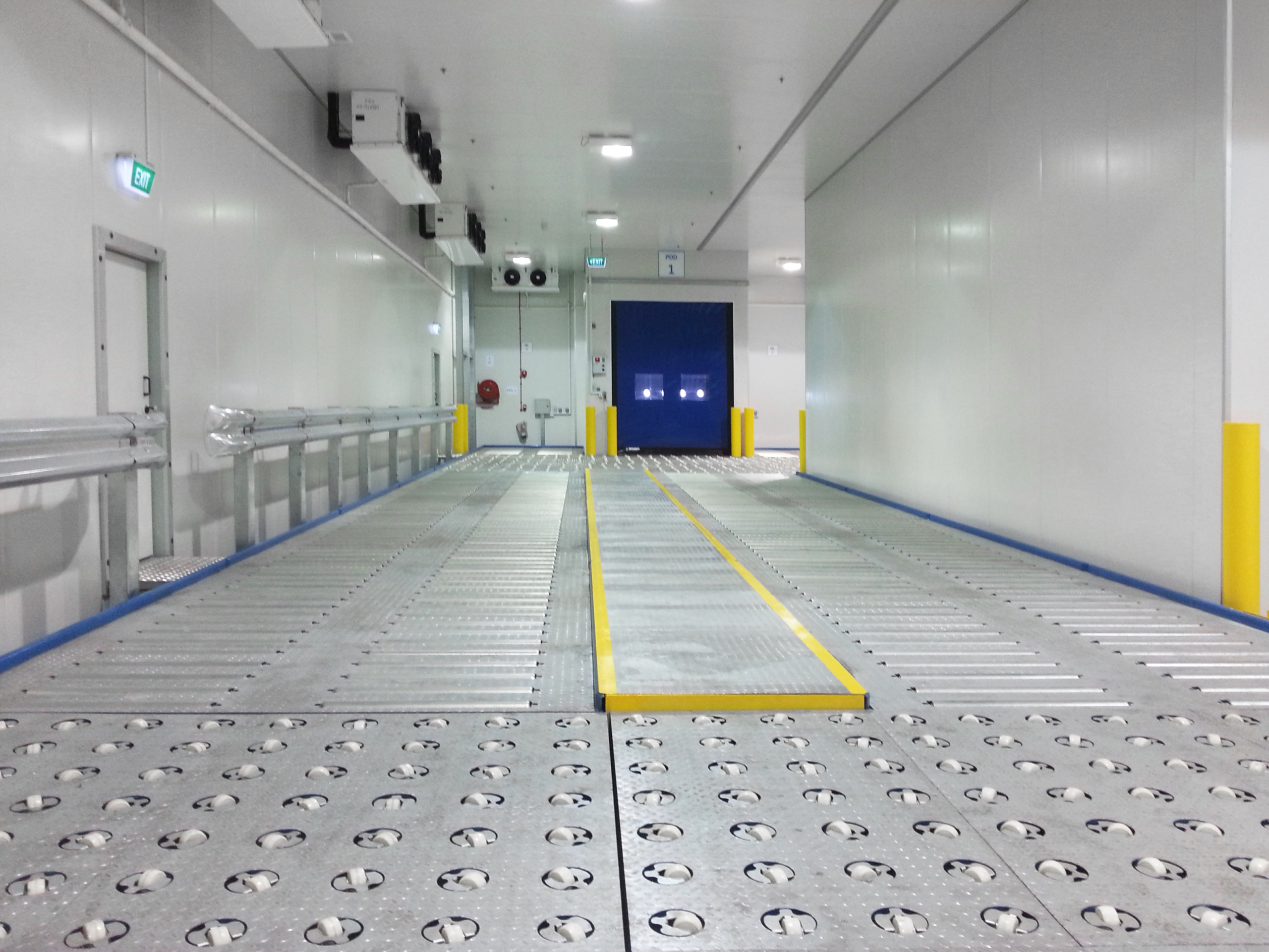
The scope includes the first material handling system installed by Lödige Industries in Asia in 1979. The system has remained in operation for decades and is now being upgraded to support continued performance. Lödige is also maintaining the Automatic Cargo Handling System, Pallet Cargo Handling System, and mechanical systems at dnata’s Cool Chain and perishable terminal facilities.
The work sits alongside the development of further solutions intended to enhance dnata’s cargo facility at Changi. Previous Lödige projects for dnata in Singapore include equipping the perishable centre, implementing an elevating transfer vehicle system, and providing equipment and associated works before underpinning activity.
“Our partnership with Lödige Industries is the best we could have chosen, not only because they have extensive experience and knowledge in this field, but also because they understand our needs and have consistently proven themselves to have a high level of reliability,” said Sam Gould, Head of Cargo at dnata Singapore. “With this critical service, we will ensure that our cargo handling systems are ready for long-term operation, enabling us to handle growing cargo volumes and maintain the high quality standards required by our customers.”
Lödige has also contributed to dnata upgrades at Sydney, Melbourne, Brisbane, London, and Amsterdam airports. That includes the second phase of dnata’s cargo handling facilities at London Heathrow, known as dnata City East Phase Two, a 2024 modification of the material handling system for dnata’s Terminal One at Sydney Airport, and equipment supply for dnata’s new cargo terminal at Amsterdam Airport Schiphol.
Air cargo operators face a constant choice between replacing infrastructure and extending its life through targeted upgrade and maintenance. Cargo handling systems are capital-intensive, technically integrated, and disruptive to remove. Where the underlying structure remains sound, lifecycle extension can protect capacity while reducing the cost and risk of wholesale replacement.
That approach is especially relevant at major airport cargo hubs. Changi handles time-sensitive, high-value, and regulated cargo flows where downtime can quickly affect airline schedules, forwarder commitments, cold-chain continuity, and service levels. Mechanical reliability directly affects the ability to build, break, store, and transfer cargo in line with flight schedules and handling standards.
The inclusion of cool-chain and perishable terminal systems is particularly important. Temperature-sensitive logistics depends on equipment availability as much as storage capacity. Pharmaceuticals, perishables, and other sensitive products require controlled handovers, reliable movement, and predictable dwell times through cargo terminals. A failure in transfer equipment can extend exposure time, create congestion, or force manual workarounds that increase handling risk.
Recent air cargo investment has been moving in the same direction, with Saudia Cargo and SFDA supporting pharma air freight and Kuehne+Nagel expanding cold-chain capacity in Hyderabad. Healthcare and perishable cargo flows need infrastructure that is controlled, traceable, resilient, and able to operate without avoidable interruption.
For cargo terminals, maintenance strategy is becoming part of capacity strategy. New technology can add throughput, but linked legacy systems still have to perform. Conversely, a well-maintained older system can continue to support volumes when upgraded intelligently and integrated with newer handling processes.
“Maintaining a fundamentally functioning system of good quality and adapting it to new challenges through upgrades can be the most effective solution in this case. We are very pleased to support dnata once again,” said Ranga Jayaweera, General Manager for Singapore at Lödige Industries.
The Changi work gives dnata a stronger lifecycle plan for critical cargo handling assets. In a sector where growth often arrives before new buildings do, the ability to keep existing infrastructure reliable can be as important as the next expansion project.