IN Brief:
- Lola Valentina has adopted FedEx and Returnity’s reusable packaging system for event rental shipments.
- The leasing model allows the business to scale reusable boxes without buying its own packaging fleet.
- The deployment shows how circular packaging can fit repeat-use B2B parcel environments.
Lola Valentina has implemented a reusable packaging system from FedEx and Returnity to support growth in event rental logistics.
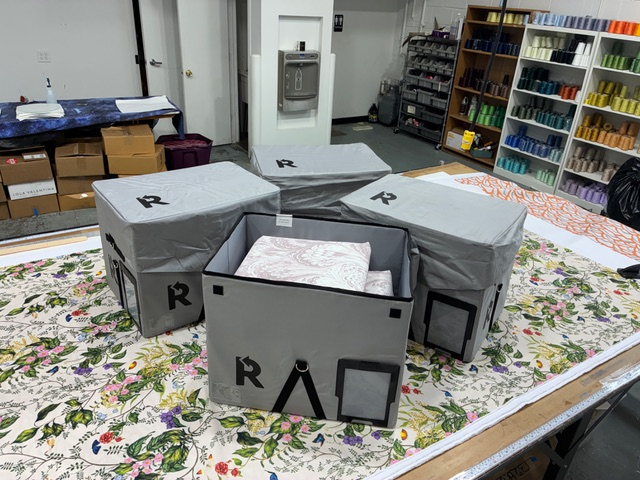
The Chicago-area design firm and linen rental company is using the reusable box solution inside existing FedEx parcel workflows. The system was developed by FedEx with Returnity, a reusable packaging provider focused on circular logistics, and is designed for managed, closed-loop B2B shipping environments where shipments move repeatedly between known parties.
Lola Valentina launched through a packaging leasing programme, giving the company access to reusable boxes without buying and managing its own container fleet. FedEx and Returnity provide onboarding, training, and support, while the shipper uses the boxes within the existing parcel network.
The company expanded the programme within the first six weeks, requesting additional boxes to support rising demand. Event rental logistics gives reusable packaging a natural operating loop: products are shipped out, used at events, returned, cleaned, stored, and shipped again for future bookings. The box becomes part of the repeat asset cycle rather than a disposable outer layer.
Reusable packaging has often struggled where returns are unpredictable. Open consumer ecommerce flows can leave packaging stranded, delayed, damaged, or uneconomic to recover. Closed-loop B2B and rental-based shipping offers a stronger operating case because the same parties handle repeat movements and the return path is already part of the service.
The FedEx and Returnity system was designed to address cost, complexity, and compatibility barriers that have limited wider adoption in parcel networks. The boxes are durable, collapsible, automation-friendly, and engineered for up to 50 shipment cycles, with capacity for up to 50lb of goods. The system has been presented as capable of reducing packaging spend by up to 30% per cycle and cutting carbon emissions by 64% to 88% compared with single-use corrugated packaging under typical conditions, based on a non-return rate of 40% or less.
Lola Valentina’s use case brings the operational side of sustainability into view. Linen rental depends on presentation, reliability, return discipline, and customer convenience. Packaging has to protect product condition, simplify returns, and support repeat handling without adding unnecessary administration. A leasing model removes some of the capital and management burden that can make reusable packaging difficult for smaller or fast-growing businesses.
Packaging costs are already becoming more visible across supply chains as corrugated use, waste regulation, and data requirements change procurement decisions. The same financial pressure sits behind EPR assessments and packaging cost reduction, where better data and material choices can directly affect compliance exposure. Reusable parcel formats attack the issue from another direction by reducing single-use packaging demand where circulation can be controlled.
The model will not suit every flow. Reusable packaging works best where shipments are frequent, returns are predictable, product protection has clear value, and the packaging can remain in circulation long enough to repay its higher initial cost. Low-frequency, one-way, or heavily fragmented shipments make the economics more difficult because lost or delayed boxes undermine both cost and carbon savings.
Repeat-use B2B shipping offers a more practical starting point. Event rentals, store replenishment, field service, internal transfers, uniforms, equipment, soft goods, and repair loops already contain predictable returns. In those environments, reusable packaging can be introduced as an operational tool rather than a sustainability add-on.
Lola Valentina’s early expansion suggests that the leasing model can lower the threshold for adoption. The company does not need to build a circular packaging system from scratch, buy a large box fleet, or redesign its carrier relationships. It can add reusable packaging inside a parcel workflow it already understands.
The adoption gives FedEx and Returnity a working B2B example beyond pilot language. More importantly, it shows where reusable packaging is most likely to scale first: not in chaotic one-way parcels, but in repeat logistics loops where the box has a job to do on the return leg as well as the outbound journey.