IN Brief:
- Low Rhine water has reduced barge capacity for heavy industrial flows between Rotterdam and Germany's Rhine-Ruhr region.
- RheinCargo is running three additional Rotterdam-Duisburg round trips each week, carrying around 2,000 tonnes per train.
- DB Cargo says approximately 400 additional wagons can be mobilised where cargo, infrastructure, routes, and resources permit.
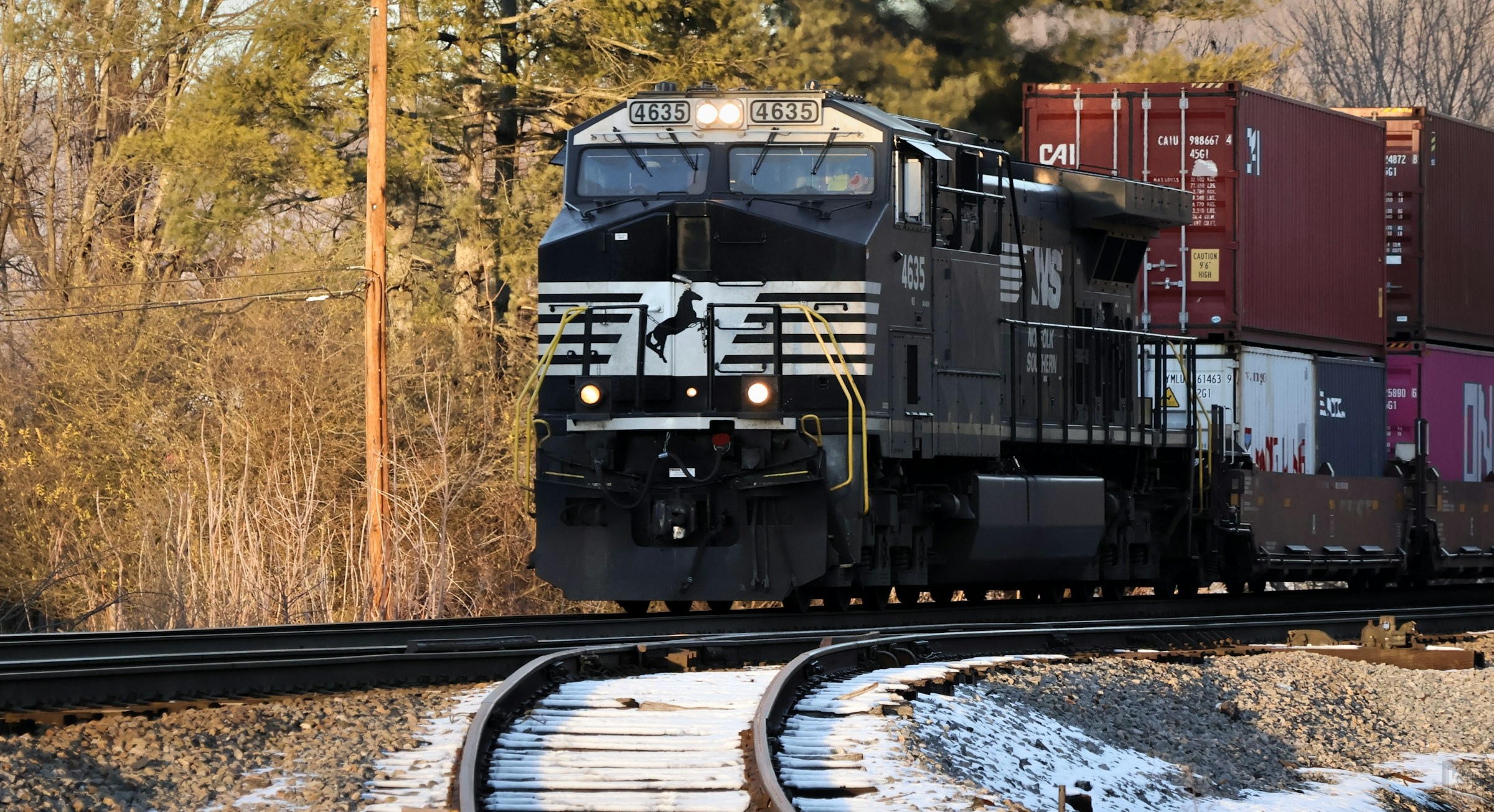
Rail operators are adding capacity around the Rhine as low water restricts inland shipping, with RheinCargo running additional Rotterdam-Duisburg trains and DB Cargo offering around 400 freight wagons for short-notice alternatives where routes and infrastructure allow.
RheinCargo’s most concrete response is a temporary service between Rotterdam and Hüttenwerke Krupp Mannesmann in Duisburg. Three additional round trips are being operated each week to supplement coal and iron ore flows normally moved from the port by inland vessel.
HGK Dry Shipping normally carries around 24,000 tonnes of coal and iron ore per day on the route. Low water has reduced the volume that can currently move by river to approximately 14,500 tonnes, leaving a substantial shortfall for the steelworks.
Each additional RheinCargo train carries about 2,000 tonnes, providing around 6,000 tonnes of extra rail capacity per week. The operator has leased 46 wagons for the work, with the temporary service expected to continue until at least the end of September depending on river conditions.
The comparison between those figures illustrates the limit of modal substitution. Three weekly trains provide a useful buffer for a major industrial customer, but their combined weekly capacity remains lower than the tonnage lost from inland shipping in a single day.
DB Cargo is responding more broadly rather than assigning its entire reserve to one flow. The operator says around 400 additional freight wagons can be made available at short notice and is working directly with companies to establish where rail can provide practical alternatives.
Wagon availability is only one part of that calculation. DB Cargo says each movement has to be assessed against the goods being carried, the route, loading infrastructure, network capacity, and the locomotives and other operating resources available.
Those constraints are particularly important on the Rhine because many affected flows involve heavy bulk commodities. Coal, ores, chemicals, fuel, and construction materials suit barges because a single vessel can move a large tonnage with comparatively little handling.
When river draught falls, vessels can often continue operating but have to carry less cargo. More sailings are then needed to move the same tonnage, effective capacity tightens, and freight costs rise before the waterway reaches the point of complete closure.
The pressure quickly spreads into other modes. Shippers seek rail or road capacity, terminals have to change loading patterns, and equipment becomes concentrated on corridors that were not planned to absorb every tonne displaced from the river.
Low water had already begun squeezing industrial freight capacity on the Rhine; the rail measures show how operators are turning contingency planning into actual transport capacity.
Rail works best as an alternative where industrial origins and destinations already have suitable sidings or access to major terminals. A steelworks built around bulk rail and river logistics can accept additional trains more readily than a warehouse whose goods normally arrive only by road.
That infrastructure is difficult to improvise during a drought. Wagons need somewhere to be loaded, train paths have to exist, terminals require enough handling capacity, and locomotive and crew resources must be available at the same time. Even where each individual element exists, arranging them simultaneously at short notice can limit how much displaced river freight can actually move by rail.
DB Cargo’s 400-wagon figure should therefore be understood as a pool of potential capacity rather than a guaranteed replacement for a defined number of barges. The company has made clear that actual transport solutions will be agreed case by case with customers.
RheinCargo’s Duisburg operation is the clearer demonstration because the origin, destination, commodity, rolling stock, and train schedule have already been established. Even there, rail supplements the waterway rather than replacing it.
The duration of both responses depends on Rhine levels. The operational lesson is less about one temporary train service than the amount of spare multimodal infrastructure available when an inland waterway loses capacity. Wagons can be mobilised comparatively quickly; terminals, sidings, train paths, and bulk-handling systems cannot.