IN Brief:
- SourcingAI 3.0 combines market analysis, supplier assessment and negotiation support within its B2B marketplace.
- Its negotiation assistant helps organise requirements and compare suppliers’ responses rather than independently authorising purchases.
- Supplier verification, inspections and secured transaction services remain subject to the terms applying to individual orders.
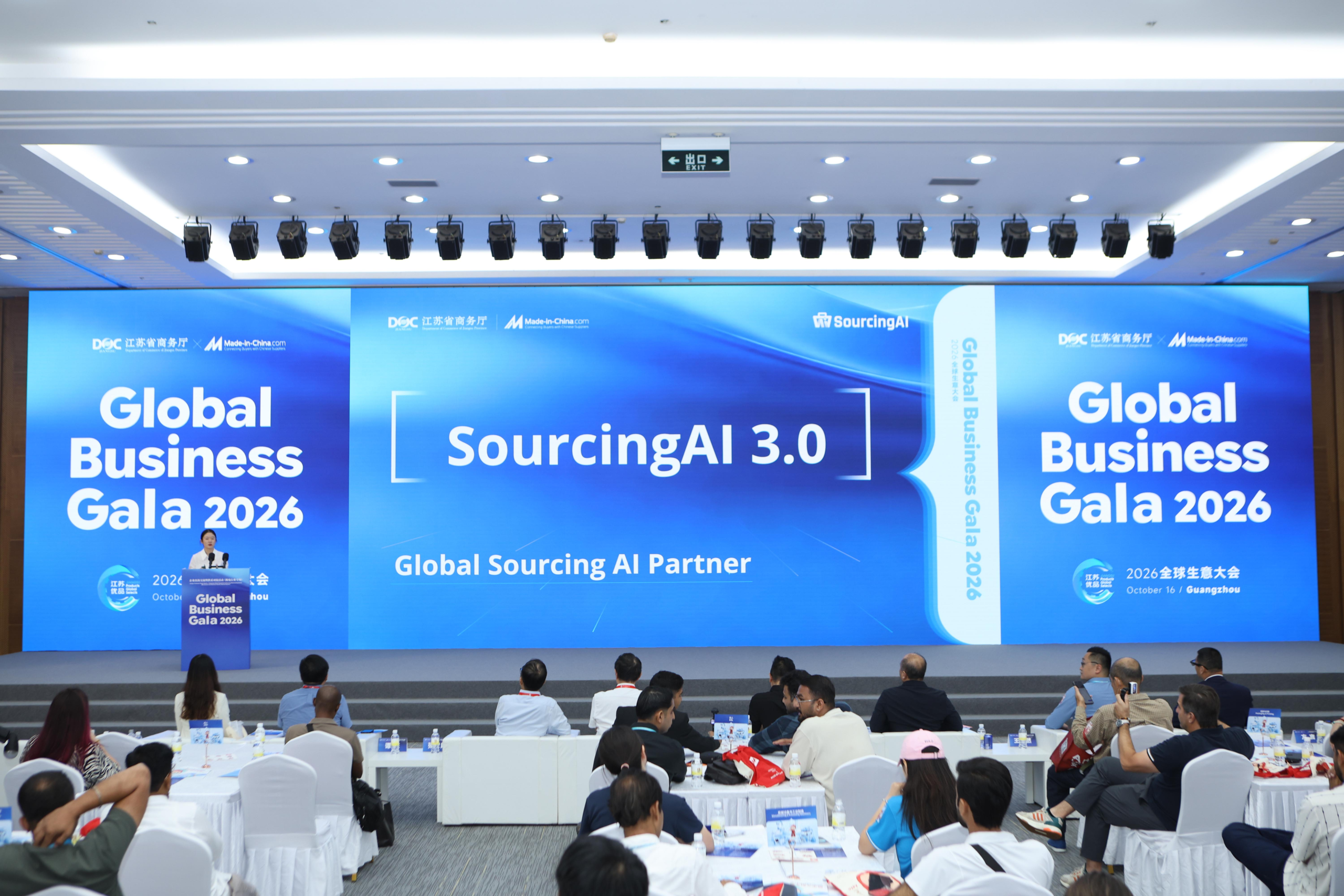
Made-in-China.com has extended its SourcingAI procurement platform beyond product discovery, adding functions for evaluating manufacturers, comparing commercial offers and accessing transaction services. Introduced on 23 October at the Global Business Gala in Guangzhou, the third version connects stages of international purchasing that buyers have often managed through separate searches, supplier messages and order records.
Held at the China Import and Export Fair Complex during the 140th Canton Fair, the gala brought overseas buyers from more than 20 countries and regions into contact with manufacturers from Jiangsu Province. Organised by the Jiangsu Provincial Department of Commerce and hosted by the marketplace, the gathering provided a setting for demonstrating the revised platform to businesses already engaged in cross-border sourcing.
SourcingAI began in 2024 with intelligent product search, before gaining a broader sourcing assistant in 2025. The latest release introduces four connected areas of support: market potential analysis, supplier matching, negotiation assistance and services associated with completing a transaction. Those functions draw on the marketplace’s existing listings and supplier resources, making the completeness of its underlying records central to the reliability of the results.
Market Potential Analysis examines trends, prospective demand, product performance and associated risks to help narrow the range of goods a buyer might investigate. Its recommendations can provide a starting point for product selection, although their usefulness depends on the information available and the conditions in the target market. Where a buyer handles several product families, the initial shortlist also has to distinguish goods that can be compared directly from alternatives requiring different manufacturing processes or certification. Without that distinction, a convenient search result may obscure an essential technical difference. Made-in-China.com has not published independent evidence of forecast accuracy or a verified reduction in sourcing costs.
After a potential product has been identified, supplier matching brings together stated manufacturing capabilities, qualifications and quality management information. AI-assisted background checks are intended to give buyers a more structured view of possible production partners than a basic directory search would provide. Differences between suppliers can be material even where their listings describe apparently interchangeable goods.
A manufacturer may possess equipment suitable for one component specification but lack the capacity, process controls or certification required for another. Declared factory capabilities also need to be reconciled with available production slots and delivery dates. The matching functions can organise the information supplied by manufacturers, while technical qualification and verification remain purchasing decisions supported by appropriate evidence.
Commercial discussions are supported by a negotiation agent that structures requirements and organises questions exchanged between buyers and several suppliers. It is designed to identify missing details, clarify responses and help establish a common understanding of proposed terms. Quotations for industrial goods may vary in their assumptions about quantity, product tolerance, inspection, packaging or delivery, and those differences can complicate a seemingly straightforward price comparison.
Bringing supplier responses into a coherent record can make unresolved technical or commercial conditions easier to identify before orders are placed. In addition, the company has not stated that the agent independently signs contracts, commits expenditure or guarantees supplier performance. Purchasers therefore retain responsibility for confirming agreed specifications and contractual obligations.
Finally, transaction support links the software with existing services, including supplier verification, the Secured Trading Service, product quality inspection and after-sales support. Availability depends on the transaction and the conditions of each service. Integrating access to those functions may make it easier to organise verification and order protection alongside supplier conversations, provided the buyer establishes what is covered.
Inspection provides a useful distinction between digital support and physical assurance. Software can identify the available inspection option and help manage its documentation, but evidence of conformity may still require factory assessments, examination of finished goods, testing or certification. Where imported equipment is subject to regulation, the applicable technical and customs requirements must also be considered before shipment.
The purchasing process continues beyond selection and negotiation. Production lead times, export paperwork, transport capacity and delivery terms can affect whether an otherwise suitable order reaches its destination as planned. SourcingAI 3.0 does not claim to perform every one of those activities autonomously, although the linked platform services address parts of the workflow.
The company has provided no adoption figures or independently measured improvements in purchasing outcomes for the new version. Its confirmed development is the availability of a wider set of tools connecting product research, supplier information and transaction support. Their practical value will depend on the accuracy of the records used and how consistently buyers and suppliers apply them to individual orders.