IN Brief:
- Maersk has confirmed twelve new container ships with nominal capacity of 24,000 TEU each.
- The dual-fuel engines will be capable of using conventional marine fuel or liquefied gas.
- Deliveries are scheduled across 2030 and 2031; the company has not confirmed the shipyard or route assignments.
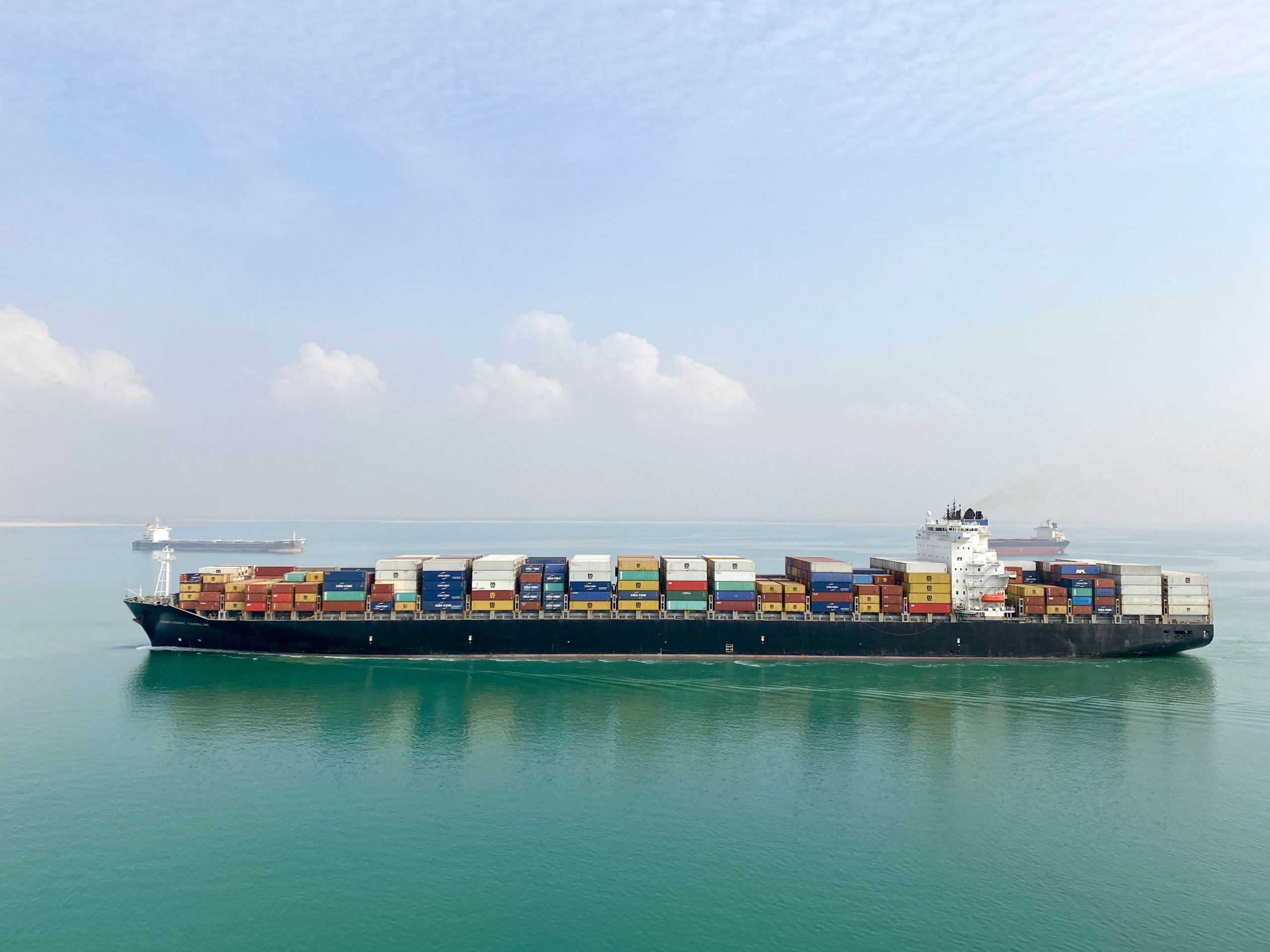
A.P. Moller–Maersk has ordered twelve ultra-large container ships with individual nominal capacity of 24,000 twenty-foot equivalent units (TEU), introducing a vessel class larger than any currently operating in its fleet. Deliveries are scheduled for 2030 and 2031, according to company confirmation reported by Reuters on 24 November.
The vessels will incorporate dual-fuel engines capable of using conventional marine fuel or liquefied gas. Together, the twelve ships represent 288,000 TEU of nominal capacity. Maersk has not identified the shipyard, disclosed the contract value, or confirmed the specific trade routes on which the vessels will operate. Reports of additional ships and options have not been included in the confirmed order total.
The new class increases the amount of container space available on an individual sailing. Its effect on total fleet capacity will depend on the retirement or redeployment of existing ships and the eventual balance between owned and chartered vessels. Maersk outlined a fleet renewal programme in 2024 that initially sought to maintain capacity at approximately 4.3 million TEU while replacing older tonnage and increasing its use of alternative-fuel propulsion.
The economics of a ship carrying 24,000 TEU depend on its utilisation across an entire service rotation. A shipping line can distribute vessel operating costs across more freight units when sufficient cargo is available, but unoccupied slots generate no corresponding freight revenue. Differences in trade volumes between the outward and return legs can require carriers to reposition empty equipment or accept lower utilisation in one direction.
Nominal capacity is also not a guarantee that every slot can be occupied by a loaded container. Weight limits, vessel stability, the distribution of individual container loads, and the availability of electrical connections for refrigerated units influence the actual loading plan. Dense industrial products may consume a greater proportion of the vessel’s permissible payload than equivalent quantities of lighter manufactured goods. Cargo requiring separation or specialised handling can further affect usable space.
Port compatibility is a significant constraint on deployment. Ultra-large ships require sufficient navigational depth, suitable turning areas, adequate quay length, and ship-to-shore cranes with the outreach needed to reach containers across their full width. A terminal must also provide enough working crane capacity to complete a large exchange of containers within the time available under the service timetable.
Handling several thousand container movements during one vessel call can temporarily concentrate demand on yard equipment and inland connections. Containers discharged from the ship need to be moved into storage positions appropriate to their onward transport arrangements. The terminal must preserve access to containers scheduled for early collection while maintaining sufficient available space to receive further cargo. If the yard becomes congested, the productivity of quay cranes can decline even though the equipment itself remains operational.
Rail, road, and barge services need to accommodate the resulting flow of containers beyond the port. An increase in vessel size can create larger individual peaks in handling demand without necessarily increasing average weekly volumes by the same proportion. Terminal investment therefore needs to address both the maritime interface and the resources used to evacuate containers inland.
Fuel flexibility adds a separate infrastructure requirement. Liquefied gas propulsion requires dedicated fuel storage and supply arrangements aboard the vessel, as well as suitable bunkering infrastructure along its operating routes. Dual-fuel capability allows continued operation with conventional fuel when alternative supplies are unavailable or commercially unsuitable.
The resulting greenhouse gas performance depends on the fuel used, the engine’s operating characteristics, and upstream emissions associated with producing and distributing the fuel. The new order should not be treated as a quantified emissions reduction. The World Shipping Council has recently called for international emissions regulations as investment in alternative-fuel container ships and vehicle carriers continues, underlining the need for fuel supply infrastructure to develop alongside fleet renewal.
A weekly service also requires multiple ships to maintain its sailing frequency while vessels complete successive port calls. The delivery schedule places the new vessels within a longer-term investment horizon than many current port and freight service decisions. Ship construction, equipment procurement, terminal capacity, and the availability of compatible fuel supplies will develop over the intervening years. The confirmed order gives Maersk a defined additional vessel class for that period, while the eventual deployment decisions will determine whether the ships primarily replace existing tonnage or support a wider increase in the carrier’s operating capacity.