IN Brief:
- M&S is acquiring a 437,000ft² fully automated distribution centre in Lichfield from ASOS.
- The £67.5m conditional deal will bring the site into the M&S network in 2027.
- The hub is expected to employ 600 people and support the retailer’s long-term plan to double online fashion sales.
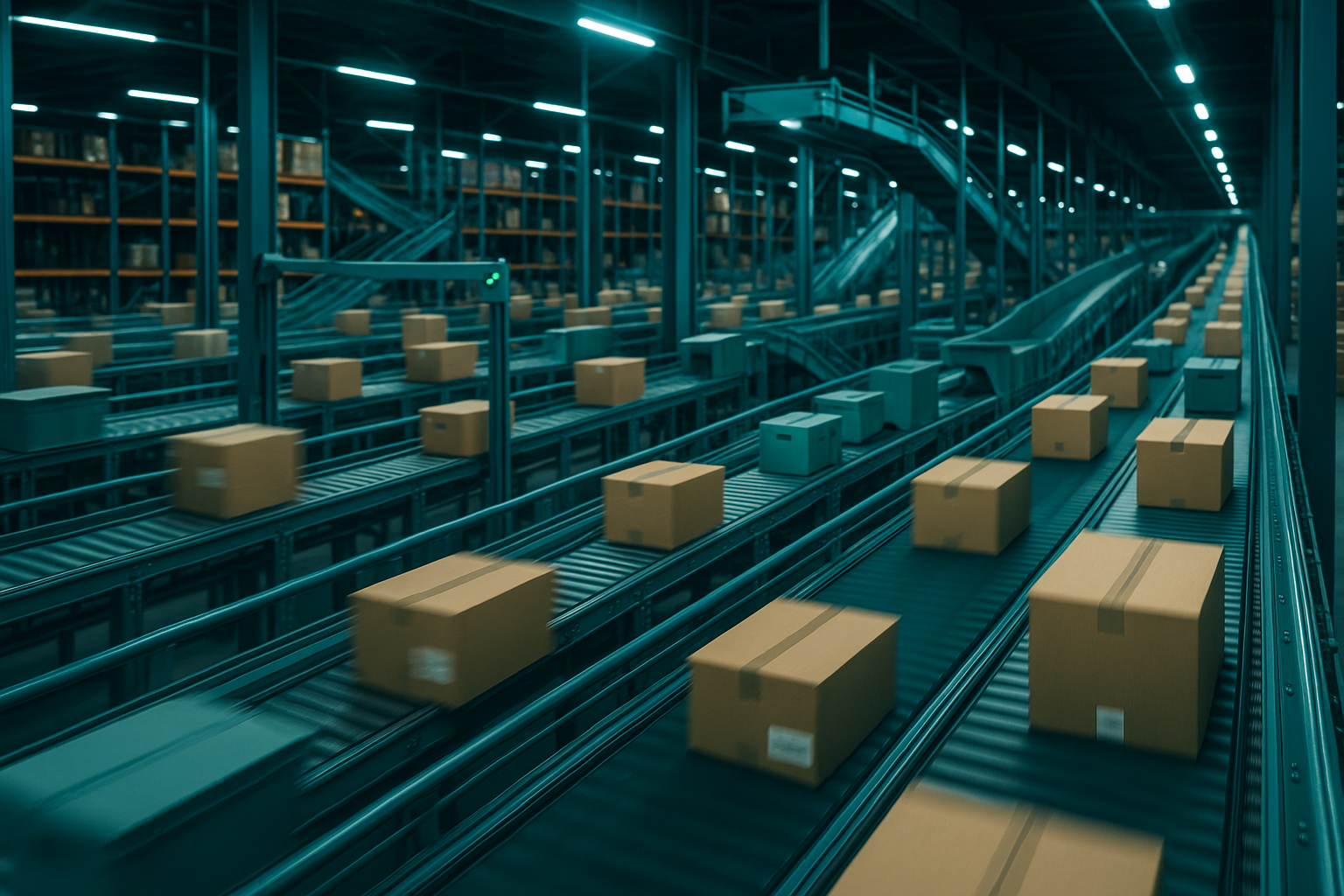
Marks & Spencer has agreed a conditional £67.5m deal to acquire ASOS’s former fully automated fashion distribution centre in Lichfield, Staffordshire, as it expands logistics capacity for Fashion, Home, and Beauty.
The 437,000ft² site is expected to enter the M&S network in 2027 and employ around 600 people. Once operational, it will increase online fulfilment capacity, improve stock availability, and support faster product movement into stores and direct-to-customer channels.
M&S has made supply chain transformation a core part of its plan to double online sales in Fashion, Home, and Beauty. Acquiring the Lichfield site gives the retailer a fitted-out automated distribution centre at a lower cost and shorter lead time than building equivalent capacity from scratch.
The transaction also transfers one of the UK’s more prominent pandemic-era ecommerce logistics assets into a different retail network. ASOS leased the Lichfield facility during a period when online fashion growth assumptions were sharply higher, before later mothballing the site as demand softened and its turnaround programme focused on simplifying operations, reducing costs, and releasing value from non-core assets.
For M&S, the same building now supports a more integrated operating model. The retailer is tying stores, brand partnerships, and ecommerce growth into a logistics network that can support higher stock accuracy, later ordering, and faster fulfilment. A 24/7 automated hub gives the business room to expand online volume while also improving availability across physical retail.
Retail logistics has become a decisive operational battleground for established chains as well as pureplay ecommerce businesses. IN Supply recently covered CEVA’s renewed Ocado Retail logistics partnership, where warehouse redesign, WMS changes, and replenishment improvements are supporting online grocery flows. It has also covered POCO’s warehouse execution modernisation programme, which is standardising warehouse processes across a multi-site German retail network.
The common thread is the changing role of the warehouse. Storage is now only one part of the value equation. Retail distribution centres influence margin, stock promise, returns processing, store replenishment, online conversion, and the ability to adapt quickly when product demand shifts. Automated sites can increase throughput and accuracy, but only when the physical system, order profile, inventory model, and carrier network align.
Fashion logistics carries particular complexity. Size, colour, seasonality, promotions, markdown cycles, brand mix, returns, and split-channel availability all create operational friction. A warehouse built for high-volume automated handling can offer strong advantages, but the value depends on how effectively it is connected to buying, merchandising, ecommerce, store operations, and transport planning.
The deal also shows how the UK logistics property cycle is being reshaped after the ecommerce surge. Assets developed or leased for one growth model are being reassessed as retailers rebalance online and store-led demand. High-specification automated buildings remain attractive where they can be absorbed into networks with proven volume, but surplus capacity is being exposed more quickly where earlier assumptions no longer hold.
For M&S, Lichfield is both a capacity purchase and a network design move. It gives the retailer a major automated hub for online growth while reducing the time and capital required to expand its Fashion, Home, and Beauty fulfilment platform. Across the wider market, the transaction reinforces a more selective approach to logistics assets, where operational fit is carrying more weight than headline square footage alone.