IN Brief:
- Glasgow Prestwick could gain from parcel and fulfilment changes linked to de minimis reform.
- The opportunity depends on customs processing, cargo infrastructure, and the ability to support B2B fulfilment models.
- Airports with available capacity may benefit as e-commerce import flows become more compliance-heavy.
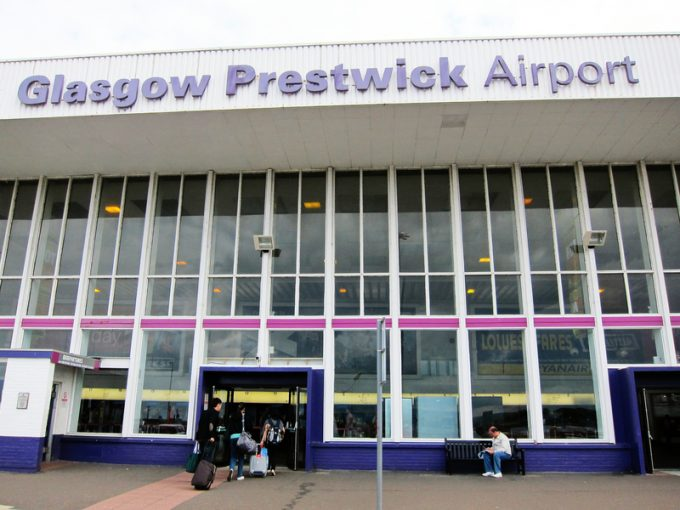
Glasgow Prestwick Airport could gain a stronger cargo role if the removal of low-value parcel exemptions pushes e-commerce flows toward fulfilment-led, customs-ready logistics models.
The potential shift centres on the end of the EU de minimis threshold and the possibility of similar changes affecting UK import processes. Low-value exemptions have supported large volumes of direct-to-consumer parcels moving through simplified customs arrangements. As those exemptions are removed or tightened, logistics models built around high-volume small-parcel imports face more documentation, data, duty, and processing pressure.
Prestwick’s opportunity sits between air cargo, customs capacity, and fulfilment. The airport has long marketed itself on uncongested operations, runway capability, and available land. Those features become more valuable if parcel flows need to move through more structured import processes, especially where shippers want to avoid congestion at larger passenger-led airports.
Policy change alone will not create cargo volume. Prestwick would need customs processing, bonded storage, fulfilment handling, parcel sortation, security screening, and fast onward distribution to convert regulatory friction into traffic. The airport would also need logistics partners capable of turning airfreight arrivals into scalable B2B and B2C delivery flows.
The wider parcel market is already being reshaped by customs reform, sustainability pressure, returns costs, and retailer efforts to regain control over cross-border flows. La Poste’s European parcel investment plans point in the same direction, with lockers, logistics infrastructure, investment, and lower-emission operations being used to strengthen network control. Prestwick sits in a different part of the market, but the underlying shift is similar: parcel networks are becoming more infrastructure-heavy and more compliance-dependent.
Low-value parcel flows have often relied on speed, scale, and limited friction. Removing exemptions changes the economics by requiring better product data, clearer origin information, more consolidated flows, and stronger customs support before goods enter the final-mile network. That favours operators with systems and infrastructure rather than those relying only on cheap linehaul.
Airports with spare capacity may gain ground where they can offer predictable handling and faster turnaround. Congested airports can struggle with freighter slots, warehouse space, ground handling labour, and truck access. A secondary cargo airport can offer operational simplicity, but it must also prove that it can connect efficiently to end markets. Prestwick’s Scottish location provides regional access, while broader e-commerce flows would require strong links into the wider UK distribution network.
The likely development is a shift from direct parcel injection toward fulfilment-based models. Goods imported in bulk, customs-cleared, held, and fulfilled closer to the customer create a logistics operation that blends air cargo, warehousing, brokerage, and domestic distribution. Airports with adjacent land and room for cargo property may have more room to build around that model than slot-constrained passenger hubs.
Retailers and marketplaces will also need greater control over import data. Customs reform increases the cost of weak descriptions, inaccurate values, missing origin information, and fragmented parcel flows. Fulfilment-led models give businesses more oversight of declarations, inventory, returns, and delivery performance, while reducing the risk of parcels being delayed or rejected because paperwork has not kept pace with the goods.
The physical property requirement should not be underestimated. Parcel and fulfilment operations need warehouse space, vehicle staging, security controls, customs systems, labour availability, and road access that can support surges rather than average daily volumes. Airports that can combine runway capacity with adjacent logistics land may gain an advantage as e-commerce imports become more regulated and more operationally intensive.
Prestwick’s cargo proposition will therefore need to move beyond runway availability. The airport has to demonstrate that it can support compliant, technology-enabled fulfilment at scale, with reliable onward road links and a clear offer for integrators, forwarders, marketplaces, and retailers.
De minimis reform is often discussed as a customs change, but its practical effect will be seen in network design. More data, more declarations, and more scrutiny will pull parcel flows toward infrastructure that can absorb process complexity. Prestwick has the space to compete for that work, provided capacity is matched with the systems and partners now required by cross-border e-commerce.