IN Brief:
- Royal Mail has cut total market-based emissions by 31% from its 2020-21 base year.
- Average parcel emissions fell to 164gCO2e, down 6% year-on-year.
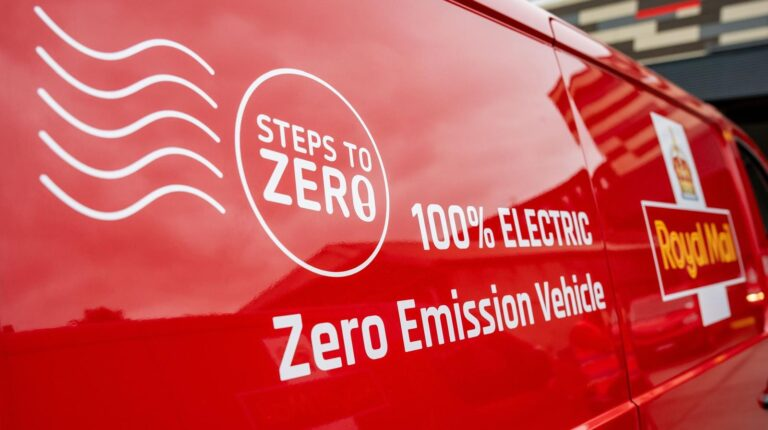
- The electric delivery fleet now exceeds 8,500 vehicles, with 44 delivery offices fully electric.
Royal Mail has reduced its carbon emissions by 31% since 2021, with average emissions per parcel falling to 164gCO2e.
The figures were published in the company’s latest sustainability report, which shows total market-based emissions of 1,085 KtCO2e in 2025-26. That represents a 31% reduction from the 2020-21 base year and a 7% decrease year-on-year. Average emissions per parcel were down 6% on the previous year.
Royal Mail linked the reduction to continued investment in fleet electrification, increased use of hydrotreated vegetable oil in heavy goods vehicles, and energy efficiency improvements across its estate. The company deployed more than 2,000 electric vans over the past year, taking its electric delivery fleet to more than 8,500 vehicles.
Nearly a third of Royal Mail delivery routes are now zero-emission, while 44 delivery offices operate as fully electric sites. The company has also started decarbonising its national distribution network, introducing its first electric heavy goods vehicles in December. In the same month, it deployed its first 80 micro electric vehicles across locations including London, Bristol, Newcastle-under-Lyme, Solihull, Brighton, and the Scilly Isles.
Jenny Hall, chief corporate affairs officer at Royal Mail, said the company was investing in electric vehicles and cleaner fuels while working to create a smarter, greener, and more resilient business.
Parcel decarbonisation is moving into the operational detail of fleet mix, depot readiness, vehicle size, and energy use. Postal networks have an advantage over many freight sectors because a large share of delivery activity follows repeatable local routes. That makes electrification more practical than in long-haul or irregular freight, where range, charging windows, payload, and route unpredictability remain harder constraints.
The transition is still complex. Electric vans require charging infrastructure, depot energy management, route planning, maintenance training, vehicle scheduling, and operational discipline around dwell time. Delivery offices have to support the change physically, not only through procurement policy. A zero-emission route depends on vehicles being charged, available, loaded, and matched to the right duty cycle each day.
Royal Mail’s move into electric HGVs is particularly significant because decarbonising linehaul and national distribution is more difficult than electrifying local delivery. HGV operations face heavier payloads, longer distances, tighter utilisation expectations, and more demanding infrastructure requirements. HVO can provide a transitional reduction route for existing heavy vehicles, but fleet operators are under pressure to show how alternative fuels and electric HGVs fit into longer-term emissions pathways.
The parcel emissions figure also connects with the wider shift toward transport-level carbon measurement. Booking-level Scope 3 freight data, already appearing in digital freight procurement tools, is changing how emissions information is used. Shippers and retailers increasingly need measurable delivery emissions rather than broad sustainability statements.
The postal operator’s progress links directly to the wider parcel market, where ecommerce customers, retailers, public bodies, and investors are pressing carriers to cut emissions while preserving delivery reliability. Greener delivery cannot be allowed to weaken service quality. Missed deliveries, inefficient routing, poorly located depots, or underused vehicle assets can erode environmental gains and add cost.
Micro electric vehicles add another layer to the delivery model. In dense urban areas and constrained locations, smaller vehicles can reduce van dependency, improve access, and support cleaner movement through neighbourhoods. Their value depends on geography, parcel profile, delivery density, and local operating design. They are unlikely to replace vans across the network, but they can improve efficiency where the route and load profile are suitable.
The 31% emissions reduction gives Royal Mail a stronger platform as parcel customers scrutinise carrier performance against sustainability targets. The next phase will be more demanding because early gains from van electrification and energy efficiency have to be extended into heavier transport, estate optimisation, and network-level planning.
As emissions reporting becomes more granular, postal and parcel operators will have to show progress at service level, not only at company level. Royal Mail’s latest figures indicate measurable movement, while the larger test remains whether fleet electrification, cleaner linehaul, and depot energy systems can scale together in a parcel market where cost and reliability remain unforgiving.