IN Brief:
- SLL and Ceekay Shipping moved 165 tonnes of energy project cargo from India to Africa.
- The 113-package consignment required two Boeing 747 freighter charters.
- A 10-metre component was handled through the aircraft nose-loading system.
SLL Integrated Logistics, working with Ceekay Shipping, has moved 165 tonnes of energy project cargo from India to Africa using two Boeing 747 freighter charters. The consignment comprised 113 packages, including a 10-metre-long item that required specialised nose loading, with National Airlines providing the aircraft and the GMR Hyderabad team supporting the departure operation.
The companies have not disclosed the African destination, customer, or energy project, leaving the transport itself as the main documented element of the announcement. Even within those limits, the dimensions and weight show why the consignment required dedicated charter planning rather than routine scheduled freight capacity.
Oversized air cargo has to be engineered around more than aircraft payload. Main-deck door dimensions, floor loading, centre of gravity, securing points, ground equipment, and the sequence in which each package is loaded can determine whether an item can travel safely. Long cargo adds another restriction because sufficient aircraft volume does not guarantee that the piece can be manoeuvred through a conventional side door.
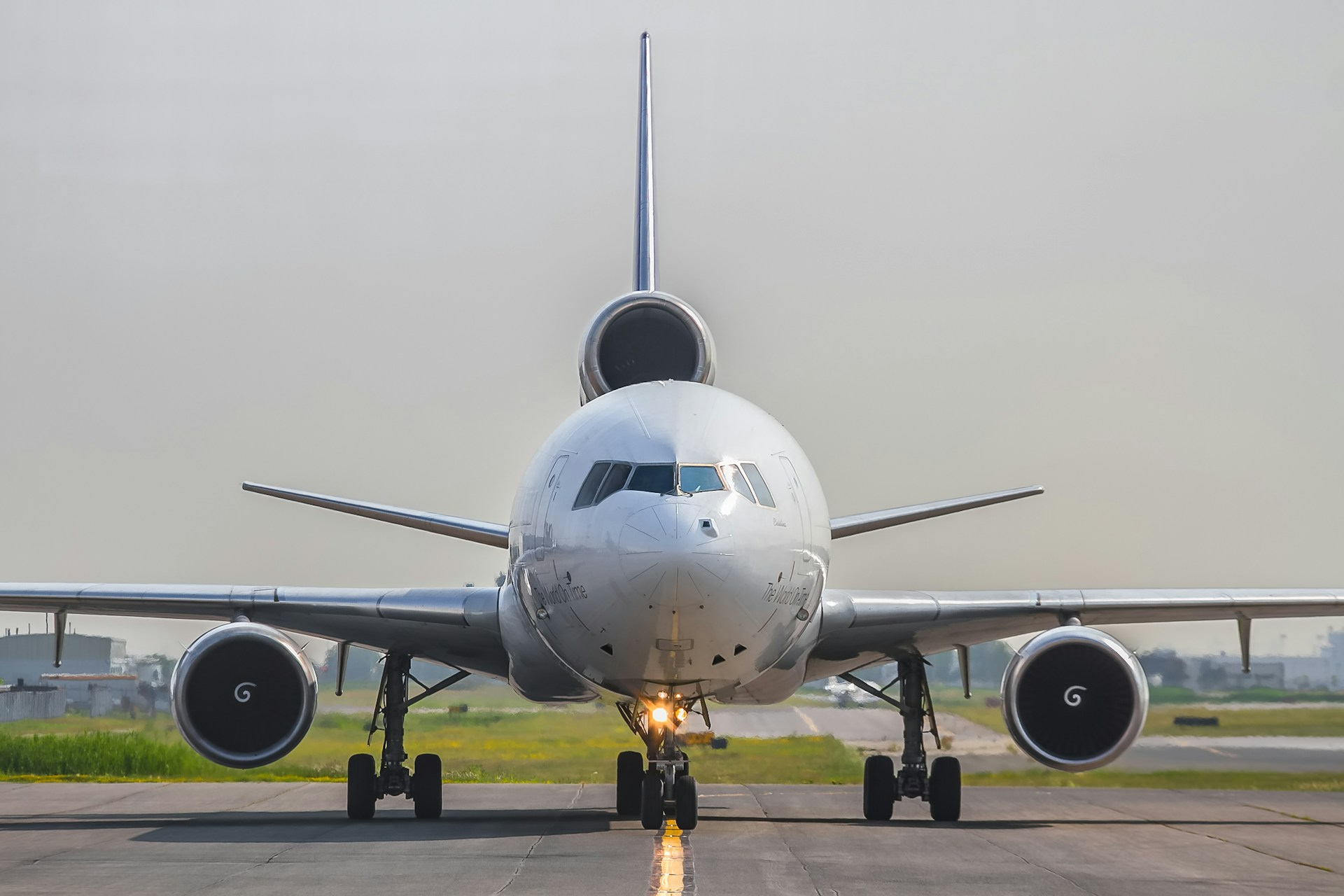
The Boeing 747 freighter’s nose-loading capability provides a solution for long pieces by allowing cargo to enter along the aircraft’s longitudinal axis. A 10-metre component can therefore be loaded without the tight turning geometry associated with side access, provided its weight, support points, and restraint plan remain within aircraft limits. Ground handling has to match that capability with the correct loader and clear working space around the aircraft.
Dividing 165 tonnes and 113 packages between two charter flights creates another planning problem. Build-up, customs documentation, airport delivery, aircraft positioning, handling equipment, and destination arrangements have to be sequenced so that both loads remain aligned with the project schedule. Where separate packages form part of one installation, the early arrival of one aircraft offers limited benefit if the second carries equipment needed for the same stage of work.
SLL Integrated Logistics operates within the Seabird Logistics ecosystem, while Ceekay Shipping provides services covering project freight, heavy lift, breakbulk, RoRo, forwarding, and cargo handling. The movement therefore sits within an established project logistics model in which the forwarder manages more than the aircraft booking, coordinating the interfaces before and after the flight.
Air transport at this scale is expensive relative to ocean freight, particularly when two dedicated Boeing 747 freighters are required. Its use for heavy energy equipment normally reflects a high value being placed on transit time, although the companies have not disclosed whether this shipment was planned as air freight from the outset or used to recover a project schedule. Either case requires the saving in transit time to justify a substantial transport premium.
Energy projects frequently draw specialist equipment from suppliers spread across several countries, leaving individual components exposed to manufacturing, inspection, export, and transport delays before they reach site. Where one late item sits on the installation critical path, the cost of keeping labour, cranes, contractors, or commissioning teams idle can exceed the premium attached to an emergency charter.
Aircraft availability is only part of that recovery option. Departure and destination airports need suitable loaders, cranes or other handling systems, secure staging space, sufficient apron access, and ground teams familiar with unusual lifting and restraint requirements. Oversized road transport may also be required at either end, bringing route surveys, permits, escorts, and delivery windows into the same schedule.
The pressure on interfaces explains why project cargo operations can fail despite the availability of an aircraft with enough payload. A missing customs document, unavailable loader, incorrect packaging arrangement, or incompatible road vehicle can consume the time that air transport was bought to save. The freighter is the fastest part of the chain; preparation on the ground determines whether the whole movement is fast.
SLL and Ceekay’s India-Africa shipment demonstrates that point neatly. The visible hardware was two Boeing 747 freighters, but the operating task covered 113 individual packages, an unusually long component, airport handling, charter coordination, and onward project logistics. Dedicated heavy airlift remains a specialist and costly option, but it retains a place in industrial supply chains where the price of losing several weeks is higher still.