IN Brief:
- Tashkent and Navoiy join SolitAir's existing Central Asian connections to Kazakhstan and Kyrgyzstan.
- Uzbekistan's air transport operators handled 57,200 tonnes of cargo during the first half of 2026.
- SolitAir operates seven Boeing 737-800 converted freighters and plans to increase its fleet to 20 aircraft by the end of 2027.
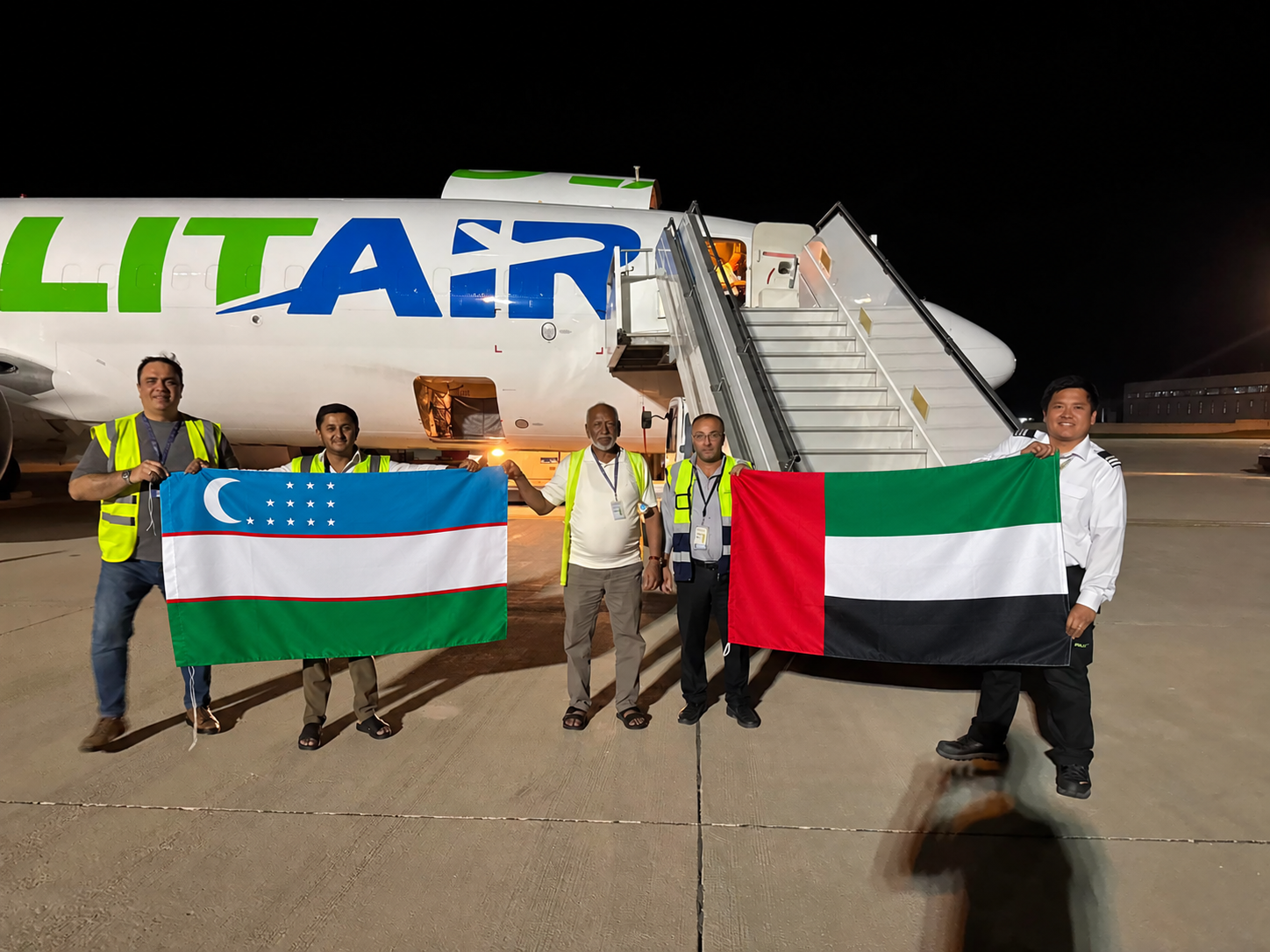
SolitAir has launched cargo operations to Tashkent and Navoiy in Uzbekistan, extending its Central Asian network as the Dubai-based carrier builds airport-to-airport freight capacity between markets in Asia, Africa, and Europe.
Tashkent International Airport and Navoiy International Airport become the airline’s latest gateways in the region, joining services to Bishkek in Kyrgyzstan and Almaty and Astana in Kazakhstan. SolitAir says perishables will be a particular focus for the Uzbekistan routes, placing the new capacity in a segment where transit times, transfer reliability, and handling conditions have a direct effect on usable shelf life.
The carrier now serves more than 60 destinations across more than 40 countries from its base at Al Maktoum International Airport at Dubai World Central. Its model centres on dedicated B2B airport-to-airport freight services rather than passenger belly capacity, allowing it to target markets where direct cargo options remain more limited than on the principal intercontinental freight corridors.
Uzbekistan’s air freight market has been expanding alongside investment in transport infrastructure and changes in regional trade patterns. Air transport operators handled 57,200 tonnes of cargo during the first half of 2026. SolitAir sees the country as part of a wider Eurasian freight corridor connecting manufacturing, agriculture, distribution, and international trade flows.
Hamdi Osman, Founder and CEO of SolitAir, said: “In a market handling more than 100,000 tonnes of air cargo annually, SolitAir brings additional capacity and network connectivity across the Global South and Europe, supporting Uzbekistan’s ambitions to further strengthen its position as a Eurasian transport hub.”
The expansion is supported by a fleet of seven Boeing 737-800 converted freighters, each providing around 20 tonnes of cargo capacity. SolitAir operates from a 20,440-square-metre cargo hub at Dubai World Central that has been operational since October 2024 and plans to increase its fleet to 20 aircraft by the end of 2027.
Narrow-body freighters occupy a different position from the wide-body aircraft used on major intercontinental trunk routes. Their payload and operating economics can support regional links where customers need dedicated cargo capacity without the volumes required to fill much larger aircraft. Across Central Asia, that can create additional options for freight moving between secondary markets and major international hubs, particularly where shippers would otherwise depend on indirect connections or limited scheduled capacity.
For forwarders and shippers, the practical benefit will depend on how the new frequencies connect with onward services through Dubai. Dedicated narrow-body capacity can improve access from secondary markets, but the commercial value rests on predictable schedules, transfer performance, and enough regular demand to support repeat services. Perishable cargo raises that bar further because missed connections and long dwell times can erode product value before the shipment reaches its final market.
SolitAir’s fleet is also becoming part of the wider Dubai freight market. The carrier is supplying three wet-leased Boeing 737-800 freighters to flydubai for dedicated cargo services beginning in October, a separate arrangement from its own Uzbekistan expansion. The agreement gives flydubai main-deck freight capacity from Dubai World Central alongside its existing belly-hold operation.
Regulatory access supports that network development. SolitAir holds a UAE General Civil Aviation Authority Air Operator’s Certificate, European Union Aviation Safety Agency Third Country Operator authorisation, ACC3 designation from the Belgian Civil Aviation Authority, and UK Civil Aviation Authority TCO certification.
The Tashkent and Navoiy routes add dedicated capacity to a region where freight demand is developing alongside infrastructure and changing trade flows. For perishable cargo, additional service options become particularly useful when they shorten waiting periods between production, export handling, transfer, and final-market distribution. Regularity will matter as much as nominal payload for time-sensitive shippers.
Frequency and load development will determine how deeply the two routes become embedded in regional logistics networks. SolitAir’s planned expansion from seven to 20 aircraft gives it scope to add further services, but the operating test will be whether traffic volumes support regular connections across a network that now extends well beyond its original Dubai hub operation.