IN Brief:
- DP World says freight volumes through Türkiye are rising as companies seek alternative Gulf routes.
- The corridor combines maritime and road transport for automotive, consumer goods, and industrial manufacturing customers.
- DP World has invested more than US$600m in Türkiye, including port, rail, and logistics infrastructure.
DP World says companies are increasingly routing cargo through Türkiye to reach Gulf markets as geopolitical uncertainty and disruption continue to affect traditional shipping routes.
The group is supporting customers in automotive, consumer goods, and industrial manufacturing through a multimodal corridor that combines maritime and road transport. The service can reduce transit times between Europe and Gulf markets from around 55 days by sea to between 22 and 29 days.
Abdulla Al Hashmi, global chief operating officer for Parks & Economic Zones at DP World, highlighted the trend at the 5th Türkiye Maritime Summit in Istanbul. He said businesses are combining sea and overland transport to shorten transit times and improve resilience, with freight moving through Türkiye in both directions: from Europe into the Gulf, and from the Far East through Türkiye and onward.
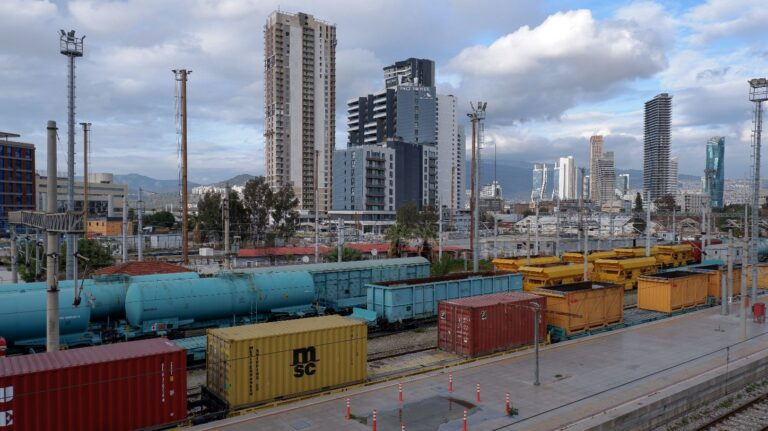
DP World has invested more than US$600m in Türkiye. In 2024, the group combined its Yarımca and Körfez terminals to create DP World Evyap, now one of the country’s largest port operators. It has also linked its terminal directly to the Baku-Tbilisi-Kars rail corridor and the wider Silk Road network.
The shift reflects a broader adjustment in supply chain design, where shippers are looking beyond single-route optimisation. Traditional long-sea routings remain essential for many flows, but disruption in major maritime corridors has increased the value of alternatives that preserve service even when they add handling complexity. A sea-road or sea-rail-road corridor gives cargo owners another option when ocean schedules lengthen, capacity becomes uncertain, or exposure to a particular route increases.
Türkiye’s position gives it a strategic role between Europe, Asia, and the Middle East. Its port infrastructure, road links, rail corridors, customs position, and proximity to Gulf demand create a practical base for multimodal routing. That position becomes more valuable when manufacturers and retailers have to rebalance cost, speed, and risk rather than simply choose the cheapest ocean service.
Route flexibility has become a defining feature of 2026 supply chain planning. The Q2 market picture was shaped by Gulf disruption, tariff frontloading, customs pressure, and uneven freight capacity, all of which pushed companies toward more adaptable operating models. The role of Türkiye as an alternative corridor sits squarely within that pattern, giving shippers another routing option when preferred lanes become less predictable.
Automotive and industrial manufacturing are especially exposed to lead-time variability. Production planning depends on predictable inbound parts, tooling, machinery, and finished goods movement. If a long-sea route becomes unreliable, the effect can move into inventory buffers, customer commitments, and working capital. A shorter multimodal option may justify its complexity where the alternative is stockout risk or delayed customer delivery.
The corridor also underlines the growing importance of integrated logistics assets. Ports, terminals, forwarding, contract logistics, rail links, and road networks have to work together if a multimodal route is to deliver consistent performance. A port investment alone does not create resilience if inland connections are weak. Road speed is less useful if customs handling, terminal handover, or documentation flow creates delay at the transfer point.
DP World’s investment in Türkiye therefore sits within a broader platform strategy. The combination of terminal capacity, rail connection, road access, and logistics services gives the group more control over the handover points that often determine whether a multimodal corridor performs consistently.
The next test is consistency at scale. Multimodal routes can become attractive during disruption, but they need sufficient frequency, equipment availability, customs reliability, and cost transparency to remain part of routine planning. Shippers using the corridor only in emergencies may gain speed, but regular use requires process discipline around documentation, handovers, route selection, and inventory planning.
Türkiye’s freight role is likely to keep expanding while supply chains remain exposed to geopolitical and maritime disruption. The country’s value lies in optionality: the ability to connect manufacturing and consumer markets through a route that shortens transit time, avoids some disruption points, and gives logistics planners more than one answer when ocean freight becomes less predictable.